
 Today’s offering comes to us from Ryan Smith. Smith has been a practicing Pagan since his teens, with over 15 years of experience in inclusive and anti-racist Heathen spirituality. He is the author of The Way of Fire & Ice: The Living Tradition of Norse Paganism and Spinning Wyrd: A Journey Through the Nordic Mysteries, has contributed to Bringing Race to the Table: Exploring Racism in the Pagan Community and No Pasaran: Antifascist Dispatches from a World in Crisis anthologies, and been published at Huginn’s Heathen Hof, Patheos Pagan, and Truthout. Ryan is also the host and producer of the Heathen podcast, the Wayward Wanderer, which is available at wherever you get your podcasts. He has a PhD in modern economic & social history and can be found online on Bluesky, Patreon, and Mastodon.

The serious questions regarding Graham Platner’s judgment – questions raised by his choice of tattoo, his decision to lie about not knowing its meaning, and to work for Blackwater, a notorious mercenary outfit with a bloody history – proved to be entirely warranted. Allegations of rape, along with a growing tide of similarly worrying emotional infidelity and sexual assault accusations, have led to Platner’s resignation from the Maine senate race and sent the Democratic Party scrambling to replace the presumptive party nominee.
Even though one could argue there are ways the Maine senate race matters politically for Pagans, I think there’s more immediate lessons that can be learned from this whole saga.
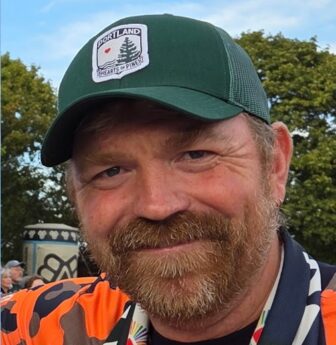
Graham Platner [Wikimedia Commons, CC 4.0, MAINEiac4434]
In many ways, Platner’s swift rise and fall mirrors the dynamics we often experience in Pagan spaces when a new cult of personality begins picking up steam. The Platner case is particularly helpful for understanding these dynamics, thanks to how the failure to properly assess people in leadership, the genuine social void filled by Platner’s campaign combined to make his rise possible, and the trappings of toxic masculinity fueled his rise.
The first place to begin with Graham Platner is his red flags. If there were two things his campaign was known for, it was the working class aesthetic of a simple Maine oysterman challenging the billionaires and the steady stream of increasingly alarming scandals surrounding his personal conduct. Whether Platner was being confronted on his proven-false claims of not knowing what his Death’s Head ink represented, accusations of sexual assault, or Reddit fantasies about fighting in colonial genocides like the Indian Wars, his campaign had plenty of clear indicators that this man may not have been fit for seeking a Senate seat in his first run for office.
As it turns out, the consultants who recruited him to run in the first place didn’t look that hard. Dan Moraff, the associate of Morris Katz who recruited Platner, waved Platner through without even the most cursory investigation into his history. In an interview with the Wall Street Journal, Moraff revealed this was deliberate, because they wanted to “disrupt” the political process by recruiting more unconventional candidates to run. These failures to deeply investigate were abetted by fears that serious questioning would derail his progressive message, a fear which was why Jenny Racicot, the woman allegedly raped by Platner in 2021, said she hesitated on coming forward.
This may be starting to feel somewhat familiar to many people with longtime experience in the Pagan scene. Many a Pagan organization, community, and project has endured a similar experience where increasingly unfit, abusive, or otherwise untrustworthy individuals remain in positions of power or authority well after the patterns of behavior become clear. Frequently, the damage they do is justified based on the positive benefits they are providing to their particular community. Victims of abuse are derided for attempting to destroy such good works, and silence is maintained through reinforcing this message.
This is why, as shown with Platner, it is critical to respond to such red flags and ensure that people are vetted for such potential problems before, not after, they take up positions of authority. There is nothing wrong with asking if a person is capable of doing the job they are seeking, can handle the rigors of the position, and knows how to work with others before letting them participate in a ritual, organize a camp-out, or engage in any other work of public trust. While fresh eyes, encouraging talent, and helping beginners express themselves are vital to maintaining the health of community, it is also important to make sure the space is safe enough for everyone to explore, experiment, and experience their spirituality. No amount of shortcuts, charisma, or talent can make up for the damage that comes from breaking such trust and safety.
What makes these steps especially critical is that Platner, like many examples of less scrupulous or more dysfunctional but well-meaning Pagan organizations, was able to succeed like he did because his campaign was stepping into a gaping void of need. It is, generally, safe to say that at this stage of our present polycrisis, social bonds and community ties in the United States have frayed to an alarming level. What was first observed in the year 2000 in Robert Putnam’s book Bowling Alone: The Collapse and Revival of American Community, which tracked the early signs of social deterioration through the collapse of in-person amateur sports leagues, has now reached alarming levels. Making this worse is the pervasive powerlessness that comes with modern life where our voices are not heard and our needs made secondary to the whims of the powerful and unaccountable.
These feelings are quite well-known to many Pagans as our spiritual journeys were often initiated by this same isolated helplessness and disconnection. They are also why if someone like Platner manages to get some real support and resources to work with they manage to get so much traction. Our society already, by default, heavily glamorizes the charismatic hero, the plucky maverick, and the misunderstood genius as sources of problem solving. This myth endures despite the actual history of social movements and major crises shows collaboration, teamwork, and community building are the real tools for building genuine change like filling the void left by social deterioration. Such work also takes time and patience, two things which a less scrupulous or overly ambitious aspiring leader promises to skip.
What certainly helped sell this willingness to plow on ahead with a clearly unready, deeply flawed candidate were his appeals to conventional masculinity. Graham Platner, for some of his more vocal supporters like Ken Klippenstein, represented an end to “smoothgroin” politics. Candidates were now supposedly allowed to act like real men. Any personal failings were secondary to the immediate, bold, manly solutions that Platner promised to bring, despite his lack of any actual experience in the business of legislation or community leadership, two endeavors where negotiation and empathy tend to get more results than two-fisted heroics. When this was combined with his outsider status, he became catnip to everyone from Jon Stewart to Pod Save America and The Majority Report, who, at long last, had a Democrat who looked like he rode out of a Marlboro commercial.
The speed at which Platner was hailed for these trappings further reinforces how such deference to the appearance of conventional masculinity often excuses deeply abusive, troubling, or disqualifying behavior and judgment. Graham Platner, like Donald Trump, was given free passes by people who should’ve known better because, at least in part, he was the right kind of white man presenting like the kind of heroes idolized by American myth. That, it seemed, was good enough. Platner’s initial responses to his growing problems, that he was a transformed man whose politics flowed from these past experiences, gave these so-called rough edges the gloss of a redeemed sinner, further excusing his clear lack of fitness for the job.
What he represented justified any action to defend him, including Dropsite News writer Ryan Grim’s shameful attempt to delegitimize Racicot’s personal experience and the Young Turks host Cenk Uygur’s assertion the accusation was “politically assassinating” Platner. Platner himself didn’t help the situation by refusing to take responsibility for his actions, blaming unnamed party elites in his withdrawal announcement, and dragging his heels on the campaign paperwork, all actions that seem like the opposite of many of the values Platner claimed to champion on the campaign trail. Platner’s image as a white man of a certain vibe on the road to redemption had become more important than the reality of his being an untrustworthy, abusive political actor or his clear lack of fitness for office.
The same often happens in our spiritual spaces, both in the form of the clearly toxic masculine types who resort to many of the same tactics as their more mainstream brethren and those who appropriate the trappings or expectations of power and authority in a bid to attain or consolidate it. A person’s actions, as it says in the Hávamál, are what shows the stuff of their character. Deeds like a clear commitment to service, learning, and care speak far more of an individual’s fitness to bear great responsibility than their ability to look gruff in a sweater or seem like the Platonic ideal of a high priest or priestess.
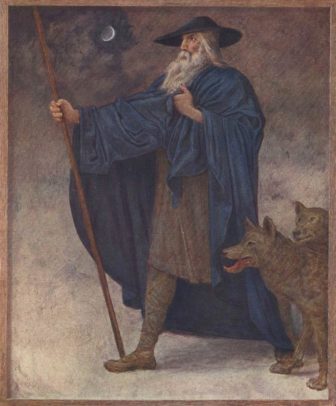
Hans Thoma, “December, The God Odin with Wolves,” oil on canvas, 1906 [public domain]
In short, the story of Graham Platner is a story we’ve all heard too many times. Paganism and the world at large have been living with the consequences of entertaining and enabling the demands of the mediocre yet privileged. If our movement is to effectively serve the people who have been coming our way in increasing numbers, then we must prioritize being of service, building communities of care, and and fulfilling people’s needs through empowerment over being a launchpad for reckless ambition.
There are no shortcuts on this path and every step is only learned by taking it, but it is a journey that will bring our movement and larger world to a more whole and sustainable place.
The Wild Hunt is not responsible for links to external content.
To join a conversation on this post:
Visit our The Wild Hunt subreddit! Point your favorite browser to https://www.reddit.com/r/The_Wild_Hunt_News/, then click “JOIN”. Make sure to click the bell, too, to be notified of new articles posted to our subreddit.