
Pagan Studies Network Brings Together International Scholars
STRASBOURG, France — The Interdisciplinary Network of Pagan Studies (INOPS) is inviting researchers studying contemporary Paganisms, revived religious traditions, and local spiritualities to connect with its growing international academic network.
INOPS brings together scholars from sociology, anthropology, political science, law, history of religions, cultural studies, folklore studies, and other fields. The network seeks to encourage interdisciplinary collaboration and comparative research into the ways ancient and local religious traditions are revived, reinterpreted, and incorporated into contemporary religious, cultural, and political life.
The network grew out of the international workshop The Echo of Ancestors: The Reemergence and Claims of ‘Ancient’ Religions in Europe, held at the University of Strasbourg in April 2025. Organizers say the discussions generated interest in creating a more permanent academic forum for researchers working on revived religious identities and practices in Europe and elsewhere. INOPS is supported by the University of Strasbourg’s Interdisciplinary Thematic Institute MAKErS and the Droit, Religion, Entreprise et Société Research Center.
INOPS also maintains an Events & Activities page highlighting conferences, seminars, workshops, and webinars relevant to Pagan studies and related fields. Recent programming has included work on contemporary spiritual networks, ritual healing, neo-shamanism, esotericism, alternative spiritualities, and the intersections of religion, culture, and society.
Researchers at all career levels and across academic disciplines are welcome to join the network.

Who Doesn’t Like a Good Ouija Board Story?
NEW YORK — The Ouija board may now be inseparable from horror movies and warnings about opening doors to the spirit world, but its beginnings were considerably less sinister.
Writing for HISTORY, Joseph Bennington-Castro traces the familiar talking board to the rise of Spiritualism in 19th-century America. The movement gained particular prominence during and after the Civil War, when widespread bereavement contributed to interest in communicating with the dead. The famous Fox sisters helped popularize Spiritualism beginning in 1848, while séances and techniques such as table-turning offered participants purported opportunities to receive messages from spirits.
By 1886, newspapers were reporting the appearance of “talking boards” in Spiritualist camps in Ohio. Baltimore businessman Charles Kennard recognized their commercial potential and, working initially with undertaker E.C. Reiche and later a group of investors, developed a marketable version. Attorney Elijah Bond filed for a patent in 1890, which was granted February 10, 1891.
Even the board’s name has its own bit of occult folklore. According to the story, Bond’s sister-in-law, medium Helen Peters, asked the board what it wished to be called. It reportedly spelled “Ouija,” followed by “good luck” when asked for the word’s meaning. A more earthly explanation suggests the name may have come from a misreading of “Ouida,” the pseudonym of novelist Maria Louise Ramée, whose image Peters may have worn on a locket.
The boards became enormously popular, with interest rising during periods of mass death and upheaval, including the world wars. Parker Brothers acquired the rights in 1966, bringing Ouija to an even larger audience.
Its transformation into something genuinely frightening came later. Bennington-Castro points particularly to 1973’s The Exorcist, which helped recast the familiar parlor game as a potentially dangerous gateway to demonic forces, an association that remains firmly embedded in popular culture more than half a century later. The full story is available on History.
A Discovering of Witches
NEW YORK — It appears the fashion world has once again discovered Witches.
In a September 24 piece delightfully titled “Get In, Crones: This Fall We’re Dressing Like Witches,” Vogue declared that fall 2026 is having a decidedly Witchy fashion moment. The trend extends beyond the season’s abundance of Witch-themed entertainment, including Practical Magic 2, American Horror Story, and Disney’s Hexed, into collections from designers including Comme des Garçons, Rick Owens, Erdem, and Lanvin.
But Vogue notes that contemporary “Witchy” fashion has moved considerably beyond the stereotypical pointy hat and black dress. The magazine identifies styles ranging from romantic goth and glamorous enchantress to earthy “witchcore,” incorporating capes, lace, corsetry, flowing sleeves, antique jewelry, symbolic accessories, and natural colors. Fashion writer Kristen Bateman suggests the appeal may also lie in dressing outside conventional expectations and embracing darker or stranger aspects of oneself.
More interestingly, the article speaks with glamour Witch and spiritual occultist Ebony Jasmine Harris, who connects fashion directly with magical practice. Harris discusses glamour magic and color magic, including the intentional use of clothing and color to influence presence, protection, perception, and spiritual expression.
The article ultimately suggests that the current fascination may be about more than aesthetics. In an unsettled world, Vogue considers whether Witchcraft—and dressing Witchy—offers people a language of personal agency, individuality, and a little magic when much else seems beyond their control.
And Still More Withcraft — Defensive Magic
WASHINGTON — Writing in Smithsonian Magazine, historian Thomas Waters explores six ways people across cultures have used magic to protect their homes, property and inhabitants from supernatural—and sometimes ordinary—dangers. Waters notes that historians and archaeologists are increasingly studying protective magic as an important part of everyday life and the built environment.
Plants frequently served as magical defenses. Seventeenth-century herbalist Nicholas Culpeper claimed bay trees could protect homes against Witchcraft, the Devil and lightning, while betony guarded against disease and harmful magic. Rosemary was believed to frustrate nighttime Witches, while chile peppers have been placed near doors in the Americas to repel harmful forces.
Buildings themselves could also become protective objects. Five- and six-pointed stars, interlocking V-shaped marks and hexafoils—sometimes called daisy wheels—appear on historic European buildings, particularly around doors, hearths and chimneys. Although some may have been builders’ marks or decoration, their placement suggests that others served apotropaic purposes. Elsewhere, architectural protections included demon tiles in East Asia and elaborate chimney designs in Spain intended to confuse Witches.
More elaborate protections included witch bottles, containing such materials as urine, hair, fingernails, bent pins and cloth hearts. Often buried or concealed near chimneys, the bottles were intended to counter bewitchment or turn magical attacks against their supposed source. About 250 have been identified in England, compared with fewer than a dozen in the United States.
Protective stones crossed cultural boundaries as well. East Asian shigandang stones invoked China’s sacred Mount Tai, while naturally perforated “hag stones” were used in Britain against Witchcraft, nightmares and misfortune—and have experienced a revival among contemporary magical practitioners.
Religious objects could serve similar purposes. Bibles were placed beneath pillows in 19th-century Britain; protective crosses appeared on Irish farm buildings; and Ottoman hilyas, calligraphic descriptions praising the Prophet Muhammad, could function as supernatural protection.
Waters ultimately describes these practices as a kind of everyday supernatural self-defense: ways of confronting danger, uncertainty, and anxiety by making the home magically as well as physically secure. Read the full article on the Smithsonian Magazine site.
Survey

By David S. Soriano – Own work, CC BY-SA 4.0, https://commons.wikimedia.org/w/index.php?curid=125089281
Author Yvonne Aburrow is asking questions about the intersection of AI and Paganism and proposing a new book.
AI is shaping up to have a significant impact on human society and our relationship with Nature, each other, and our humanity.
Following on from their previous call for contributions to an anthology of Pagan, Heathen, polytheist, and animist responses to generative artificial intelligence, Yvonne Aburrow is now conducting an online survey to canvas a broader range of opinion on the subject.
The survey is completely anonymous. Please follow this link: https://forms.gle/U58AykemajoJRvU78
Community Announcements
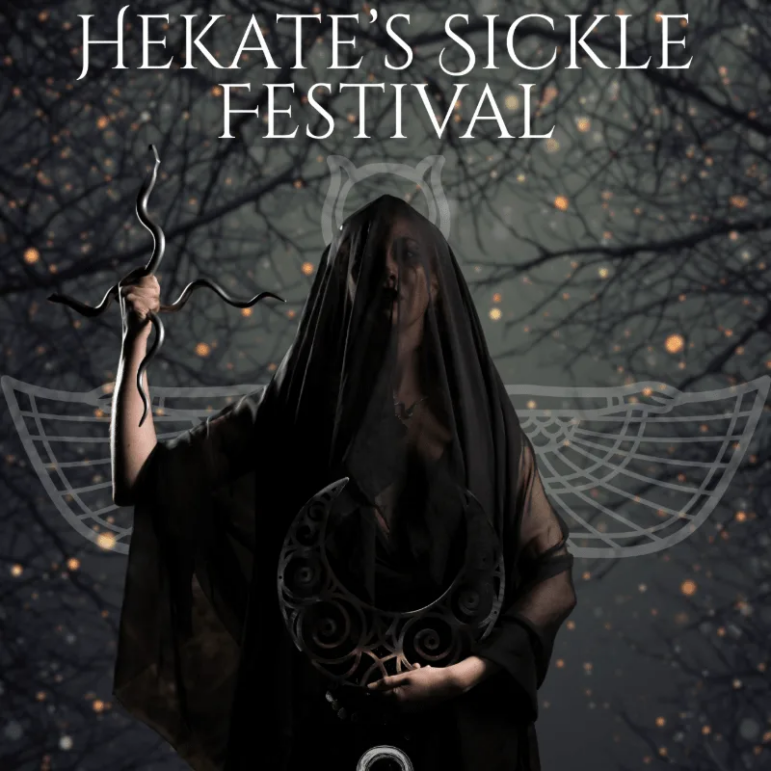 Hekate’s Sickle Festival Returns This November to the Salish Sea for a Three-Day Rite of Devotion, Mystery, and Community
The Aquarian Tabernacle Church (ATC) announces the return of Hekate’s Sickle Festival, a three-day Witch Retreat devoted to Isis, Hekatean practice, sacred arts, and community ritual, to be held November 6-8th at Camp Moran State Park on Orcas Island, Washington.
Set amid evergreen forest and wide water views in the San Juan Islands, Hekate’s Sickle Festival invites practitioners, seekers, and dedicated devotees to step into a concentrated weekend of ritual, teaching, devotional practice, and fellowship. The festival’s programming centers on reverent engagement with Hekate through guided rites, workshops, and community spaces designed to support both newcomers and long-time practitioners.
“While the amenities of the hotel are comfortable, Witches want to be in the wild woods, under the moon, with firelight, and drums,” said Belladonna LaVeau, Archpriestess and CEO of the Aquarian Tabernacle Church. “Hekate’s Sickle is a witch retreat, dedicated to magic, deepening your connection with deity and each other, so we can return to our lives strengthened by shared mystery and sacred work.”
Register now, as space in the camp is limited and spots are filling up fast. The Weekend Registration is all-inclusive; we feed you and give you a bed in the camp cabins for the weekend for only $299.
A Festival Designed for Real Bodies and Real Lives
ATC acknowledges that rustic state-park lodging can be a barrier for some attendees. The park does not have ADA-compliant facilities in the cabins. In response to community feedback, ATC is highlighting nearby off-site lodging options that offer a higher-comfort environment while keeping attendees close to the heart of the event.
- Doe Bay Resort (approximately 12 miles from Camp Moran): https://doebay.com/
- Rosario Resort (approximately 9 miles from Camp Moran): Rosario Resort | 1624 Rosario Road, Eastsound, WA, USA https://www.rosarioresort.com/
Because November is a quieter season in the San Juan Islands, these properties may be open to negotiating rates, and ATC can help coordinate pickup and drop-off between the festival site and either lodging location.
Registration
Registration is open now, and discount tickets are still available for a limited time.
- Register: http://sickle.atcwicca.org
About Aquarian Tabernacle Church
The Aquarian Tabernacle Church (ATC) is a 501(c)(3) religious organization serving a broad Pagan community across the United States, Canada, and South Africa. ATC supports spiritual education, seasonal festivals, devotional practice, and community-building through local branches and online resources.
Monthly EBSAT meeting on Monday, October 12, 2026
7:00 PM Central Time /
6:00 PM Mountain Time /
5:00 PM Pacific,
and last 30 minutes.

For The Love of Books
 An online day about books for Pagan book lovers
On Saturday, October 17th, Ardantane presents an online program for Pagans who enjoy reading and all things bibliophilic. The program will take place starting at 10:00 am Mountain Time (9 am Pacific, 11 am Central, and 12 noon Eastern). It will wrap up about 4:30 pm Mountain Time.
The day will include short workshops on:
- Meet Seshat, the Egyptian goddess who is Mistress of the House of Books
- Ancient Scribes: Enheduanna, the Sumerian priestess who is the first known author in human history. Listen to a reading of her “Hymn to Inanna.”
- Ancient Praise: a smattering of hymns and praise for the Divine Ones from various ancient texts.
- Manuscript Art and Illumination: the Book of Kells, fun with marginalia, and more
- How to make your own Book of Shadows: Making inks, papermaking, embellishment, illumination process, resources
- Organizing and Caring for Your Library
- Writing and Publishing YOUR Book, with authors Amber K and Azrael
- Freedom to Read: activist tips for fighting book bans
There will be breaks between workshops, and a longer lunch break. Participants can attend the whole program or any portions they wish.
And fun! Enter several drawings for door prizes—mostly books!—which will be mailed to lucky winners after the event.
The program is organized by the Stewards of Seshat, Ardantane’s library committee. Seshat is the ancient Egyptian goddess Who is our library’s patron deity.
To sign up, visit Ardantane. The fee for the whole program is only $15; which goes to Ardantane, a non-profit Pagan school and retreat center based in New Mexico. Registration closes at 5:00 pm Mountain Time on Friday, October 16.
“Bring us Witches with agency. Bring us transformation. Bring us rot and bloom.”
 California — Coreopsis Journal has announced an international call for submissions for Spellbound, the first volume of a planned three-book fantasy anthology inspired by The Coven, a series of paintings by Ukrainian fantasy artist Inna Vjuzhanina.
Vjuzhanina, who lives and continues to work in Zaporizhzhia, Ukraine, created The Coven as part of what organizers describe as her personal spiritual and artistic journey. She is collaborating on the anthology with the team behind Coreopsis Journal. The project is being published by an independent Canadian publisher, with the first volume planned for 2027.
Each of the three proposed volumes will feature nine of Vjuzhanina’s paintings accompanied by original fiction and poetry inspired by the artwork. For Spellbound, writers select one of nine paintings and create a work in which the depicted Witch is essential to the story. The figure may be interpreted broadly—as protagonist, antagonist, deity, familiar, machine, memory, place, or something else entirely—but editors emphasize that the work should not function without the Witch at its center.
Submissions are open to writers worldwide. Fiction of up to 15,000 words and poetry of up to 50 lines will be considered, along with shorter and flash fiction when appropriate to the selected artwork. The project offers a token payment, with organizers hoping to increase compensation through fundraising.
An optional priority-reading process is available for Ukrainian and Ukrainian-diaspora writers and writers currently living in or displaced from war zones.
Editors say they are particularly interested in imaginative, emotionally engaging work featuring Witches with agency and transformation. They will not consider work relying on ethnic stereotypes, pseudo-Slavic caricatures, stock portrayals of Witches as evil hags or seductive villains, graphic sexual content, sexual violence, or gratuitous violence. Writers drawing upon living cultures or traditions outside their own are asked to approach the material with research and care.
Submissions for Spellbound close December 1 at 11:59 p.m. Eastern Time.
More information, the nine paintings, and submission instructions are available from the Spellbound project at Worldsmyths. Questions may be directed to publishing@worldsmyths.com.
And they shared some Magical Music to write by …
EarthSpirit Announces Fall schedule
 WESTERN MASSACHUSETTS — The EarthSpirit Community has shared its calendar of rituals and gatherings for the remainder of 2026, beginning with an Autumnal Equinox Ritual and Sacred Land Walk near EarthSpirit’s home in western Massachusetts.
Twilight Covening, EarthSpirit’s annual intensive spiritual retreat, will take place October 9–12 in the Berkshires. The community will return to Glenwood on October 25 for an Ancestor Ritual and Sacred Land Walk from 1 to 5 p.m., including a ritual walk at 1 p.m. and an Ancestor Ritual at 3 p.m.
EarthSpirit’s Samhain Ritual is scheduled for Friday, October 30, from 7:30 to 9 p.m. at the Williamsburg Grange in Williamsburg, Massachusetts. The community will close its 2026 seasonal ritual calendar with its Yule celebration. Specific details below:
Twilight Covening
October 9-12, 2026
in the Berkshires of western MA.
Ancestor Ritual and Sacred Land Walk
October 25, 2026, 1 – 5 pm
at Glenwood, EarthSpirit’s home in western MA
Ritual Walk at 1 pm, Ancestor Ritual at 3 pm
EarthSpirit Samhain Ritual
Friday, October 30, 2026 7:30-9pm
Williamsburg Grange, Main St, Williamsburg, MA
EarthSpirit Seasonal Rituals in Williamsburg:
Yule – December 19
Events and Announcements
More Events at our new Events Calendar
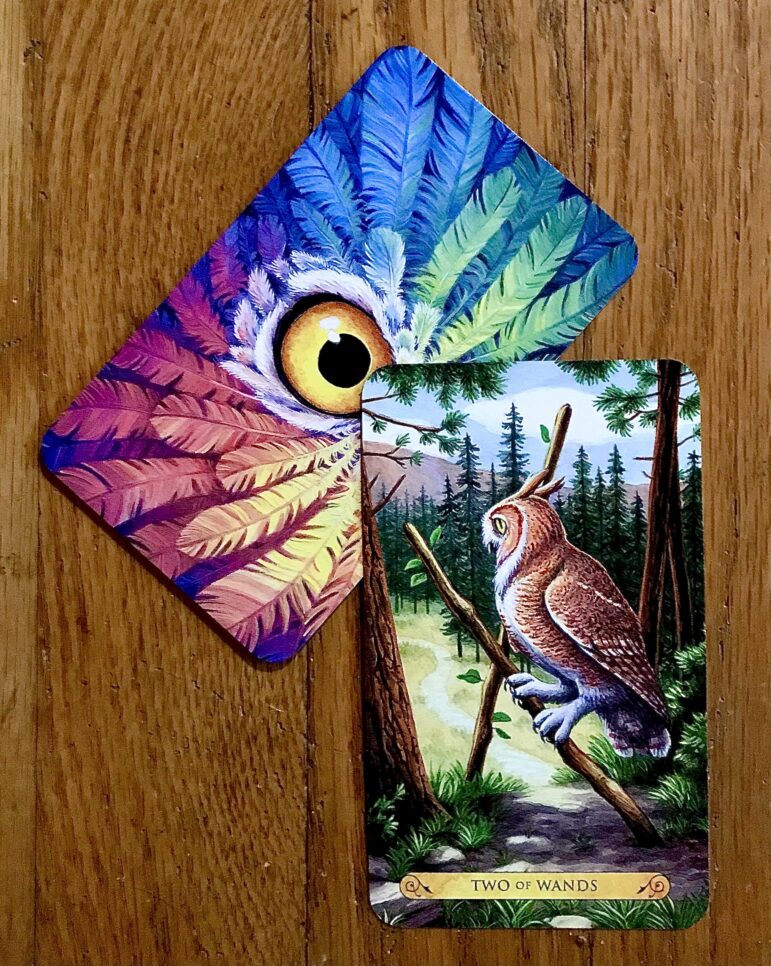 Deck: Tarot of The Owls, illustrations by Elisabeth Alba, text by Pamela Chen, published by Llewellyn Publications.
The Wild Hunt is not responsible for links to external content.
To join a conversation on this post:
Visit our The Wild Hunt subreddit! Point your favorite browser to https://www.reddit.com/r/The_Wild_Hunt_News/, then click “JOIN”. Make sure to click the bell, too, to be notified of new articles posted to our subreddit.