NEMI, Italy – Today, August 13, marks a traditional feast day associated with Diana, the Roman goddess of the hunt, wilderness, the Moon, childbirth, and the protection of women. The date is particularly associated with Diana’s ancient sanctuary at Lake Nemi, south of Rome, where she was worshipped as Diana Nemorensis, Diana of the Sacred Grove.
The sanctuary at Nemi was one of the most important centers of Diana’s worship in the ancient world. Set within the wooded crater surrounding the lake, the sacred complex drew worshippers from communities throughout Latium. Ancient sources connect the August observance with gatherings at the sanctuary, while archaeological evidence demonstrates the site’s importance over centuries of Roman religious life.
Diana’s August festival is commonly identified with the Ides of August, or August 13, and was observed beyond Nemi as well. In Rome, Diana had an important temple on the Aventine Hill, traditionally associated with the cooperation of Rome and other Latin communities. Ancient literary evidence also connects Diana’s festival with particular consideration for enslaved people, for whom the day was traditionally regarded as a holiday.
At Nemi, Diana possessed a particularly complex identity. She was associated not simply with hunting but with the forest, fertility, healing, childbirth, sovereignty, and the boundaries between civilization and wilderness. The sanctuary became famous in later literature for the mysterious priesthood of the Rex Nemorensis, the “King of the Grove,” whose story would eventually inspire James George Frazer’s The Golden Bough.
Modern Pagans and devotees of Diana continue to observe August 13 in various ways, from offerings and prayers to time spent in forests and other wild places. Contemporary practices vary considerably and need not reproduce ancient Roman ritual.
More than two millennia after worshippers gathered beside the waters of Lake Nemi, the Feast of Diana remains an occasion to honor a goddess whose sacred landscape, mythology, and enduring associations with wildness continue to inspire modern Pagan practice.
Mortellus’ Candidate Filing Challenge
Publisher Photo via Amazon
RUTHERFORD COUNTY, N.C. — Pagan author and clergy member Mortellus is challenging the North Carolina State Board of Elections over how their name will appear on the November ballot, raising questions about candidate names, administrative authority, and the ability of minority-faith candidates to participate in public life under the names by which they are known.
Mortellus filed in June to run for supervisor of the Rutherford Soil and Water Conservation District, a nonpartisan local office. The dispute centers on the State Board’s handling of Mortellus’ candidate filing and voter-registration records and the name under which they may appear on the ballot.
Mortellus, a Gardnerian Wiccan High Priestex, author, and community organizer, uses a religious name taken as part of their clergy identity. They have now sought a declaratory ruling addressing the Board’s authority to alter those records.
In a statement provided to The Wild Hunt, Mortellus said they had contacted election officials before filing to determine how they could appear on the ballot and followed the guidance they received, only to have that guidance subsequently rescinded.
“Rather than communicating with me, the State Board changed my candidate filing and voter registration record themselves—deciding what name I would be known by and what would appear on the ballot—without informing me or obtaining my consent,” Mortellus said. “My name may be at the forefront of this case, but the declaratory ruling is also asking a much more basic question: did they have the authority to make those changes without my knowledge?”
Mortellus told TWH that the dispute also carries broader significance for Pagans and members of other minority religions considering public service.
“People from Pagan and other minority-faith communities need to know that we can step into civic life without surrendering parts of ourselves at the door,” they said. “We should be running for office, serving on boards, volunteering, organizing, and caring visibly for the places we call home.”
Mortellus added that local races can be particularly consequential because local governments make decisions affecting everyday community life.
“Pagan civic participation demonstrates something our communities have always known: our faith doesn’t separate us from our neighbors. It gives us reasons to care for them,” Mortellus said. “We belong in public life, and we should not have to become less ourselves in order to take part in it.”
Braucherei tradition makes the news
H. & S. Hoffman Barn, bearing twelve hex signs, in Montgomery County, Pa. [public domain
LANCASTER COUNTY, Penn. — On August 3, 2026, National Geographic published a feature by Nora Neus examining the revival of Braucherei, the Pennsylvania Dutch folk-healing tradition also known as powwow. The practice, brought to Pennsylvania by German-speaking immigrants beginning in the 18th century, combines prayers, charms, ritual actions, and traditional methods intended for healing, protection, and assistance in everyday life.
For generations, Braucherei was practiced discreetly, particularly amid anti-German sentiment and suspicion of folk practices. Knowledge was often transmitted orally between trusted individuals, with some prayers and rituals deliberately kept secret. The article notes that practitioners traditionally addressed practical concerns ranging from stopping bleeding and removing warts to protecting homes, livestock, and families.
Among those featured is Robert Lusch-Schreiwer, an active member of the Pagan community and a hereditary practitioner whose great-grandmother, Alice Miller, practiced Braucherei in the 1920s. Schreiwer grew up encountering the tradition within his family and has since become a prominent figure in its contemporary revival, training dozens of practitioners and researching more than 170 Brauchers. His work includes adapting instruction to technologies such as Zoom while maintaining traditional restrictions surrounding material considered secret or sacred.
The article also speaks with longtime practitioner Jack Montgomery, who has practiced Braucherei for more than five decades. Montgomery does not formally take students himself but accepts that other practitioners may use apprenticeships and online instruction, provided prospective students are appropriately vetted.
The resurgence raises questions about how a tradition rooted in family, community, secrecy, and personal transmission can survive in an era of social media. While increased visibility risks attracting charlatans or weakening traditional boundaries, practitioners also see adaptation as essential to Braucherei’s survival. As scholar Josh Brown observes, the tradition has never been static; its continuing evolution may itself demonstrate that Braucherei remains a living practice rather than a historical relic.
Thank you! Thank you! Thank you!
If you’ve been thinking about supporting The Wild Hunt, now is the time.
As always, our deepest gratitude to everyone who has brought us this far.
Tarot of the Week by Star Bustamonte
Deck: Golden Black Cat Tarot, by Helena de Almeida, published by AGM-Urania/Konigsfurt-Urania Verlog GmbH.
Card: Seven (7) of Swords
The week ahead is apt to offer opportunities for seriously re-evaluating who is allowed into one’s life and access to private and privileged information and assets. Not everyone has our best interests at heart, nor is everyone honest. There is no fault in requesting to see the receipt before paying the bill, as it were. Discernment and the ability to take strategic action when required are likely to be key this week.
Conversely, self-deception and a refusal to recognize and accept reality are unlikely to make anything better and are more likely to cause even more grief further down the road. Keeping secrets shrouded and hidden from others will eventually be revealed. The best way forward is to reveal any dark secrets and own them—particularly before someone else does.
The Wicker Man
1979 re-release era poster.
LONDON — The entertainment site, NME reported on August 10, 2026, that The Wicker Man, the influential 1973 folk-horror film exploring tensions between Christianity and Paganism, is receiving another spiritual successor.
Wrath of the Gods will have its world premiere at London’s FrightFest on August 28, completing what the family of original director Robin Hardy considers a loose trilogy alongside The Wicker Man and the 2011 film The Wicker Tree.
The new film emerged from notes and correspondence discovered among Robin Hardy’s papers after his death. His son Dominic Hardy told NME that his father originally envisioned a story about a Disney-like corporation attempting to build a theme park inside an extinct Icelandic volcano, provoking a revolt by the actual gods. Dominic and his half-brother Justin Hardy subsequently developed the idea in a different direction while retaining its grounding in Norse mythology.
“Emmy and BAFTA-nominated director Justin Hardy has revealed WRATH OF THE GODS, a new British folk horror film inspired by a concept discovered in a recently unearthed script written by his late father, THE WICKER MAN director Robin Hardy,” The teaser released on YouTUbe noted, “will have its world premiere at FrightFest 2026, and finally complete his father’s true vision for THE WICKER MAN.”
Set on the remote Scottish island of Hel and filmed in Shetland, Wrath of the Gods follows Anna, a grieving widow who travels to the island to bury her husband following his suicide. Like Sergeant Howie in The Wicker Man, Anna arrives as an outsider among an insular community. She becomes associated with misfortune as children begin disappearing. Dominic Hardy describes the film as more serious and visceral than the original, building its suspense around the ethical horror of child abduction rather than recreating The Wicker Man’s narrative games.
The premiere will carry particular poignancy following the sudden death of director Justin Hardy from a heart attack on July 31 at age 61, only weeks before the film’s debut.
Dominic Hardy also reflected on the enduring religious themes of his father’s original film, arguing that its confrontation between Paganism and Christianity treats both as serious ideas rather than superficial devices. More than five decades later, he said, The Wicker Man has transcended its troubled production history to become a cultural icon that “lives on its own.”
The Wild Hunt is not responsible for links to external content.
To join a conversation on this post:
Visit our The Wild Hunt subreddit! Point your favorite browser to https://www.reddit.com/r/The_Wild_Hunt_News/, then click “JOIN”. Make sure to click the bell, too, to be notified of new articles posted to our subreddit.

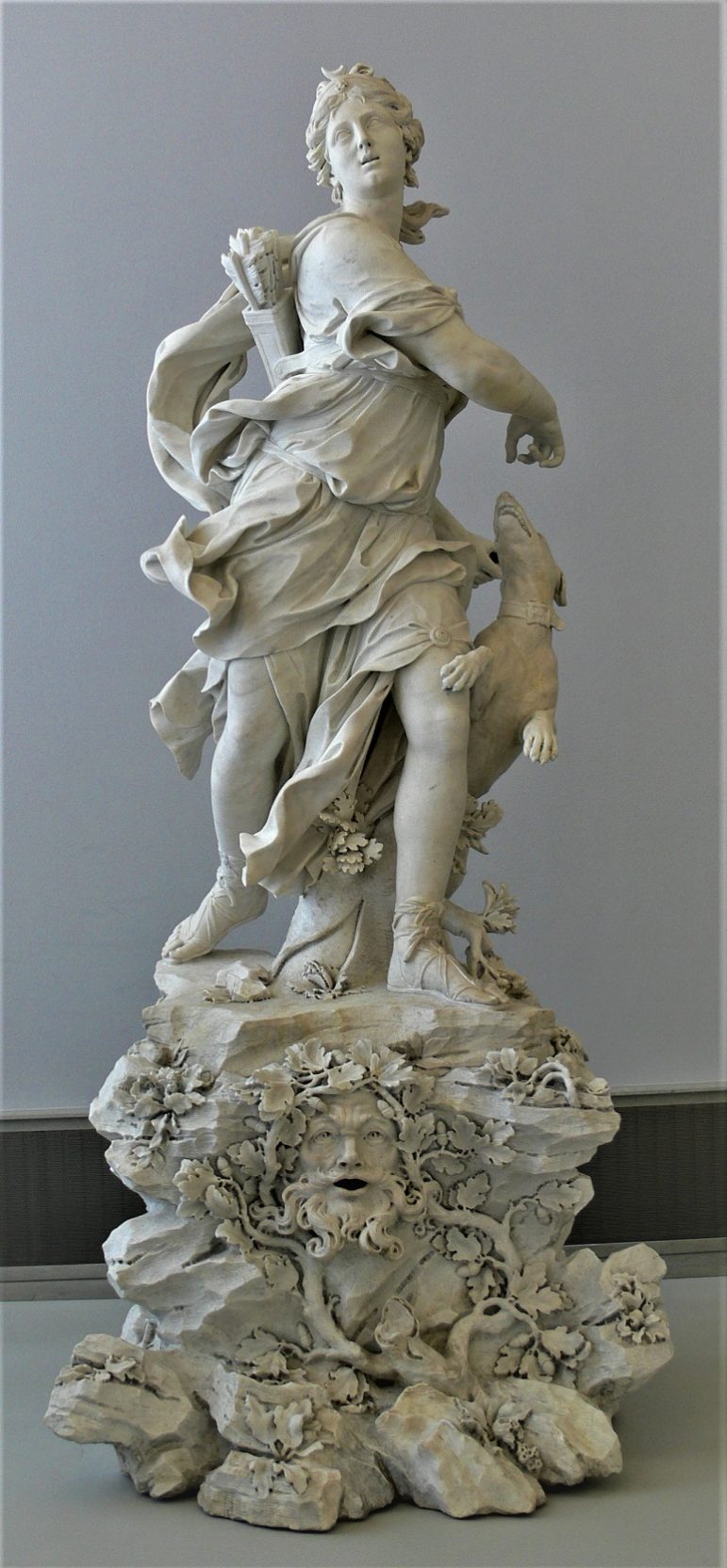 NEMI, Italy – Today, August 13, marks a traditional feast day associated with Diana, the Roman goddess of the hunt, wilderness, the Moon, childbirth, and the protection of women. The date is particularly associated with Diana’s ancient sanctuary at Lake Nemi, south of Rome, where she was worshipped as Diana Nemorensis, Diana of the Sacred Grove.


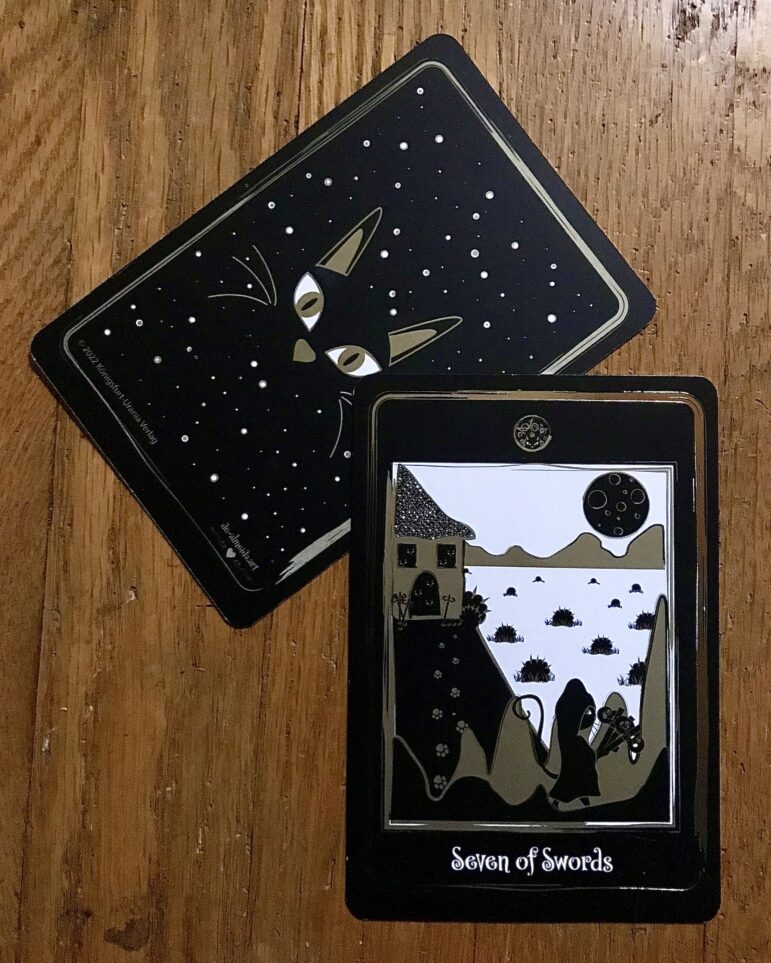 Deck: Golden Black Cat Tarot, by Helena de Almeida, published by AGM-Urania/Konigsfurt-Urania Verlog GmbH.