

Doula Regulation
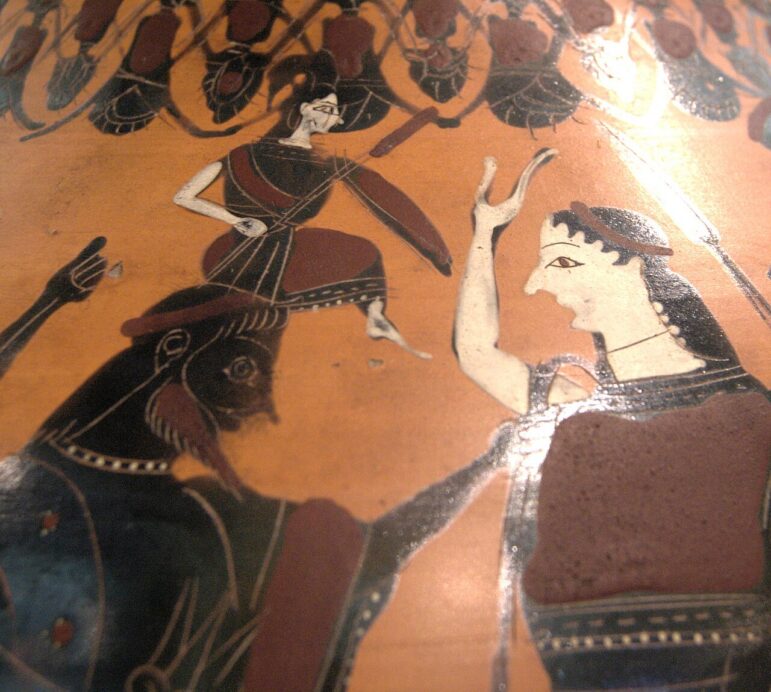
Amphora depicting the birth of Athena from the head of Zeus, with Eileithyia, the goddess of childbirth, on the right. [public domain
The role of doulas has gained increased attention in recent years, with Pagan publications and authors noting the importance of the doula’s work in supporting holistic and spiritually grounded birth practices. Doulas are nonclinical trained professionals who provide physical, emotional, and informational support during pregnancy, childbirth, and the postpartum period.
Unlike midwives, doulas do not provide clinical care.
In the United States, doula regulation is increasingly taking shape through Medicaid reimbursement and insurer requirements rather than through a single national licensing system.In the United States, regulation of doulas is emerging through a “regulation-by-reimbursement” model rather than a unified national licensing system. Because doulas are non-clinical professionals, they are not subject to the same licensing standards as physicians or midwives. However, the landscape is evolving as states and insurers increasingly integrate doula services into coverage frameworks.
As of early 2026, more than 26 states and Washington, D.C. provide Medicaid coverage for doula services. To ensure quality and reduce fraud, states have implemented requirements such as registration with state boards, certification through approved training programs, and, in some cases, background checks. States including Arizona, Virginia, and Oregon require registries, while Maryland and Michigan mandate certification through designated organizations.
Private insurers are beginning to mirror these standards. Some now offer nationwide doula benefits, requiring certification for reimbursement and effectively establishing a baseline for participation in insured care.
Legislative trends include the creation of Doula Advisory Committees and the development of standardized training expectations, often requiring coursework, supervised births, and training in privacy, CPR, and cultural competency.
Brazil is taking regulation a step further.
Agência Brasil, a Brazilian public news agency, reported that President Luiz Inácio Lula da Silva signed into law on Wednesday, April 8, a bill regulating the profession of doulas. The legislation had been approved by the Chamber of Deputies after previously passing through the Senate.
The new federal regulation defines the role of doulas across pregnancy, labor, and the postpartum period. During pregnancy, doulas may help women access reliable, evidence-based information and encourage engagement with prenatal care services. Health Minister Alexandre Padilha described the law as addressing a longstanding demand and emphasized its potential to reduce obstetric violence and reduce cesarean rates, citing studies linking doula support to improved birth outcomes.
The law guarantees that a doula chosen by the pregnant woman may be present throughout labor and immediately after birth in both public and private healthcare settings, without affecting the existing right to a companion. This applies to all childbirth scenarios, including complications and miscarriage.
To practice, doulas must hold a high school diploma and complete at least 120 hours of certified training, with foreign credentials requiring validation. Those already practicing for more than three years may continue with proof of experience.
Doulas may assist with comfort measures such as positioning, breathing techniques, massage, and other non-medical pain relief methods, as well as offer postpartum guidance on newborn care and breastfeeding. However, they are prohibited from performing medical procedures or interfering with clinical care.
Officials framed the law as part of a broader effort to promote more humane, supportive, and patient-centered childbirth experiences for women and families.


Temple of Confucius in Liuzhou, Guangxi [李海斌, Wikimedia Commons, CC 2.0
GUANGDONG PROVINCE, China— Various reports have suggested that Chinese authorities intervened to block a traditional “Parade of the Gods” in Guangdong province, highlighting ongoing tensions between local religious practices and state control over public expressions of belief. According to the report, the parade, part of longstanding folk religious traditions, was halted by police despite its deep cultural roots and community significance. At least one news source, Bitter Winter, a magazine on religious liberty and human rights worldwide, has confirmed the episode.
The “Parade of the Gods” is a ritual procession in which statues or representations of local deities are carried through the streets, often accompanied by music, incense, and communal offerings. These events are not only religious in nature but also serve as important expressions of local identity, continuity, and ancestral reverence. In many parts of southern China, such practices have persisted for generations, blending elements of Daoism, Buddhism, and folk spirituality. Underscoring the spiritual nature of the parade, participants were chanting “Bless the Gods.”
Authorities reportedly cited concerns related to public order and regulatory compliance as justification for stopping the procession. However, the article frames the incident within a broader pattern of increasing restrictions on religious and cultural activities that fall outside state-sanctioned frameworks. Even when such practices are not overtly political, they may be curtailed if they are deemed insufficiently regulated or aligned with official policy.
The interruption of the parade underscores the challenges faced by practitioners of traditional and folk religions in China, where religious expression is permitted only within tightly controlled boundaries. The article suggests that such interventions contribute to the gradual erosion of intangible cultural heritage, as communities are prevented from maintaining public rituals that have historically reinforced social cohesion and spiritual life.
Ultimately, the incident in Guangdong illustrates the ongoing negotiation between local religious traditions and centralized authority, raising concerns about the future of community-based spiritual practices in China.
AHS COVEN?
The teaser image does not confirm specific plot details, but its tone and styling suggest a possible connection to past storylines, including the witches of Coven. This has fueled theories that season 13 may revisit or expand upon that narrative arc, continuing the trend of interconnected storytelling seen in previous seasons.
While official confirmation remains limited, the article emphasizes the excitement surrounding Lange’s rumored involvement and the broader anticipation for a season that could blend nostalgia with new developments. If confirmed, her return would mark a significant milestone for the series and potentially reintroduce one of its most influential characters to a new generation of viewers.
Thank you! Thank you! Thank you!
If you’ve been thinking about supporting The Wild Hunt, now is the time.
👉 This is how you can help:
Tax-Deductible Donation
PayPal
Patreon
As always, our deepest gratitude to everyone who has brought us this far.
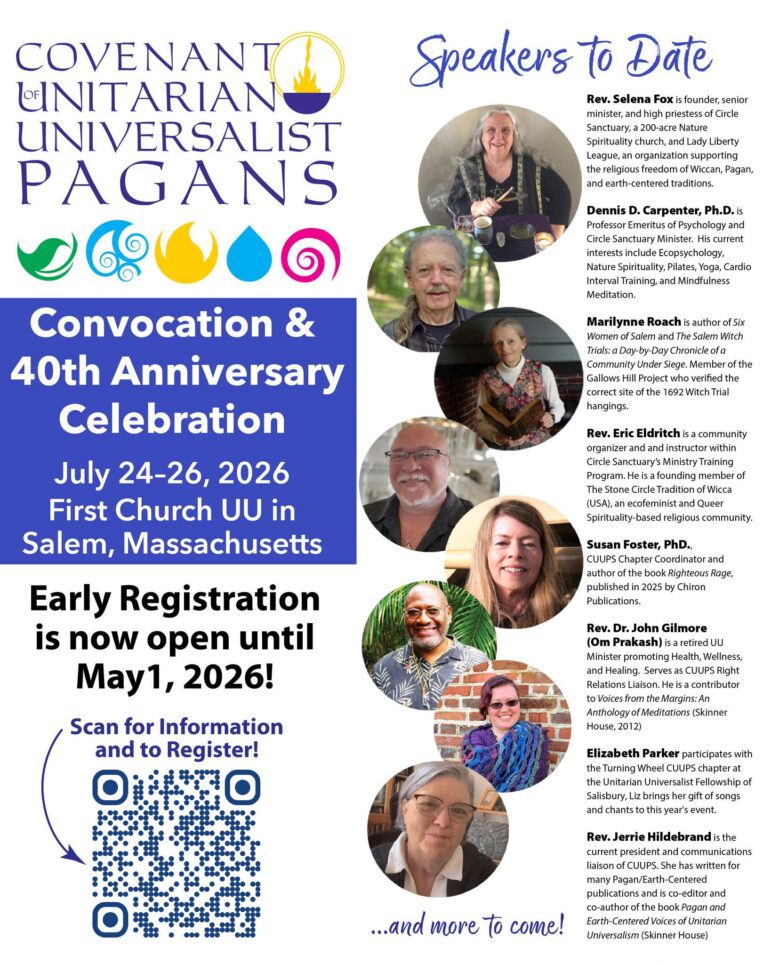
Events and Announcements
Do you have news to share with our community?
Announcements? Festivals? Elevations? Events?
We’ll share it with the community in the
TWH Events Calendar featured on the Front Page.
(Yes, it’s free, we just need your information.)
Let us know at pcn@wildhunt.org
More Events at our new Events Calendar
Tarot of the Week by Star Bustamonte

Deck: Joie de Vivre Tarot, by Paulina Cassidy, published by U.S. Games Systems, Inc.
Card: Ten (10) of Coins
The incoming week holds the promise of reward for properly balancing spiritual and material abundance. There is also likely to be an incentive for counting one’s blessings and seeing the beauty that exists all around. Additionally, recognition of how taking the paths that reflect a core mission and are heartfelt has led to greater joy and abundance is likely to be prominent.
In contrast, being blind to the bounty and opportunities that exist merely because they differ from what was expected is likely to result in missed chances and probable failures. The inability to appreciate whatever advantages are held, as well as those who have helped to pave a way forward, is liable to be a precursor to the loss of those resources.
👉 Don’t forget: supporting The Wild Hunt helps sustain independent Pagan journalism.
Tax-Deductible Donation
PayPal
Patreon
As always, our deepest gratitude to everyone who has brought us this far.
Monrachs!
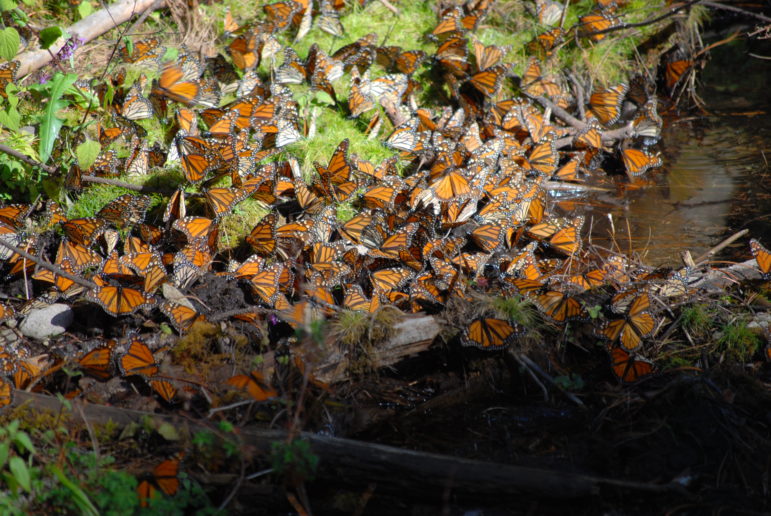
Monarch butterflies along the bank of a stream at the Cerro Prieto Sanctuary in the Sierra Chincua, Michoacan – Image credit: AlejandroLinaresGarcia – CC BY-SA 4.0, https://commons.wikimedia.org/w/index.php?curid=12521923
In some positive environmental news, the population of monarch butterflies in Mexico rose significantly this winter, increasing by 64% compared with the same period in 2025, offering a rare sign of recovery for a species considered at risk of extinction. According to figures released by World Wildlife Fund (WWF) Mexico, monarchs occupied 2.93 hectares (7.24 acres) of forest, up from 1.79 hectares (4.42 acres) the previous winter—the largest coverage recorded since 2018.
“The monarch butterfly is the symbol of the trilateral relationship between Mexico, the United States, and Canada,” said Alicia Bárcena Ibarra at a news conference. “Its conservation is a collective commitment we must maintain for the future.”
Each fall, millions of monarchs migrate nearly 3,000 miles from Canada through the United States to overwinter in Mexico’s forests. However, their numbers have declined sharply over the past three decades due to deforestation, climate change, and widespread herbicide use, which has reduced milkweed—the only food source for monarch caterpillars.
In response to these declines, conservationists have pushed for stronger protections. “It would be unforgivable for [the monarch’s] epic migrations to collapse because of political cowardice on enacting range-wide protections for them,” said Tierra Curry. “Even the Trump administration has to think twice about letting these iconic butterflies collapse toward oblivion.”
Despite ongoing threats, including illegal logging tied to organized crime, conservation efforts have reduced forest loss. “One of the greatest achievements of this work is that illegal logging in the core zone of the Monarch Butterfly Biosphere Reserve has been virtually eradicated since 2008,” said María José Villanueva, noting that critical overwintering habitats are increasingly protected.
The Wild Hunt is not responsible for links to external content.
To join a conversation on this post:
Visit our The Wild Hunt subreddit! Point your favorite browser to https://www.reddit.com/r/The_Wild_Hunt_News/, then click “JOIN”. Make sure to click the bell, too, to be notified of new articles posted to our subreddit.