
WASHINGTON — On March 31, 2026, a rarely convened federal panel with the authority to override endangered species protections voted to exempt oil and gas drilling in the Gulf of Mexico from key provisions of the Endangered Species Act, a move drawing sharp criticism from environmental groups and raising concerns about already imperiled marine life. For many in nature-centered traditions, the potential loss of species and ecosystems is not only an environmental issue but also a spiritual one, touching on deeply held beliefs about the sanctity and interdependence of life.
The decision came from the Endangered Species Committee, often referred to as the “God Squad” for its power to permit actions that could lead to species extinction. The committee voted unanimously during a brief, closed-door meeting at the Department of the Interior, marking only the third time in more than five decades that it has exercised this authority.
The exemption was requested by Defense Secretary Pete Hegseth, who argued that environmental restrictions have hindered domestic energy production in the Gulf. Administration officials framed the move as a matter of national security, citing global instability and the need to maintain reliable domestic oil supplies.
“When development in the Gulf is chilled, we are prevented from producing the energy we need as a country,” Hegseth said, pointing to geopolitical tensions affecting global oil routes as reinforcing the urgency of increased domestic production.
The Gulf of Mexico accounts for roughly 15 percent of U.S. crude oil output, making it central to the nation’s energy infrastructure. Supporters of the exemption say it provides regulatory clarity and ensures continued offshore development while maintaining a framework for environmental consideration.
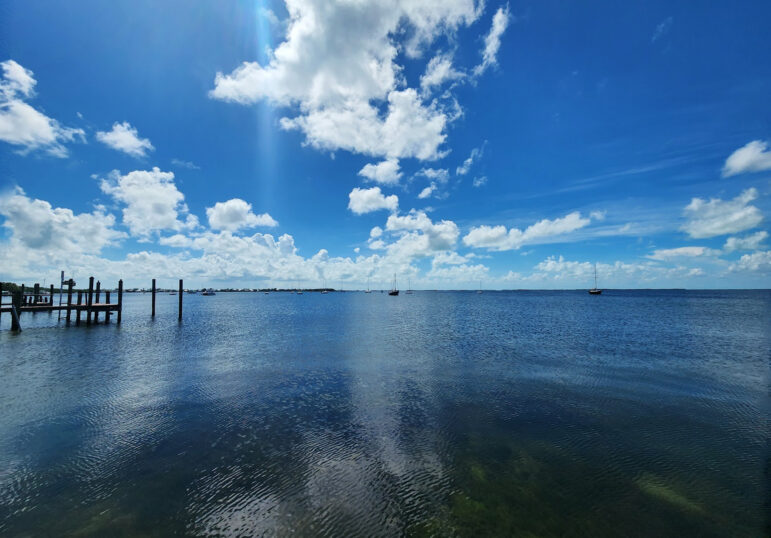
The Gulf of Mexico from the Florida Keys [photo credit: S. Ciotti
The Endangered Species Act, enacted in 1973, has long required federal agencies to ensure that their actions do not jeopardize protected species or destroy critical habitat.
However, conservationists and environmental law experts strongly dispute the administration’s rationale, arguing there is little evidence the law has meaningfully restricted oil production in the Gulf. Instead, they warn that weakening protections could have irreversible ecological consequences.
At the center of these concerns is Rice’s whale, one of the most endangered marine mammals in the world, with a population estimated at just over 50 individuals. Found only in the Gulf of Mexico, the species faces heightened risk from vessel traffic and industrial activity. Federal scientists previously concluded that ongoing oil and gas operations could drive the whale to extinction and recommended mitigation measures, such as reduced vessel speeds, that will no longer apply under the exemption.
Environmental groups have already filed legal challenges. A coalition including Healthy Gulf, Turtle Island Restoration Network, Friends of the Earth, and Sierra Club, represented by Earthjustice, has sued in federal court, arguing that the use of the national security exemption bypasses the law’s required review process.
The Center for Biological Diversity has filed a separate lawsuit alleging procedural violations, including a lack of transparency around how the exemption request was initiated.
“This is nonsensical,” said Jane Davenport of Defenders of Wildlife, rejecting claims that the law has impeded oil production. “There is not a shred of evidence” supporting that assertion.
Critics also point to broader ecological risks. The Gulf is home to at least 19 threatened and endangered species, including sea turtles, giant manta rays, and vulnerable coral systems already under stress from climate change and industrial activity. They warn that removing safeguards could accelerate biodiversity loss in a region still recovering from past environmental disasters.
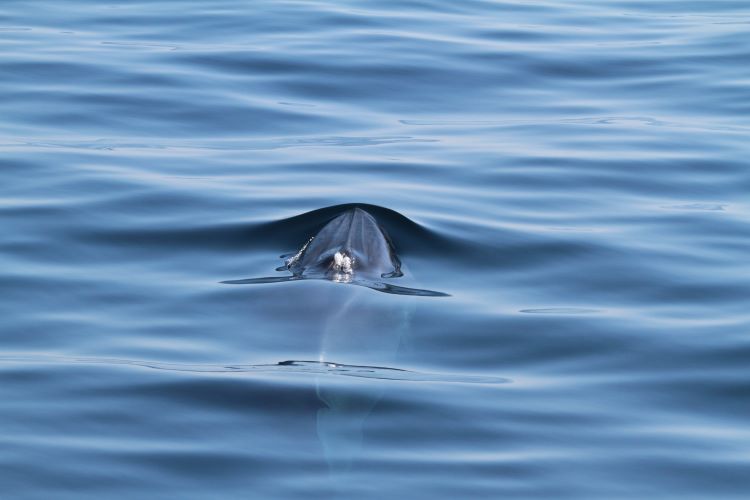
Rice’s whale at the surface showing the three ridges on its rostrum. Credit: NOAA Fisheries/Laura Dias (Permit #14450)
The process behind the decision has also drawn scrutiny. Previous committee deliberations included weeks of scientific testimony, but this meeting reportedly lasted less than 30 minutes and included no outside expert input.
“In a moment of self-made crisis, the Trump administration has decided to manipulate the law to entrench offshore oil drilling in the Gulf for decades to come, even if it destabilizes entire ecosystems that communities and businesses depend on,” said Steve Mashuda, managing attorney for Earthjustice’s Oceans Program.
Martha Collins, executive director of Healthy Gulf, called the decision “an unprecedented act that will have disastrous consequences for the Gulf,” adding that it reflects an effort to sideline public concern over species protection.
The vote comes amid broader efforts by the administration to reshape how environmental laws are implemented, an approach underscored by a separate USDA regulatory action announced one week later.
In a related development, on April 7, 2026, the U.S. Department of Agriculture (USDA) finalized a new rule updating its implementation of the National Environmental Policy Act (NEPA), consolidating multiple agency-specific regulations into a single department-wide framework. The change follows the 2025 rescission of government-wide NEPA regulations by the Council on Environmental Quality, requiring agencies to establish their own procedures.
According to the USDA, the new framework reduces regulatory volume by 66 percent, streamlines environmental reviews, and shortens project timelines while maintaining NEPA’s core requirement that agencies assess environmental impacts before making decisions.
U.S. Secretary of Agriculture Brooke Rollins emphasized efficiency gains, stating, “Since last July, agencies at USDA have shown they can reduce environmental review timelines by up to 80%. These faster, more efficient reviews are saving the Department millions in taxpayer dollars.”
Deputy Secretary Stephen Vaden framed the changes as a return to the law’s original intent. “NEPA is a procedural statute meant to ensure the government considers reasonable environmental analysis before making a final decision,” he said, arguing that it had become “the greatest roadblock” to projects ranging from wildfire prevention to infrastructure development.
Together, the two actions signal a broader shift in federal environmental policy, prioritizing expedited development and energy production while narrowing the practical reach of longstanding environmental protections.
As litigation over the Gulf exemption proceeds, the outcome may set a consequential precedent, not only for offshore drilling, but for how far the federal government can go in subordinating species protection and environmental review to national security and economic priorities.
The Wild Hunt is not responsible for links to external content.
To join a conversation on this post:
Visit our The Wild Hunt subreddit! Point your favorite browser to https://www.reddit.com/r/The_Wild_Hunt_News/, then click “JOIN”. Make sure to click the bell, too, to be notified of new articles posted to our subreddit.