
This article comes to us from High Priestex Mortellus.
Note: This article is written from a first-person perspective as a follow-up to a previous story: Pagan Priestex Prepares for Arrest Rather Than Surrender First Amendment Rights
RUTHERFORDTON, North Carolina – On the evening of December 6th, twelve of us—neighbors, clergy, queer folks, immigrants, Pagans, and allies—gathered on the Rutherford County Courthouse Lawn in an act of civil disobedience. For two weeks, the Town had delivered shifting explanations as to why we couldn’t be present in a traditional public forum during the annual Christmas parade and tree lighting ceremony. At times they described the entire day as unavailable for “additional permitted activities,” effectively creating a date-wide ban on free speech. At stake was more than whether a few of us could hold signs during a parade—it was whether marginalized residents have equal access to public space in rural America. For many of us living in the American South, that question is not academic, but lived.
Midday on December 5th, mere hours before the event, the ACLU of North Carolina sent a letter to Town officials stating in part: “The Supreme Court has held that the government cannot prohibit all expressive activity in a traditional public forum,” reminding the Town that its ordinance—Article VII—appears likely unconstitutional. “The First Amendment does not allow officials to bar peaceful expression simply because an event is taking place nearby.”
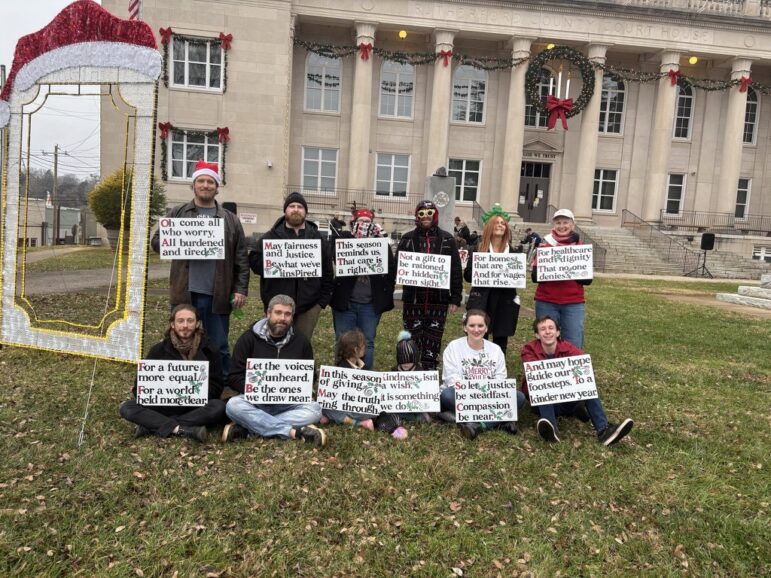
Group Photo of Protesting Team. [Courtesy
Almost simultaneously, I received an email from Chief of Police Clint Ingle urging us to “reconsider,” “because of the dangers that could arise for innocent people, citing a lack of resources “to guarantee safety for two separate gatherings at once.” This framing—that peaceful demonstrators should stay home because others might react poorly—is a classic “heckler’s veto,” long rejected by federal courts. It is the government’s job to protect speakers, not silence them.
We went anyway—but privately, I worried we might not have enough people to make our action meaningful.
Some locals were nervous, unsure that peaceful assembly was allowed without the Town’s “permission.” Many asked whether we “had a permit,” and some declined to join us when we said no—missing the point entirely, and illustrating how unconstitutional policies teach people to treat their own rights as optional.
But the deeper disappointment was who wasn’t there. Our Democratic Party leaders were absent, as were other groups who regularly speak the language of solidarity and inclusion. Perhaps they stayed away out of fear. Perhaps they misunderstood the First Amendment. Or perhaps—and this is the painful part—some institutions still hold a quiet discomfort with Pagans and other marginalized communities, even as they claim to stand with us.

It is hard not to feel that part of the silence was about who raised the alarm. Had these same constitutional concerns been voiced by someone else, might they have been believed? Was it too easily dismissed because the voice speaking it was a witch?
The night before the demonstration, a video of my town-meeting comments circulated on Facebook. Under one share, a local resident asked, simply: “‘Interfaith caucus’ now includes Wiccans?” The question wasn’t hostile, simply incredulous—as though the idea of Pagans participating in civic life was still unimaginable. It was a reminder, gentle, but unmistakable, of why visibility matters.
In the end, twelve of us came—exactly as many as were needed—two of them my own seven-year-old children, bright-cheeked and bundled against the cold. We carried the twelve signs that, together, formed our message—two lines of hope on each board, a poem about dignity, care, justice, and kindness for every family in the winter season.
Oh come, all who worry, all burdened and tired—
May fairness and justice, be what we’ve inspired.
This season reminds us, that care is a right,
not a gift to be rationed, or hidden from sight;
for homes that are safe, and for wages that rise,
for healthcare and dignity, that no one denies;
for a future more equal, for a world held more dear,
Let the voices unheard, be the ones we draw near;
In this season of giving, may the truth still ring through:
Kindness isn’t a wish, it is something we do;
So let justice be steadfast, compassion be near,
and may hope guide our footsteps, to a kinder new year.(Copyright Mortellus, 2025)
The poem did what poetry is meant to do: create space for reflection in the middle of noise. People approached us with hard expressions, then visibly softened as they read. Some called out “Merry Christmas!” expecting we would bristle, and when we smiled and returned the greeting with warmth, their expressions melted into something gentler.
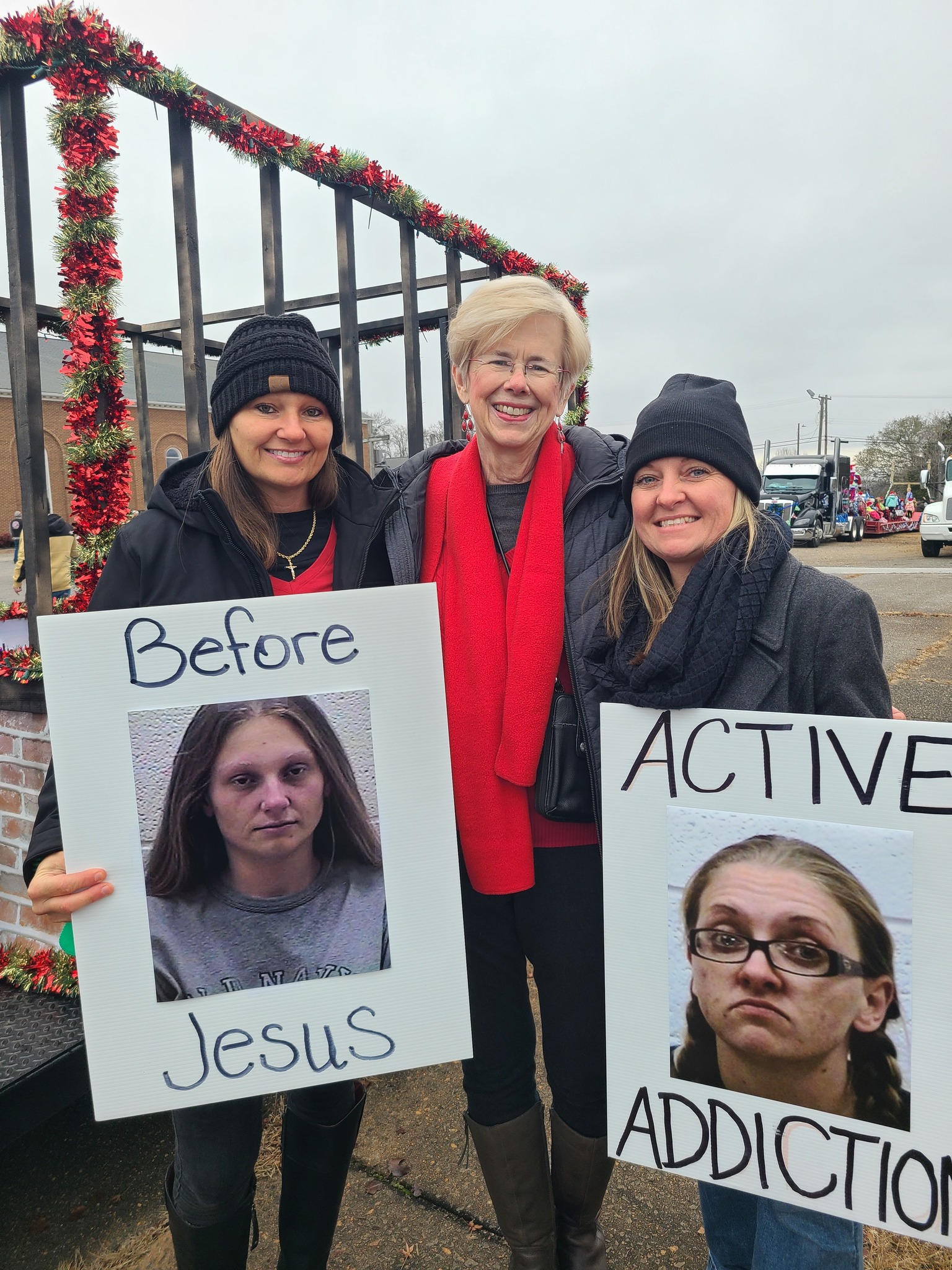
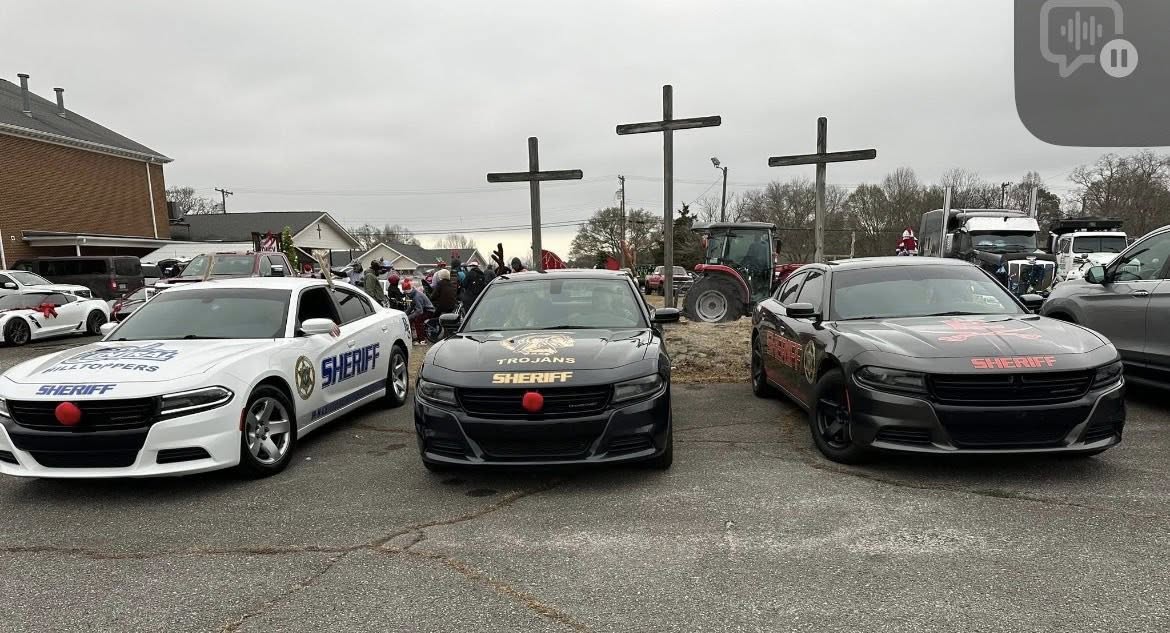
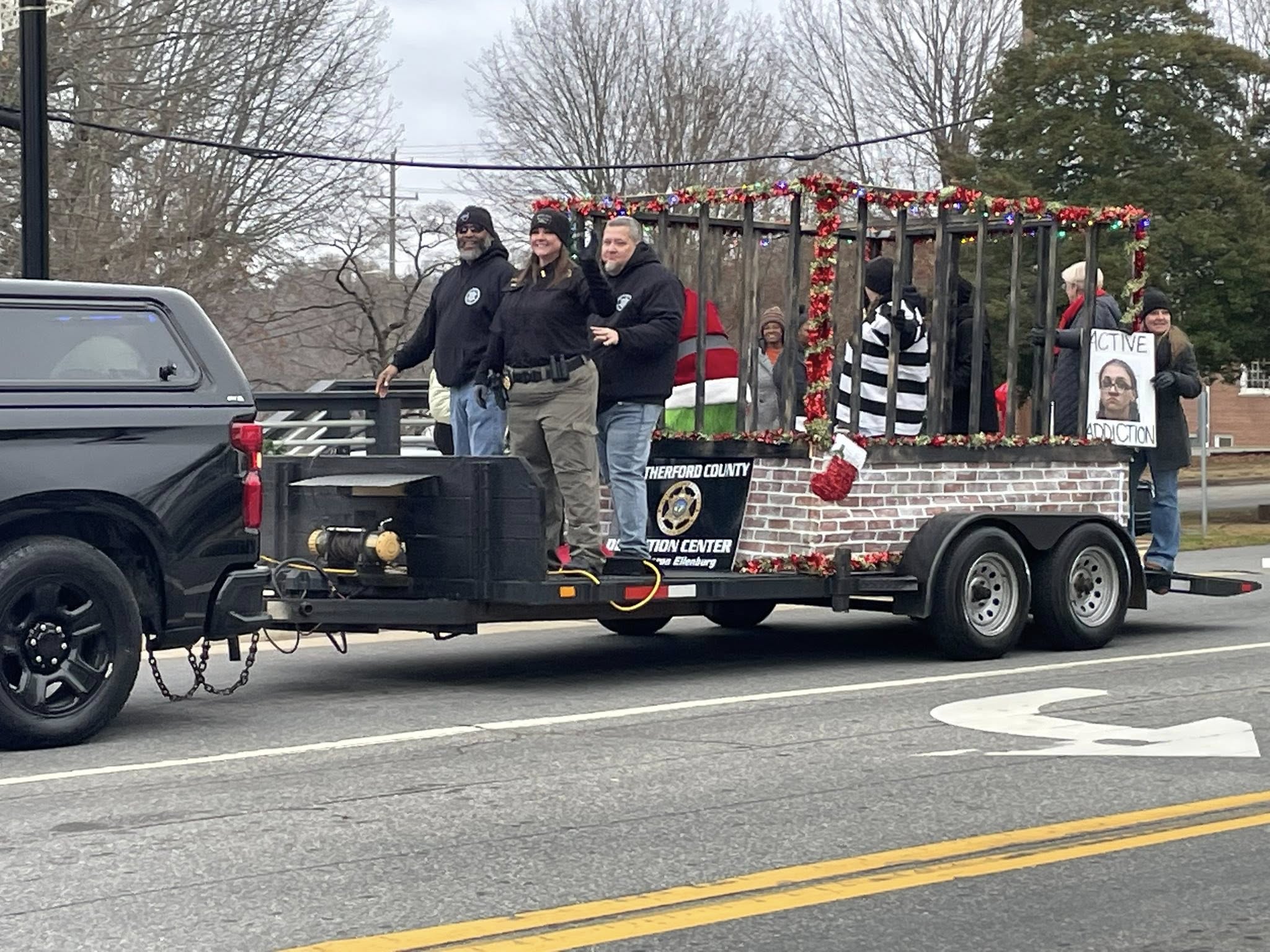
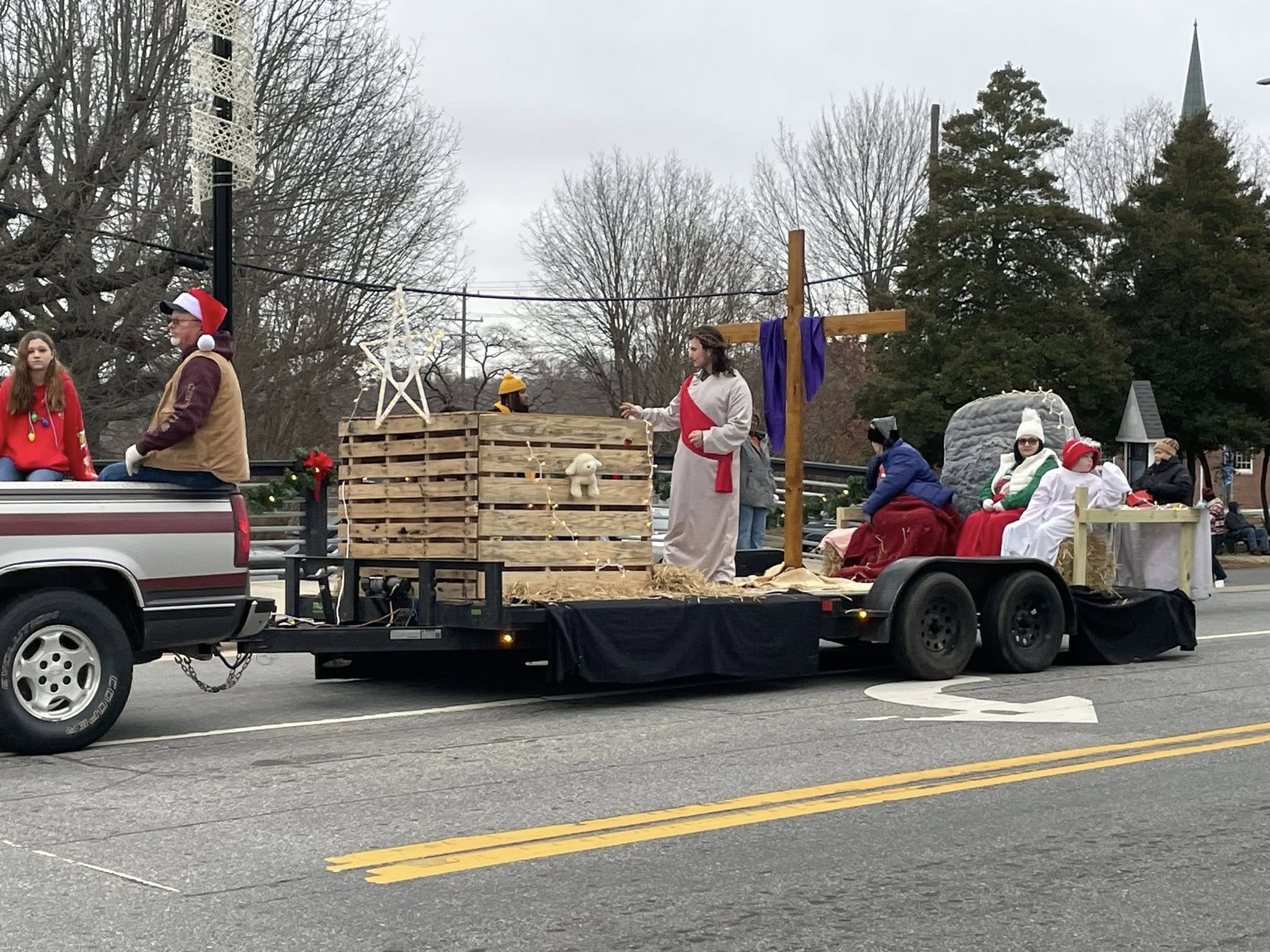
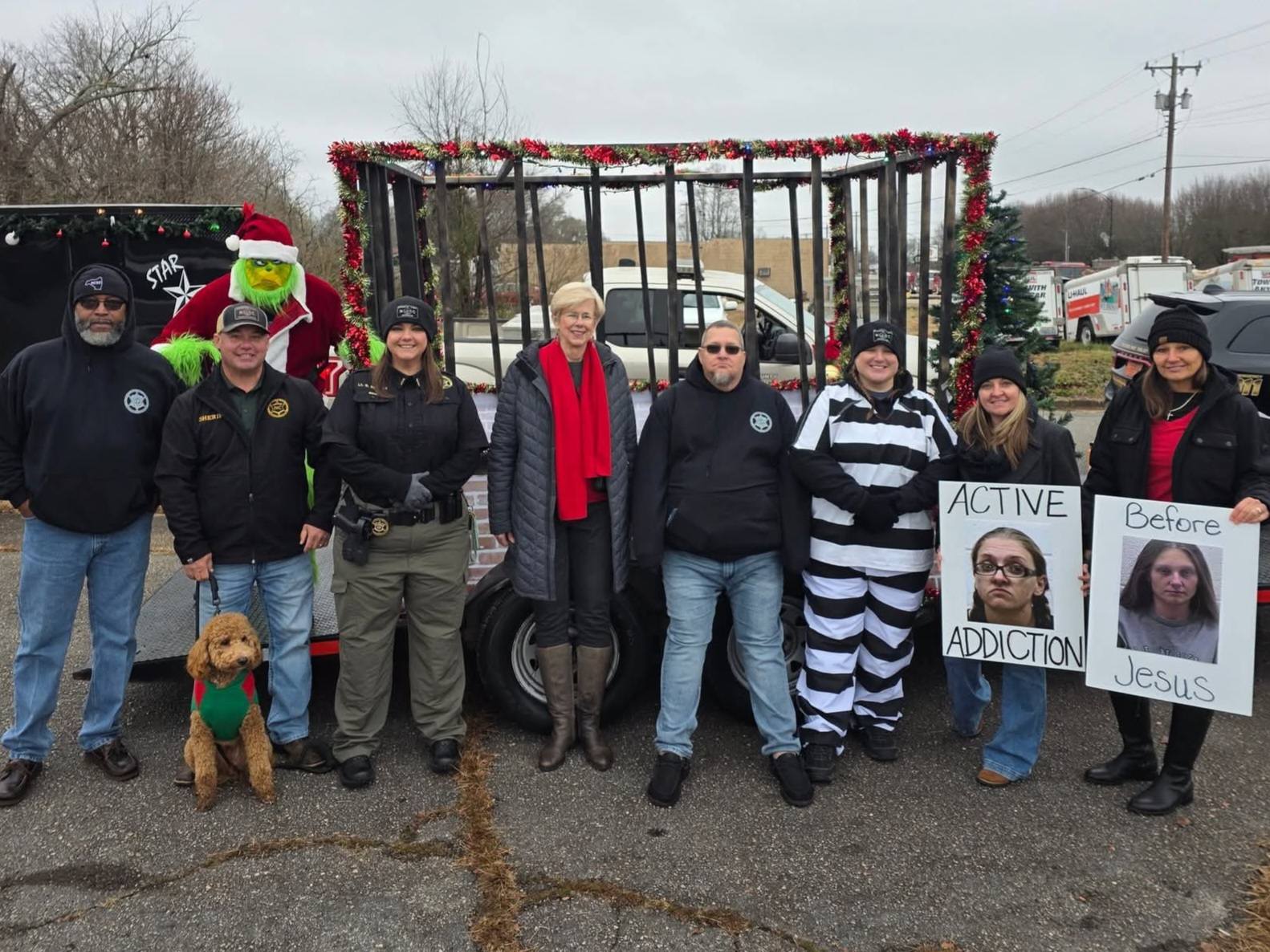
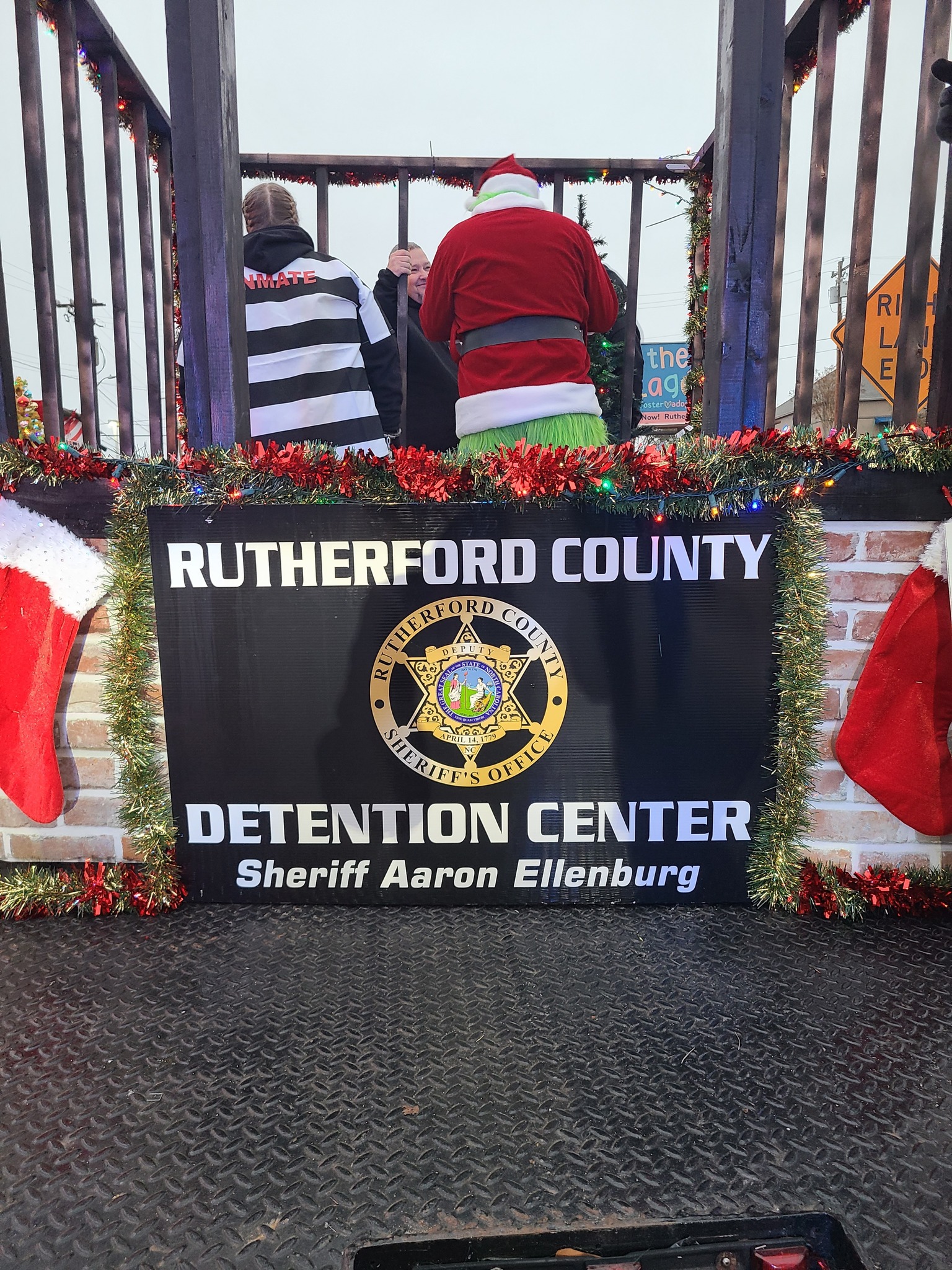
We sat on the courthouse lawn in full view as the parade rolled past, while law enforcement officers from seemingly every department in the county paced the perimeter in militarized gear—watching, but never approaching. Their stark presence contrasted sharply with the cheerful procession: children wobbling along on tinsel-wrapped bicycles; floats for local political candidates; a full crucifixion tableau with a costumed Jesus handing out candy; and the detention center’s float, a rolling jail cell featuring formerly incarcerated residents holding large printouts of their own mugshots labeled “before Jesus.” They smiled dutifully under the watchful gaze of Sheriff Ellenburg. Inside the mock cell, another figure sat in black-and-white stripes, trapped in their festive incarceration—presumably, without Christ.
Not a single order to disperse was issued. No threats. No hostility. The fear the Town had invoked simply did not exist.
We were exactly what we promised we would be: peaceful, orderly, joyful. Present.
When the tree lighting ended and the great deodar cedar (the largest in North Carolina) glowed gold against the night sky, we gathered our signs, embraced one another, and dispersed quietly—twelve neighbors stepping off the lawn as gently as they had stepped onto it. Before leaving, I approached Town Manager Barrick, shook his hand, and thanked him sincerely for the restraint shown that evening. He told me—unprompted—that the Town now intends to revise Article VII to bring it in line with constitutional requirements.
I told him I will be vigilant in ensuring that the promise is kept.
And because this is Appalachia—where a week of sharply worded emails doesn’t erase the fact that we are neighbors—I hugged him. Moments later, he was holding my phone and taking pictures of my children with Santa beneath the glowing tree.
Civil disobedience is not always dramatic. Sometimes it looks like sitting on cold grass with a poem in your hands. Sometimes it looks like refusing to disappear from public space. Sometimes it looks like wishing strangers a Merry Christmas when they expect you to balk. Sometimes it looks like a Pagan parent teaching their children that rights are lived, not granted.
And there’s still work to be done. The ordinance still needs amending. Relationships between marginalized communities and local government still need care and transparency. But for one important night, the Constitution held. No one was removed. No one was silenced. The Courthouse Lawn remained a public forum. And the story we carried—that everyone deserves enough to make it through the winter—had space to be seen.
What This Means for Pagans and Other Marginalized Communities
The Wild Hunt has always chronicled the ways Pagan people navigate civic life—our vulnerabilities, our victories, and the ways power interprets us. We know how fragile access to public space can be—how quickly visibility becomes vulnerability, and how often officials assume their own cultural framework is the neutral one.
This past week reminded me how important it is for minority-faith communities to be visible, legally literate, and steadfast.
Rural Paganism is often invisible not because we are few, but because we’ve been taught to keep our heads down, to avoid conflict, to be grateful for what scraps of tolerance we receive. But we are citizens. Voters. Taxpayers. Clergy. Neighbors. Parents. Teachers. And when we claim our place in public life, the world does not fall apart. Sometimes—like last night—it quietly expands.
Each day may we continue to stand where we need to stand, speak when we need to speak, and protect one another as just as fiercely as this season demands.
A Free Speech Quick Reference Guide
What Is a “Traditional Public Forum”?
Courthouse lawns, sidewalks, parks, and town squares are legally considered traditional public forums—places where people have gathered to speak for centuries. In these spaces, the government’s ability to restrict expression is extremely limited.
Can a Town Require a Permit for Free Speech?
Yes—but only for large, coordinated events, and only if the rules are content-neutral, narrowly tailored, and leave open alternative channels of expression. The government cannot create blanket bans, discretionary veto power, or rules that functionally silence certain groups.
What the Supreme Court Says
Courts have consistently held that the government cannot prohibit all expressive activity in a traditional public forum. Permit schemes must not give officials broad discretion to approve or deny speech. Officials cannot restrict peaceful expression simply because another event is taking place nearby.
What Is a “Heckler’s Veto”?
A “heckler’s veto” occurs when the government restricts a speaker’s expression because others might react badly. Courts reject this approach outright. Officials must protect speakers, not silence them to avoid hypothetical conflict.
Why It Matters for Pagans and Marginalized Communities
When a locality misapplies permit rules, marginalized groups are often the first to lose access to public space. Understanding these protections ensures that minority-faith voices—long silenced through social pressure—are not legally excluded from civic life.
The Wild Hunt is not responsible for links to external content.
To join a conversation on this post:
Visit our The Wild Hunt subreddit! Point your favorite browser to https://www.reddit.com/r/The_Wild_Hunt_News/, then click “JOIN”. Make sure to click the bell, too, to be notified of new articles posted to our subreddit.