
Winds of Patagonia and Teeth of Sobek Lend Name to a Hypercarnivore
 Seventy million years ago, in what is now southern Argentina, a fearsome predator prowled the Cretaceous landscape. Scientists have revealed a new species of crocodile-like reptile, Kostensuchus atrox, a hypercarnivore that likely hunted dinosaurs and other large prey.
The fossil was discovered in 2020 near El Calafate in southern Patagonia’s Chorrillo Formation. Preserved inside a large stone concretion, the remains include a beautifully intact skull, jaws, and part of the skeleton. At full size, the creature stretched about 11.5 feet (3.5 meters) and weighed roughly 550 pounds (250 kilograms).
The discovery as announced on August 27. 2024 in the scientific journal PLOS One.
The name Kostensuchus atrox carries layers of meaning: “Kosten” refers to the powerful Patagonian wind, while “Suchus” recalls the Egyptian crocodile-headed god Sobek. Together, the name signals both the environment where the predator lived and its ferocious character.
Unlike today’s crocodiles, K. atrox belonged to a now-extinct group called Peirosauridae, relatives of modern crocs that evolved in the southern continents. Its broad snout, blade-like teeth, and muscular forelimbs point to a diet of mostly meat—more than 70% of what it ate. Scientists say its anatomy shows it was well-equipped to take down sizeable prey, including dinosaurs that shared its environment.
The discovery is especially important because it provides the most complete picture yet of a large, broad-snouted peirosaurid. Its closest relatives lived far away, such as Colhuehuapisuchus in central Patagonia and Miadanasuchus in Madagascar. That makes K. atrox both the latest-living and southernmost member of its family.
By filling in these evolutionary details, researchers show that crocodyliforms were not just lurking in rivers—they were top predators on land, shaping ecosystems at the very end of the Age of Dinosaurs. And in the process, Sobek gets some love and a nod from science.

Demeter’s Sanctuary Emerges in Aigai

Events and Announcements
More Events at our new Events Calendar
Tarot of the Week by Star Bustamonte
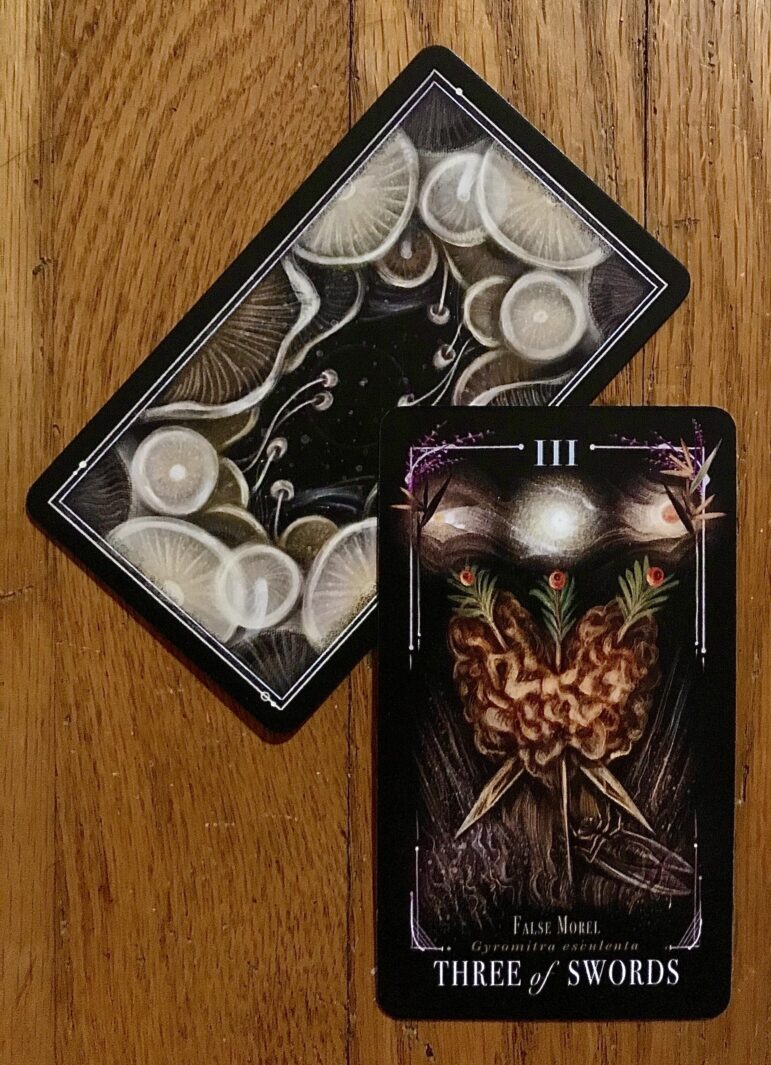 Deck: Midnight Magic: A Tarot Deck of Mushrooms, by Sara Richard, published by Adams Media, an imprint of Simon and Schuster, Inc.
Card: Three (3) of Swords – False Morel – Gyromitra esculenta
This week is liable to offer up situations that are difficult and evoke strong emotions centered around grief, heartbreak, and sadness. Expressing feelings of grief, pain, or sorrow can help us to release them, paving the way to accepting the reality of the situation and beginning to move past it. Being mindful of and addressing emotional, mental, and physical health is also indicated.
Conversely, being kind to oneself and applying self-forgiveness could be key in recovering optimism and self-confidence. Letting go of past hurts, grievances, and losses that have had a major impact can open the door for new experiences to be embraced. There may also be opportunities to be a peacemaker, as well as reminders to think before opening one’s mouth.
Rainbow Bridge Remembrance Day
 Social media is filled today with tributes to animals who have crossed the Veil. It makes sense that our pets rejoin the Mighty Dead, and we thought it fitting to honor the day here.
Each year on August 28, pet lovers around the world pause to remember their animal companions on Rainbow Bridge Remembrance Day. The observance was founded in 2015 by author Deborah Barnes, after the loss of her beloved cat, Mr. Jazz. It draws inspiration from the well-known poem The Rainbow Bridge, which imagines a peaceful meadow in the afterlife where pets joyfully await reunion with their humans.
Rainbow Bridge Remembrance Day offers both comfort and community. For many, the grief of losing a pet is profound, and this observance affirms that such loss is real and worthy of reflection. People mark the day in many ways—lighting candles, sharing photos and stories online, creating memory boxes, or visiting a favorite place once shared with their pet. Social media has amplified the observance, with the hashtag #RainbowBridgeRemembranceDay creating a community worldwide.
Hail the Travelers!
The Wild Hunt is not responsible for links to external content.
To join a conversation on this post:
Visit our The Wild Hunt subreddit! Point your favorite browser to https://www.reddit.com/r/The_Wild_Hunt_News/, then click “JOIN”. Make sure to click the bell, too, to be notified of new articles posted to our subreddit.