Pagan Solidarity Alliance Announces Inaugural “State of Pagan Solidarity” Public Briefing Following Religious Liberty Advocacy Efforts
Pagan solidarity logo
The Pagan Solidarity Alliance (PSA) has announced its inaugural State of Pagan Solidarity public briefing, an online event intended to examine recent developments affecting minority-faith religious liberty while introducing a broader vision for cooperation across Pagan traditions.
The briefing follows several weeks of activity by PSA in response to two recent federal developments: the reported consolidation of Department of Defense religious affiliation codes and the work of the Presidential Religious Liberty Commission.
In response to questions surrounding the Department of Defense’s reduction of military religious affiliation designations, PSA submitted multiple Freedom of Information Act (FOIA) requests seeking records explaining how the changes were made, the rationale behind them, and their potential impact on minority-faith service members. The organization also submitted formal comments to the Religious Liberty Commission during its public comment period, urging that any recommendations regarding religious liberty explicitly protect minority religions, Indigenous traditions, non-theistic belief systems, and other communities that have historically received less public attention.
While these initiatives were prompted by specific events, PSA leaders say they also revealed something larger.
“The military issue became the catalyst, but it also demonstrated what can happen when people from many different Pagan traditions work together thoughtfully and professionally,” said M. Rev. Dr. Davron Michaels, a member of the PSA Spiral Council. “This briefing is not simply about one controversy. It is about exploring what our community can accomplish when we combine scholarship, cooperation, and constructive engagement.”
During the public briefing, PSA will discuss the organization’s first year of development, summarize its recent religious-liberty initiatives, explain the current status of its FOIA efforts, and outline a long-term framework built around five areas of work:
- Research
- Education
- Advocacy
- Community
- Leadership
PSA describes the Leadership pillar as a commitment to identifying, mentoring, and empowering the next generation of Pagan leaders so that today’s efforts continue to benefit the community for years to come.
The organization emphasizes that the event is intended to be educational and nonpartisan, welcoming participants from across the Pagan spectrum as well as interfaith allies, veterans, scholars, clergy, and others interested in religious liberty and constructive community building.
The theme of the evening is:
“Many Traditions. One Community. One Future.”
The virtual briefing will be held on Monday, July 20, 2026, at 8:30 p.m. Eastern via Zoom. Registration information is available through the Pagan Solidarity Alliance’s website and social media channels.
The Witch’s Grave
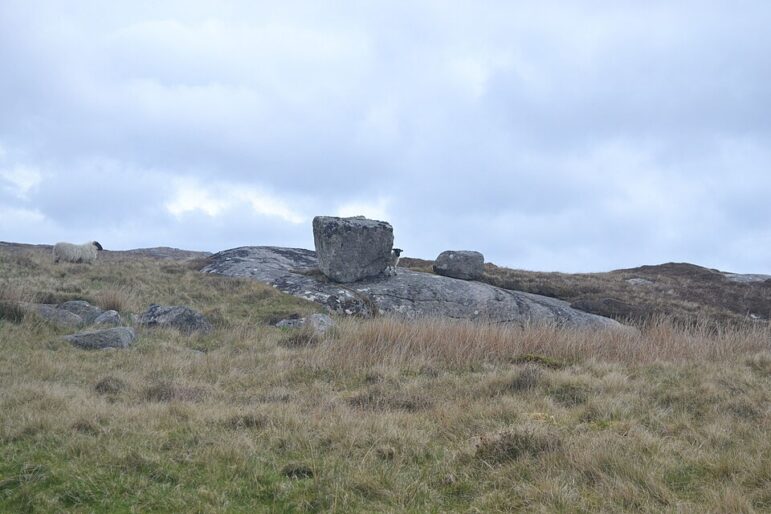
Outcrop, South Uist, Scotland. Photo Credit: Stephen Darlington, CCA SA 2.0
LONDON— Archaeologists investigating the site traditionally known as the “Witch’s Grave” have significantly revised their understanding of a prehistoric monument once thought to be primarily associated with a single burial. The monument is also known as Leac-na-bana-bhuidseach on South Uist Island.
New excavations and modern scientific analyses indicate that the site was part of a much more complex Neolithic ceremonial landscape than previously recognized, dating back thousands of years. The excavation was carried out in coordination with the “Uist Community Archaeology Group” as part of the Scotland’s Earliest Megalithic Monuments Project.
Researchers combined careful excavation with advanced dating techniques and environmental analysis to reconstruct how the monument developed over time. Their findings suggest that what had long been interpreted as an isolated grave was instead connected to a broader ritual enclosure that likely served ceremonial, communal, or symbolic purposes for some of Britain’s earliest farming communities. Evidence from the site—including its layout, construction methods, and surviving archaeological deposits—points to repeated activity and changing uses over many generations rather than a single funerary event.
The study also illustrates how local folklore can shape the modern identity of ancient sites. While the name “Witch’s Grave” reflects much later traditions and beliefs, archaeologists emphasize that there is no evidence the monument had any historical connection with witches or witchcraft. Instead, the excavation reveals the constant tendency of communities to reinterpret prehistoric monuments through later cultural and religious narratives.
The excavation demonstrates, nonetheless, how modern archaeological methods continue to transform understanding of Britain’s Neolithic past. By re-evaluating a site long associated with legend, researchers have uncovered new evidence about the ceremonial landscapes created by early farming communities, offering a richer picture of prehistoric ritual practices while disentangling ancient archaeology from centuries of later folklore.

Saving Mangroves
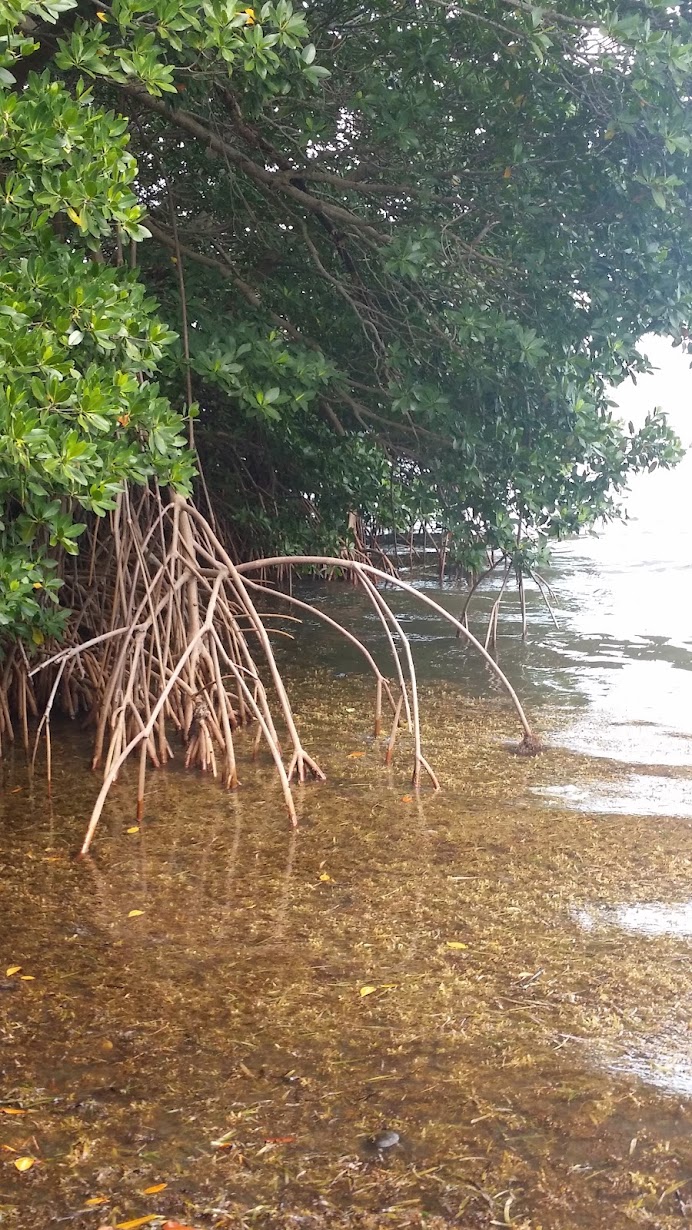
Mangrove in Florida [MJTM
In Benin, the ancient spiritual tradition of Vodun is playing an important role in protecting one of the country’s most threatened ecosystems: its mangrove forests. A new report from Mongabay highlights how local communities, conservation organizations, and government agencies are working together by drawing upon longstanding religious beliefs that regard mangroves as sacred living places rather than simply natural resources.
Mangroves are among the world’s most effective natural carbon sinks, storing up to four times more carbon than terrestrial forests while also protecting coastlines, supporting fisheries, and providing habitat for countless species.
Yet Benin’s mangrove forests have suffered decades of decline due to logging, salt production, agriculture, and expanding urban development. A 2025 study found that the country lost nearly 29% of its mangrove cover between 1995 and 2015.
To address this loss, the conservation organization Eco-Bénin has partnered with Vodun religious leaders to establish sacred protected areas. Before an area is designated, a Fâ priest consults the spirits through traditional divination. Once approved, the site comes under the protection of the Zangbéto, a revered Vodun deity associated with guardianship and communal order. Communities believe violating these sacred areas by cutting trees or fishing invites spiritual consequences, creating a powerful system of local environmental stewardship. Over the past decade, this approach has helped preserve approximately 500 hectares (~1,235 acres) of mangrove habitat.
The new protection of the mangrove forest demonstrates how official recognition of Indigenous and traditional ecological knowledge can positively impact the landscape and conservation efforts. Benin’s government, which formally recognized Vodun as a national religion in 1996, now views these spiritual conservation practices as complementary to conventional environmental policy. Officials argue that combining governmental authority with community-led religious traditions creates stronger, culturally grounded protection for fragile ecosystems. Rather than treating spirituality and conservation as separate spheres, the Benin model demonstrates how traditional religious practices can become effective partners in biodiversity conservation and climate resilience.
Reminder – CUUPS is celebrating its 40th anniversary!
Join them for a vibrant weekend filled with workshops, rituals, storytelling, music, and community as they celebrate four decades of CUUPS – 40 years of spiritual exploration, earth‑centered wisdom, and shared sacred space.
More information on the CUUPS Convocation site!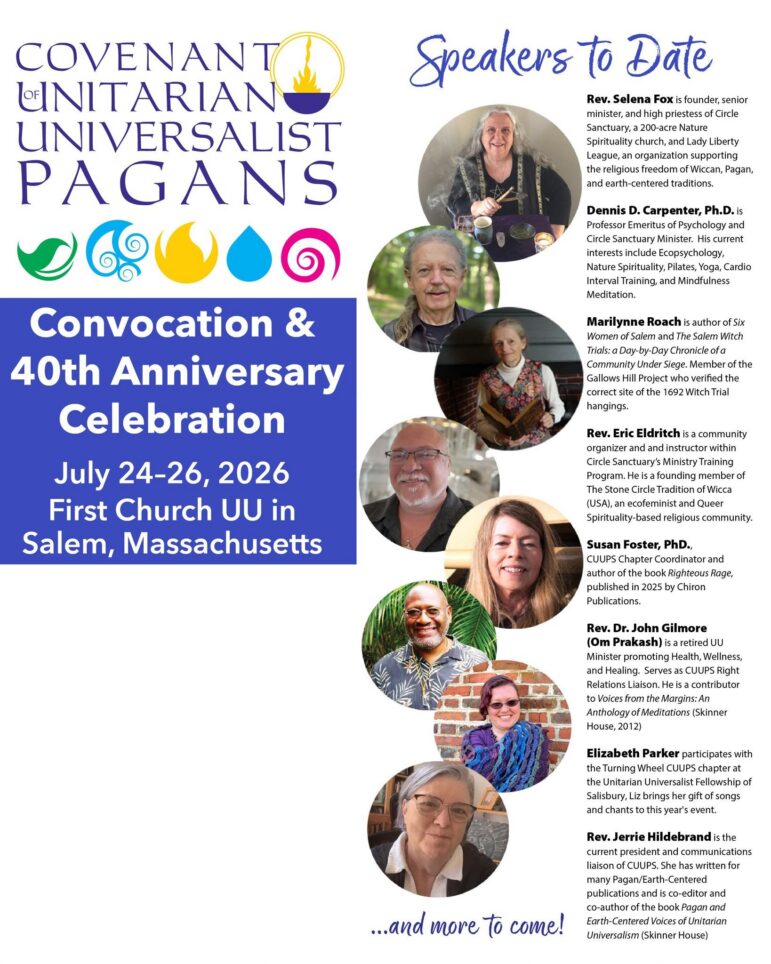
Events and Announcements
More Events at our new Events Calendar
👉 Don’t forget: supporting The Wild Hunt helps sustain independent Pagan journalism.
Tax-Deductible Donation
PayPal
Patreon
As always, our deepest gratitude to everyone who has brought us this far.
Tarot of the Week by Star Bustamonte
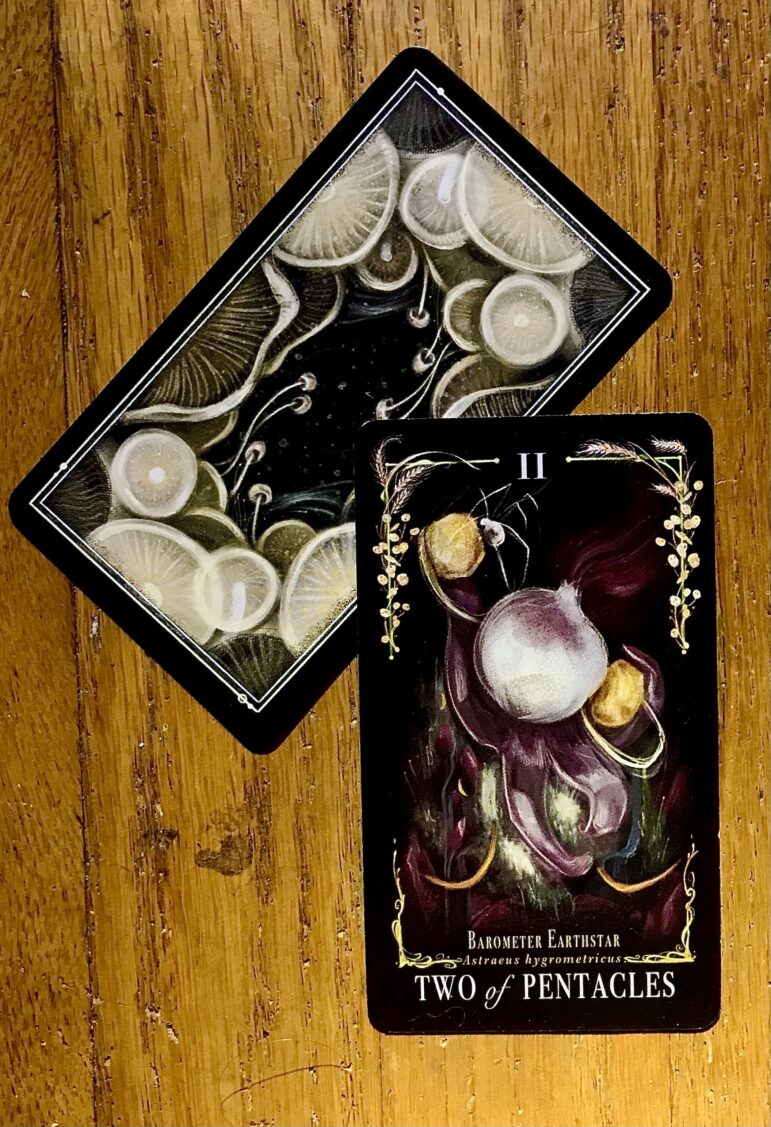 Deck: Midnight Magic: A Tarot Deck of Mushrooms, by Sara Richard, published by Adams Media, an imprint of Simon & Schuster, Inc.
Card: Two (2) of Pentacles – Barometer Earthstar (Astraeus hygrometricus)
The next seven days are liable to have a recurring theme of balance, particularly as it pertains to resources. While finances may be the first thing to spring to mind when considering resources, time, connections, and community have the potential to figure prominently. Strategic choices when it comes to both how resources are allocated, as well as how they are acquired, will likely be significant.
Conversely, being overcommitted and over-extended financially and socially, will take a toll if changes are not made. Taking a step back and prioritizing what is truly important may be a major key in restoring balance. The ability to adapt quickly may be necessary but also the need to recognize that patience may be required when addressing imperative institutional and foundational shifts.
