

Uncovering the Past
Stefano Ciotti contributed to this story.
ROME — One of the most celebrated surviving masterpieces of Etruscan painting has returned to public view in Italy after more than a century and a half in private hands. The National Etruscan Museum of Villa Giulia has inaugurated a new permanent display for the frescoes from the François Tomb, accompanied by the special exhibition The Return of the Heroes, on view through Dec. 31, 2026.
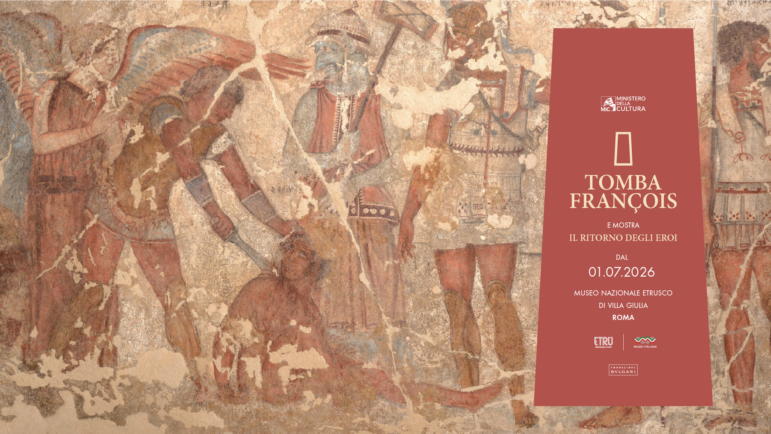
Exhibition Announcement from National Etruscan Museum of Villa Giulia [Courtesy]
The Italian government acquired the fourth-century BCE fresco cycle earlier this year from members of the Torlonia family for approximately €15 million (US$17 million), ending decades of negotiations. The exhibition reunites the paintings with artifacts from the tomb that are now held in museums around the world, offering visitors the most complete reconstruction of the monument since its discovery in 1857.
For Italian archaeologists and historians, the significance of the frescoes extends far beyond their artistic beauty. They preserve one of the few surviving Etruscan interpretations of early Roman history, presenting events from a perspective largely absent from later Latin sources.
“This painting cycle is important not only for its extraordinary artistic quality,” museum officials noted, “but above all because it constitutes a testimony to Etruscan and Roman history intertwined with the traditions of Greek myth.”
The tomb was discovered near the ancient Etruscan city of Vulci in 1857 by archaeologist Alessandro François, for whom it is named. Writing shortly after the discovery in the Bullettino dell’Instituto di Corrispondenza Archeologica, François marveled at the paintings’ exceptional quality.
“Exquisite paintings, each figure accompanied by a clear Etruscan inscription,” he wrote, adding that “their beauty recalls the finest days of Botticelli and Perugino.”
François had spent years seeking permission to excavate at Vulci. After the death of Princess Alexandrine de Bleschamp, widow of Luciano Bonaparte, ownership of the estate passed to Prince Alessandro Torlonia, who authorized the excavation. The decision quickly proved fruitful when François uncovered the richly decorated tomb at the locality known as Ponte Rotto.
The discovery was an international sensation. Yet in 1863 the frescoes were removed from the tomb walls and entered the Torlonia family’s private collection. While the paintings became famous, the tomb itself gradually fell into obscurity until archaeologists relocated it during renewed investigations in the early twentieth century.
The frescoes are considered masterpieces of late Classical painting. Art historians note the painter’s sophisticated use of light, shadow, and three-dimensional modeling, techniques influenced by the celebrated Greek painter Nicias of Athens. One of the finest examples depicts Cassandra desperately attempting to defend herself against Ajax the Lesser after the fall of Troy.
Their greatest importance, however, lies in their historical narrative.
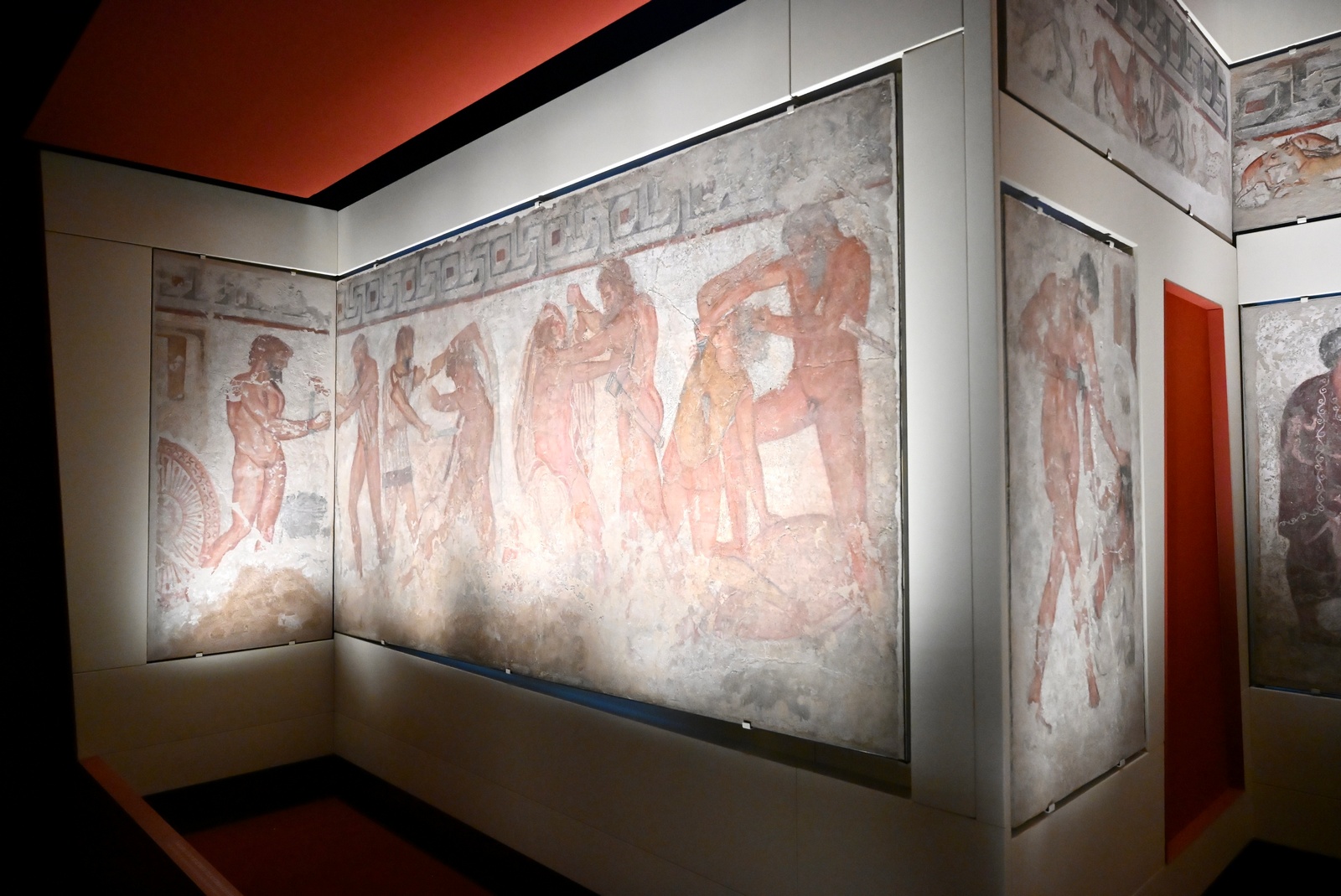
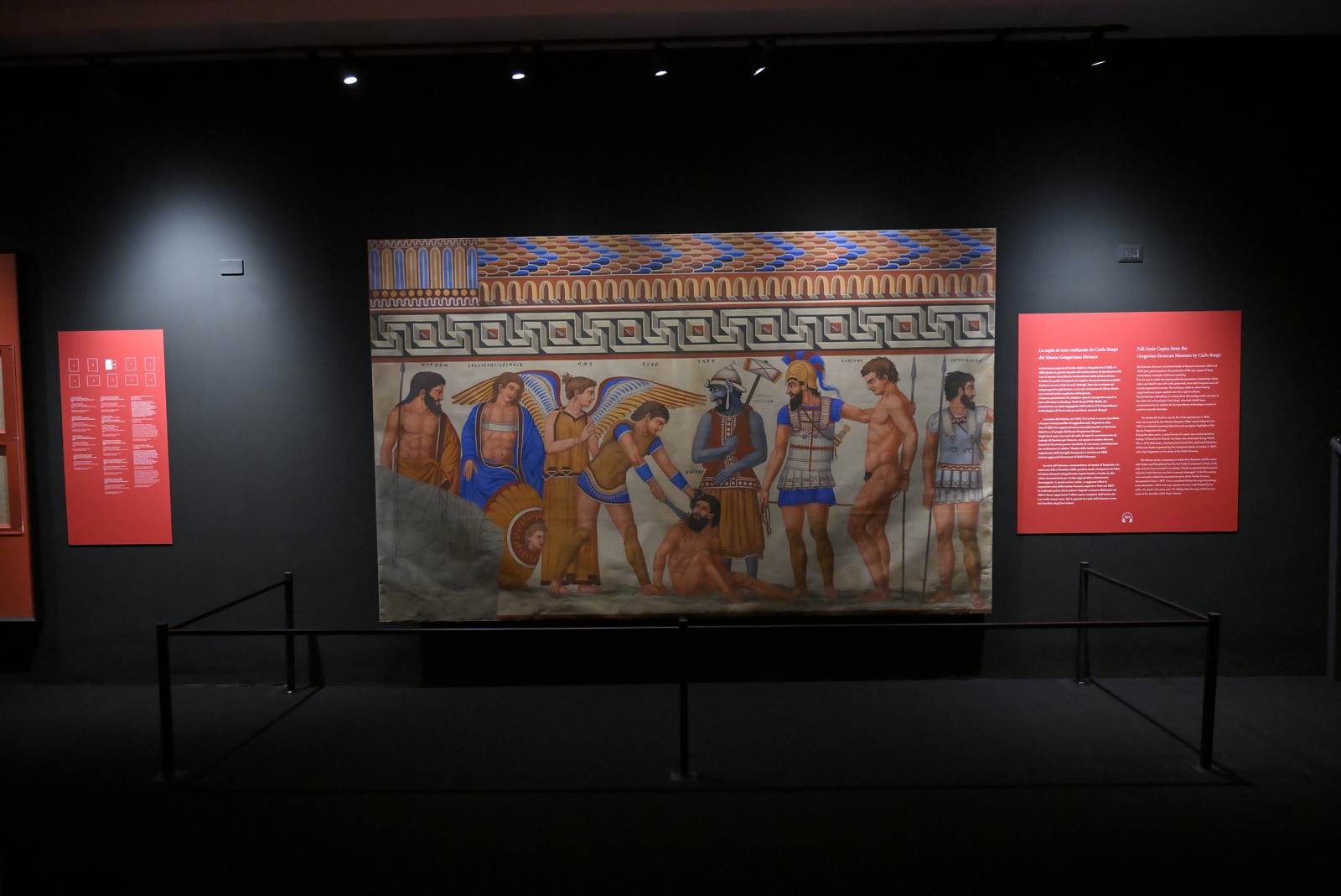
Recreated "Return of Heroes" - Images via Museo Nazionale Etrusco di Villa Giulia [Photo by Valenitna Sensi: Courtesy]
The paintings juxtapose scenes from Greek mythology with episodes from Etruscan history, creating a visual argument about identity, memory, and political legitimacy. Alongside scenes such as Achilles’ sacrifice of Trojan prisoners in honor of Patroclus are depictions of Etruscan heroes battling Roman opponents.
Among the most significant scenes is the killing of the Roman Cneve Tarchunies, generally identified with Tarquinius Priscus, by the Etruscan warrior Marce Camitlnas. Another depicts Mastarna freeing Caelius Vibenna, an episode that the Roman emperor Claudius later identified with the future Roman king Servius Tullius.
These images offer a striking alternative to the traditional Roman narrative.
Rather than portraying the succession from Rome’s fifth king, Tarquinius Priscus, to the sixth, Servius Tullius, as preserved in later Latin histories, the frescoes suggest a violent struggle between the Tarquinians and the people of Vulci for dominance over Rome itself. Archaeologist Filippo Coarelli has argued that these conflicts may even have taken place within the royal palace.
The paintings also appear to express a broader cultural worldview. By pairing victorious Etruscan warriors with heroic episodes from Greek mythology, the patron of the tomb, Vel Saties—whose portrait appears crowned and elaborately dressed within the fresco cycle—seems to identify the people of Vulci with the Greeks and the Romans with the defeated Trojans.
Created around 330 BCE, the paintings were completed only decades before Vulci and the rest of Etruria fell under Roman control. Viewed in that historical context, the cycle preserves what scholars describe as an Etruscan memory of independence at the moment it was slipping away.
At the exhibition’s opening, Italian Culture Minister Alessandro Giuli called the acquisition “a fundamental” recovery of Italy’s cultural heritage, returning one of antiquity’s greatest artistic treasures to public ownership.
Museum director Luana Toniolo described the François Tomb as “one of the greatest masterpieces of antiquity and Etruscan painting.”
“It is a vast book of stone and color,” Toniolo said, “that tells us about families, warriors, gods and heroes—both Etruscans and Greeks—and recounts Greek myths reinterpreted through an Etruscan lens.”
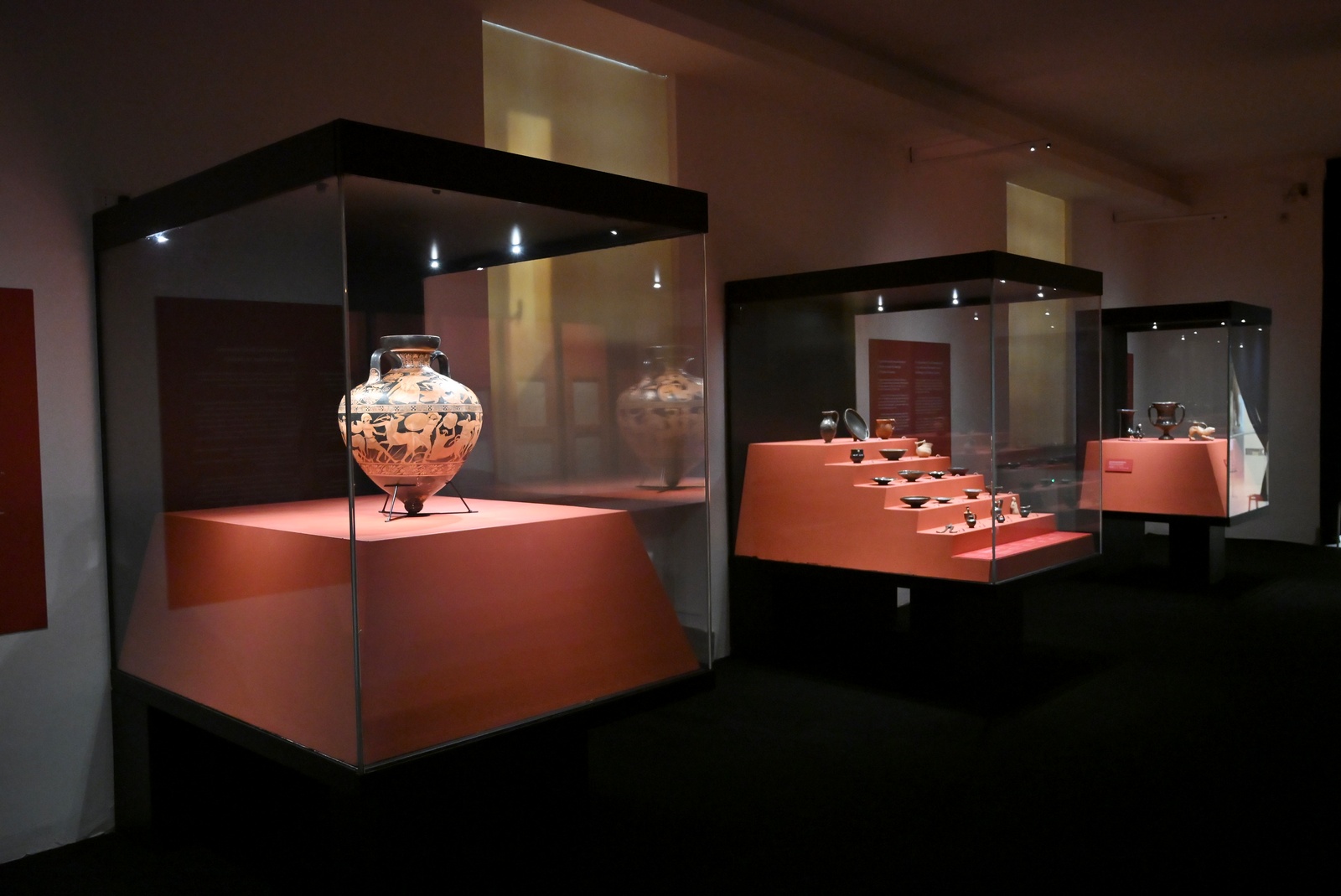
The exhibition also reunites the frescoes with jewelry, painted pottery, and funerary objects excavated from the tomb, many of which have been loaned by museums across Europe and North America.
Together, they restore not only one of the masterpieces of Etruscan art but also a rare voice from a civilization whose own account of its past was largely overshadowed by the rise of Rome.
The Wild Hunt is not responsible for links to external content.
To join a conversation on this post:
Visit our The Wild Hunt subreddit! Point your favorite browser to https://www.reddit.com/r/The_Wild_Hunt_News/, then click “JOIN”. Make sure to click the bell, too, to be notified of new articles posted to our subreddit.