

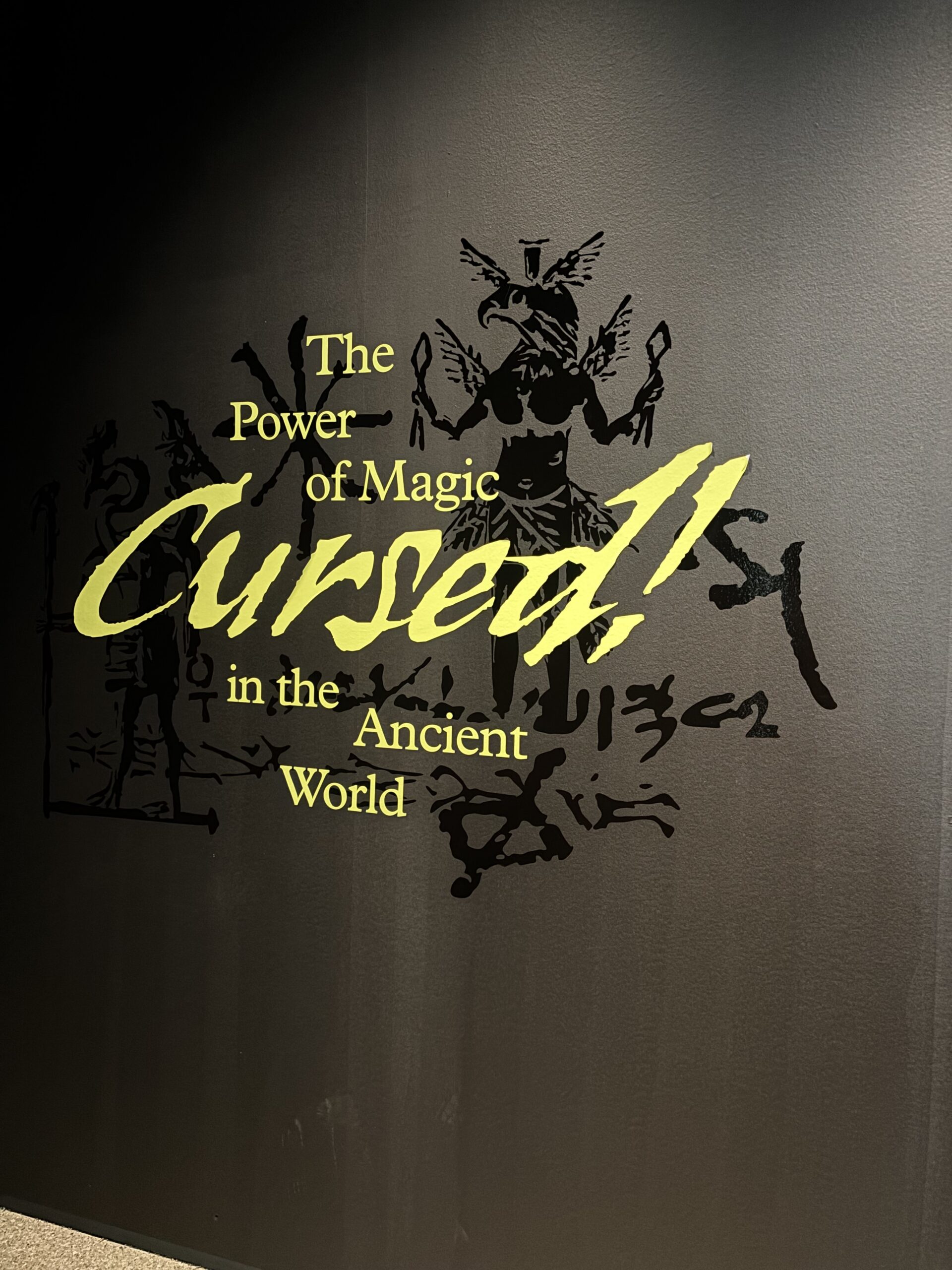
TOLEDO, Ohio – It was a rainy, dreary morning when my partner and I drove from Cleveland to Toledo to experience Cursed! The Power of Magic in the Ancient World exhibit at the Toledo Art Museum.
This exhibition bills itself as one “that examines the central role of magic in ancient societies – its integration into religious traditions in Mesopotamia and Egypt, and its marginal, often illicit status in Greece and Rome – between the years 2000 BCE and 300 CE.”
I was very keen to see what the offerings were, since their focus from the collection name seemed to be on, well, curses.
Housed in the Glass Pavilion, which is across the street from the main museum (currently under sweeping renovation), the exhibition contains everything from amulets to papyrus, statuary to wands, and much more.
While small, contained in two of the gallery rooms in the Glass Pavilion, the displays offered a slice of what life was like in ancient times, given the different reasons people were turning to magic for assistance.
The exhibit starts with Ancient Egypt, which featured an assortment of burial amulets to help guard and guide the person’s spirit as it transitioned to the Afterlife. These included amulets shaped like hearts, a djed pillar, cultures, cobras, papyrus stalks, crocodiles, and more. There was even a preserved amulet shaped like the goddess Taweret, who carried a sa symbol of protection into the afterlife.

Curse figure. Egyptian, Middle Kingdom, 12th Dynasty, 1991–1802 BCE. Clay with red pigment, 13 3/4 × 5 3/4 × 3 5/8 in. (34.8 × 14.5 × 9.3 cm). Musées royaux d’art et d’histoire/Koninklijke Musea voor Kunst en Geschiedenis, E.07442. Photo: Image Studio, Royal Museums of Art and History, Brussels
It was in the Ancient Egyptian section that we saw our first “curse” item – a clay figure that was crafted at the behest of a pharaoh to curse a foreign enemy. “The names of the enemies’ cities and rulers were written on clay figures along with magical spells,” reads the figure’s display. “The figures were then smashed to symbolically overcome the opponent.”
We then traveled to Ancient Mesopotamia, where the “headliner” item is on display: an amulet of the demon Pazuzu. Pazuzu was a demon, yes, but he was feared by other demons. As such, he was often called upon for protection against them.
Other items in the Mesopotamian area included a tablet containing a ritual to counteract harmful witchcraft. Which, obviously, implies that the people were okay with beneficial witchcraft some of the time. As with the Egyptian clay carving, the ritual involved engraving the name(s) of those participating in the deeds onto clay tablets, which were smashed to break their power. The item on display is a broken tablet found in Nineveh, put back together by archaeologists.

Mask of Humbaba. Old Babylonian, 2000–1700 BCE. Fired clay, 3 1/8 × 2 3/4 × 1 1/8 in. (8 × 7 × 2.8 cm). The British Museum, 1931,1010.458. Photo © The Trustees of the British Museum
There were plenty of magical and protection amulets on display as well. The craftsmanship on these was astounding. To imagine that the amulets were crafted with only the tools available around 900BCE and to have the level of detail that they carry in their inscriptions, the makers were obviously master craftspeople. One such amulet was to protect an expectant mother from Lamashtu, a demon who harmed pregnant women and babies. While the front of the piece is impressive in its design, it was the back that truly engaged me. On the obsidian amulet was a lengthy inscription in cuneiform which commanded Lamashtu to stay away. The skill that went into this piece, which was slightly bigger than my thumbnail, was awe inspiring.
The Greek and Roman area was filled with pottery, additional amulets, more clay images, and parts of the Greek Magical Papari. The goddesses Circe and Hekate featured prominently, as did the witch Medea, on the items on display. In this gallery we find a famed Roman Curse Tablet, carved in gypsum.
One of my favorite items in the Greek/Roman area was a coercive love charm that a gentleman named Gaius inscribed to seek the love of four different women! They are all named in the charm, along what he wants to happen to them until they seek him out. The museum notes on this charm conclude with “Although coercive love charms were commonly used in the Roman Empire, naming four women at once is unusually ambitious.”


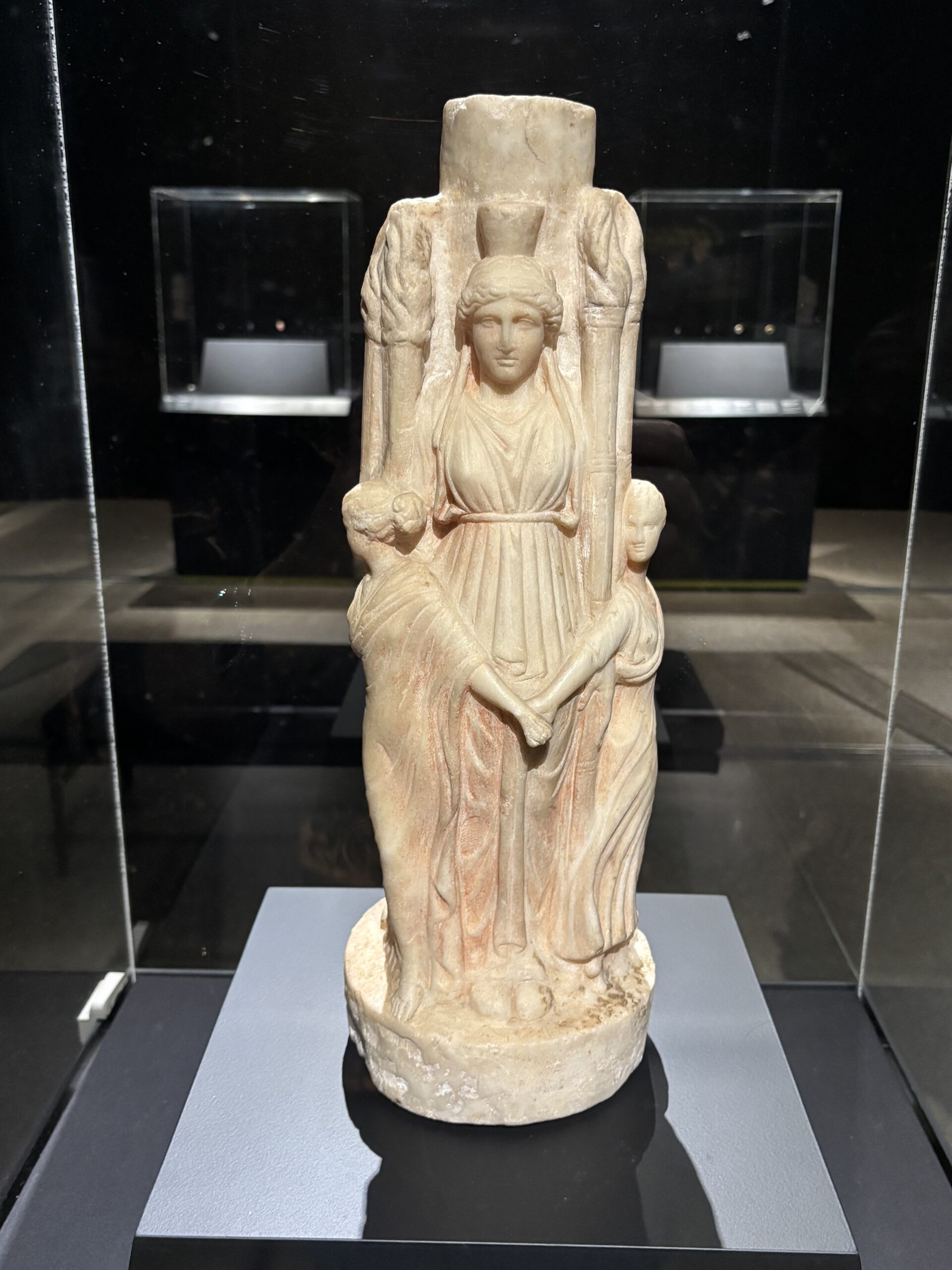


Overall, the exhibit was well worth the drive and expense (it’s $10 for non-members, free to museum members). My main takeaway was how prolific magic seemed to be in day-to-day life for ancient peoples. Gods, demons, and powerful spirits were actively called upon for protection, fertility, love, and guidance into the afterlife. Which seems to resonate with many of the reasons we call on them today.
My other takeaway was how amazingly intricate these ancient items are. The items in the galleries were intricate and precise. Without modern tools, the craftspeople created amulets that could just as easily have been purchased in modern times off Etsy or similar platforms today.
The exhibition is on display until July 5, 2026. If you’re in the Toledo area, I highly recommend that you stop by.
The Wild Hunt is not responsible for links to external content.
To join a conversation on this post:
Visit our The Wild Hunt subreddit! Point your favorite browser to https://www.reddit.com/r/The_Wild_Hunt_News/, then click “JOIN”. Make sure to click the bell, too, to be notified of new articles posted to our subreddit.