

Last year, I reviewed four books published the year before. This was such a positive experience that I decided to give it a go again this year, this time, reviewing four Pagan books published in 2025 (or very late 2024). I hope that you will find in this brew of folklore, myth and cultural approaches some inspiration for your own reading endeavors, and that I might be able to continue this tradition next year as well!
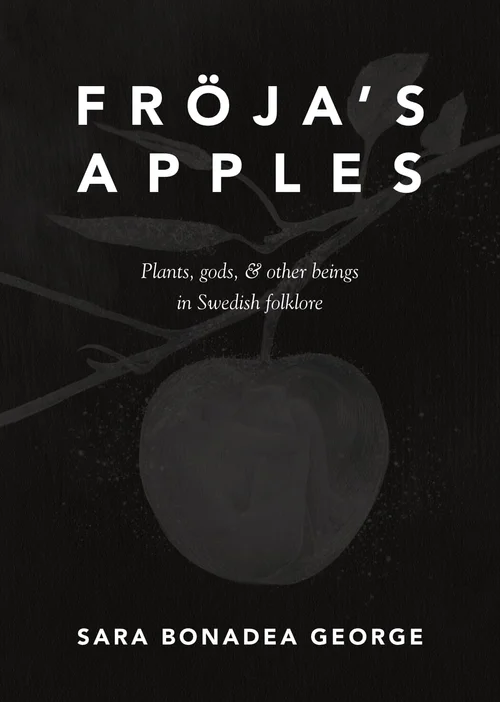
Fröja’s Apples: Plants, Gods, & Other Beings in Swedish Folklore
Sara Bonadea George
Hyldyr
214 pages
Available via Bigcartel (for the US) and Asterism books(for elsewhere).
Having recently moved to an island renowned for its apples and located a stone’s throw from Sweden, I was very much looking forward to this new release by Swedish folklorist and herbalist Sara Bonadea George on the ever-consistent publishing house Hyldyr. Introduced by Norse folklore titan John Lindow (as it happens, my old MA thesis’s external reviewer – the world is definitely a small place!), this volume consists almost entirely of old Swedish folkloric accounts of the supernatural nature of pre-industrial plant lore.
If you, like me, are interested in folklore but are far from an expert, this concise yet straightforward volume will almost certainly manage to catch your attention. Although folkloric concepts are very much introduced and discussed, Bonadea George wisely chose to emphasize her sources above everything else. Perfectly sourced, discussed, and coming with their original Swedish text, the dozens of tales, sayings, and other eerie anecdotes that she carefully tracked down and selected for publication quite literally speak for themselves.
From secret names for medicinal plants, to tales of female tree-bound spirits and invocations to pre-Christian Norse deities, the corpus presented throughout is as mesmerizing as it is diverse. Showcasing a rich spiritual (some could say borderline animist) outlook on life, these stories of orchard rituals, fearful forest fiends and so much more are bound to inspire even the most post-modern urbanite and constitute an engaging introduction to the fascinating world of folklore.
To boot, Bonadea George’s translations are all excellent and retain all of the intricate layers of meaning of the original Swedish in a clear and smooth English, and, as usual with Hyldyr, the reader will find within numerous fitting illustrations, both old and new, elevating the reading experience of Fröja’s Apple above that of a simple academic treatise.
(Disclosure: the author of the present review is a frequent collaborator to Hyldyr and contributed to this volume by locating a high resolution scan of one archival picture featured in this book.)
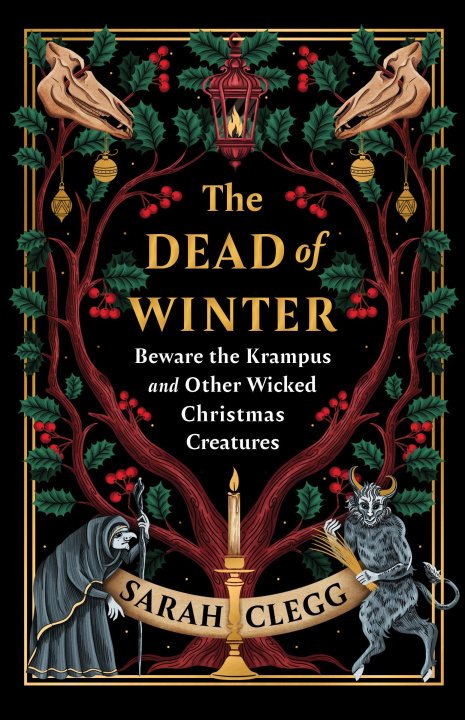
The Dead of Winter: Beware the Krampus and Other Wicked Christmas Creatures
Sarah Clegg
Algonquin Books
193 pages
Available via Hachette
When my wife received this book from her mother as a Yule present, I fully expected it to be little more than normie-friendly fluff. When my better half started to reference some very legitimate scholarship transmitted within its pages including that of the near-legendary Terry Gunnell (as it happens, my old MA thesis’ director – the world is beyond a doubt a small place), I became intrigued, and snatched the book from her warm, very much still alive hands as soon as she was finished with it.
What I found in Sarah Clegg’s The Dead of Winter proved indeed to be far from uninteresting. Structured as a travelogue taking place in half a dozen locales, the author introduces numerous festivals, rituals, feasts, and other cultural peculiarities that have cropped up in the wintry half of the year in Europe. Mixing personal observations and anecdotes with bibliographical sources and light if legitimate scholarship, this book makes for a smooth, entertaining and up to a point instructive read.
If everything you ever thought about Pagan-adjacent winter rituals are glossy pictures of Austrian Krampus marches, you are indeed guaranteed to learn a fair bit about these (and many, many others) figures, their origins, and their typology. Glossing both older popular sources (to trace origins, but also analyze reception processes), and modern academics (to provide some well-needed contextualization), Clegg succeeds in presenting the mind-bogglingly complex network of old winter festivals and their associated menagerie in an alluring fashion.
However, at times, specific topics can feel a bit superficially discussed, and the rather limited bibliography, mixed with the dearth of notes (all too often used to belittle aspects of older practices the author judges to be problematic) do make some portions of the work feel a bit weaker than the rest. Notwithstanding these small issues, The Dead of Winter is a fine read I can very much recommend.
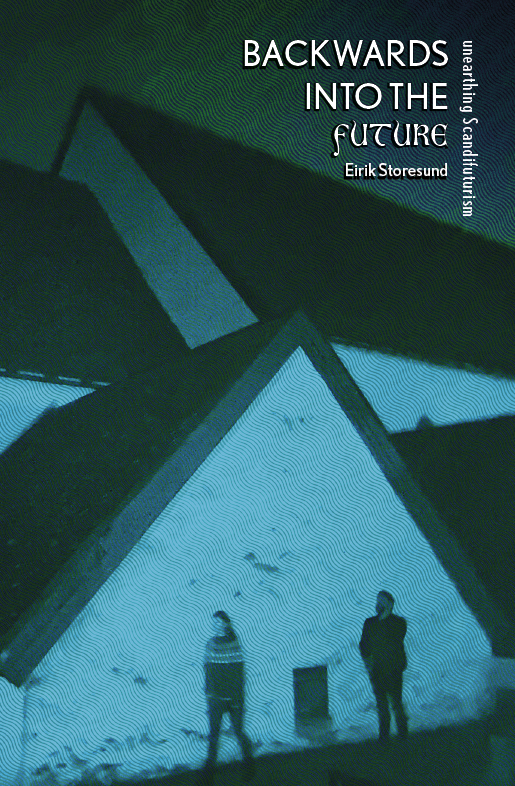
Backwards into the Future: Unearthing Scandifuturism
Eirik Storesund
Troll Cat Press
50 pages
Available via Trollcat Press .
Eirik Storesund, well-known in murky corners of the internet as an irreverent podcaster, cultural agitator, essayist, translator, and conceptual artist of a kind you don’t see much these days, has based a not insignificant amount of his internet & real life presence in the past decade or so advocating for something he dubbed “Scandifuturism.” Now, years and years after coming up with the term and disseminating it piecemeal through his various creative outputs, the mustachioed Norskie finally committed to actually explain what the Hel he meant by it via this brand-new release.
Effectively a manifesto for something no one (least its creator) seems to be sure whether it is a movement, a philosophy, a doctrine, or an unexplainable vibe, Backwards into the Future paradoxically succeeds in putting a lot of meat on the conceptual bones of Scandifuturism while at the same time remaining ambiguous enough as to keep the prospective reader into a sense of near constant elated bewilderment.
Resembling some type of occult magickal work, Scandifuturism is described as “a method for personal and interpersonal intimacy with cultural context” but also as “something murky that emerges as we work with it […] [it] should be trollish and hard to pin down, and always be more of a hunch or a lens or filter than a set of dogmas.” Confused? Congrats, you are halfway there. In a 50 page essay where the main concept at hand is defined in more than 20 different ways, you will find yourself facing what essentially amounts to a manual for cultural, ethnic and spiritual advocacy which, although anchored fjord-deep in its Nordic context, could probably be understood (to the degree that it ought to be comprehended, as opposed to felt and experienced) and utilized by just about anyone on earth candid enough to genuinely be willing to engage with his or her heritage, living culture, and the intersections and interplays thereof. This is an important work that would benefit from a wide readership and has the potential to lit many, many creative sparks. More than highly recommended.
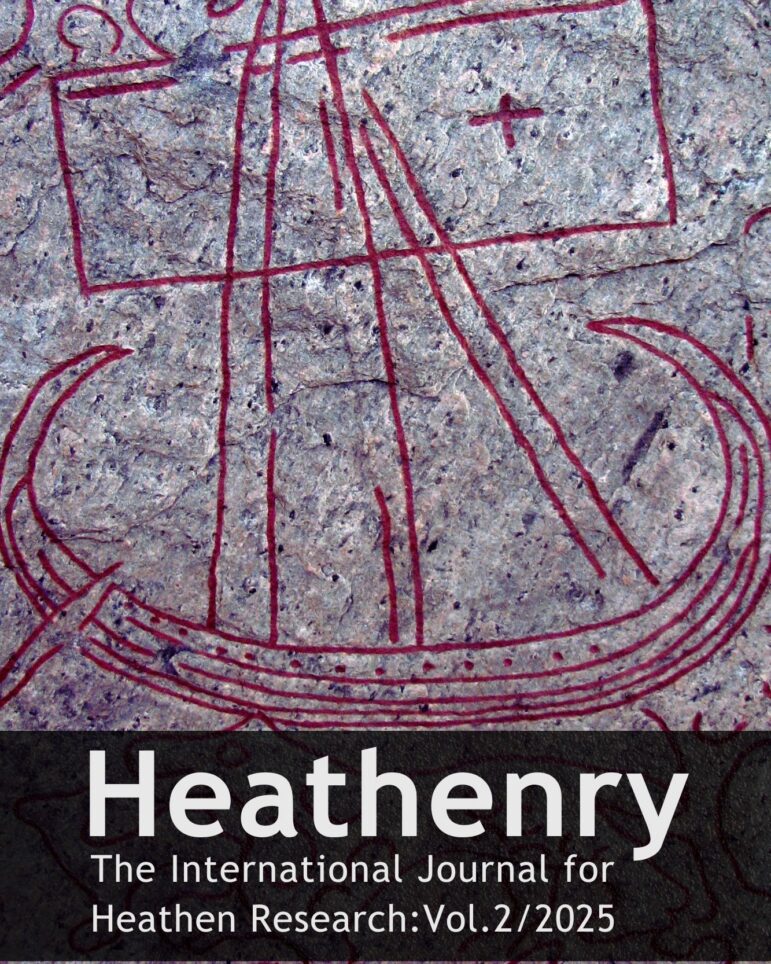
Heathenry: The International Journal for Heathen Research: Volume 2
Sif Brookes & Dan Coultas (eds)
Asatru UK
104 pages
Available via Amazon.
Like clockwork, one year after their first volume, Asatru UK Academic Team released the second volume of their journal for Heathen research. Although Heathenry is not yet on the level of leading and established periodicals dealing with Old Norse topics, there is enough progress to show in this second volume to feel confident in the future growth of the journal and the abilities of the team to go further and farther on their academic quest.
As was the case with volume one, we are here presented with three articles and three book reviews. Although the latter were a welcome addition (despite their shortness) I will here only refer to the former.
The first piece, Þá var vǫllrin óheilagr av heiptarblóði by Joe Windo investigates the sacral aspects of sanctuary peace in pre-Christian Scandinavia. Built on both literary and archeological sources, this article showcases how various concepts related to the ritually-mandated laying down of arms and the sanctuarization of specific structures, locales, and events. Making a hefty use of Swedish sources (Olof Sundvist, but also, aptly the medieval Guta lagen) among others, Windo gives a solid overview of the often overlooked peaceable aspect of Viking-Age society all the while remaining faithful to, and grounded on primary sources. While this topic would be deserving of a much broader study, this article showcases that its author would be well-equipped to take his investigation further.
The second text, What does Athens have to do with Uppsala by Gus Kraus, is significantly more high concept than the preceding piece. Conceptualized as an exploration of Platonic and Neoplatonic ideas concerning the Godhead, myths, and inspiration but applied to a Norse context, the article is unlike pretty much anything I have ever read. In it, I learned a fair bit about a Pagan philosophy I knew previously nothing about but that the author clearly is intimately familiar with. The use and conceptualization of primary Greek and Latin source here is excellent, but its relevance and integration into the Norse material (Largely Hávamál strophes 138-142) remains in my eyes somewhat underdeveloped. This article nevertheless opens a tantalizing avenue for a truly novel analysis of key source material.
The final article, Depicting Norse and Christian Literary References on the Gosforth Cross and Interpretations Behind Them by Sophie D. Everett is as anchored in material evidence as the previous piece was docked in the realm of ideas. As its title indicates, this piece focuses on the famous yet enigmatic northern English Iron Age Gosforth Cross which is famous for its blending of tentatively Christian and Heathen imagery. Despite having been exposed to it in my university years, I never revisited this peculiar artifact and was thus glad to be presented with such a thorough review of its imagery and the various ideas surrounding it. Theorizing that the cross was originally erected by recent Norse converts to the Christian faith who used the lore of their old religion to express theological concepts, this text, although somewhat dryly written at times did a good job at updating me about the various themes of and discussions about this uniquely important witness to Viking Age religions.
The Wild Hunt is not responsible for links to external content.
To join a conversation on this post:
Visit our The Wild Hunt subreddit! Point your favorite browser to https://www.reddit.com/r/The_Wild_Hunt_News/, then click “JOIN”. Make sure to click the bell, too, to be notified of new articles posted to our subreddit.