

Today’s offering is from Cosette Paneque, who we welcome back to the pages of The Wild Hunt. Cosette has a background in traditional journalism and is a Community Manager. She is a long-time Pagan, a priestess in the Georgian Wicca tradition, and a daughter of Ogun. Born in Havana, raised in Miami, she currently resides in Melbourne. She’s interested in community and social justice. Visit her at cosettepaneque.com.
The narrator of Olga Ravn’s The Wax Child is made of beeswax, rose hip, hair, fingernails, dread, and longing. It watches as four Danish women, including its creator Christenze Kruckow, face witchcraft accusations in 1621.
Ravn draws from the Aalborg witch trials in Northern Jutland, part of Denmark’s most brutal period of persecution from 1617 to 1625. Court records document 494 witchcraft executions in Jutland between 1609 and 1687. Ravn has mined letters, ledgers, court records, grimoires, and “black books” dating from 1400 to 1900. The wax child itself, while fictional, draws on the genuine folk magic practice of “wax children” (voksbarn in Danish), dolls used in spell-casting.
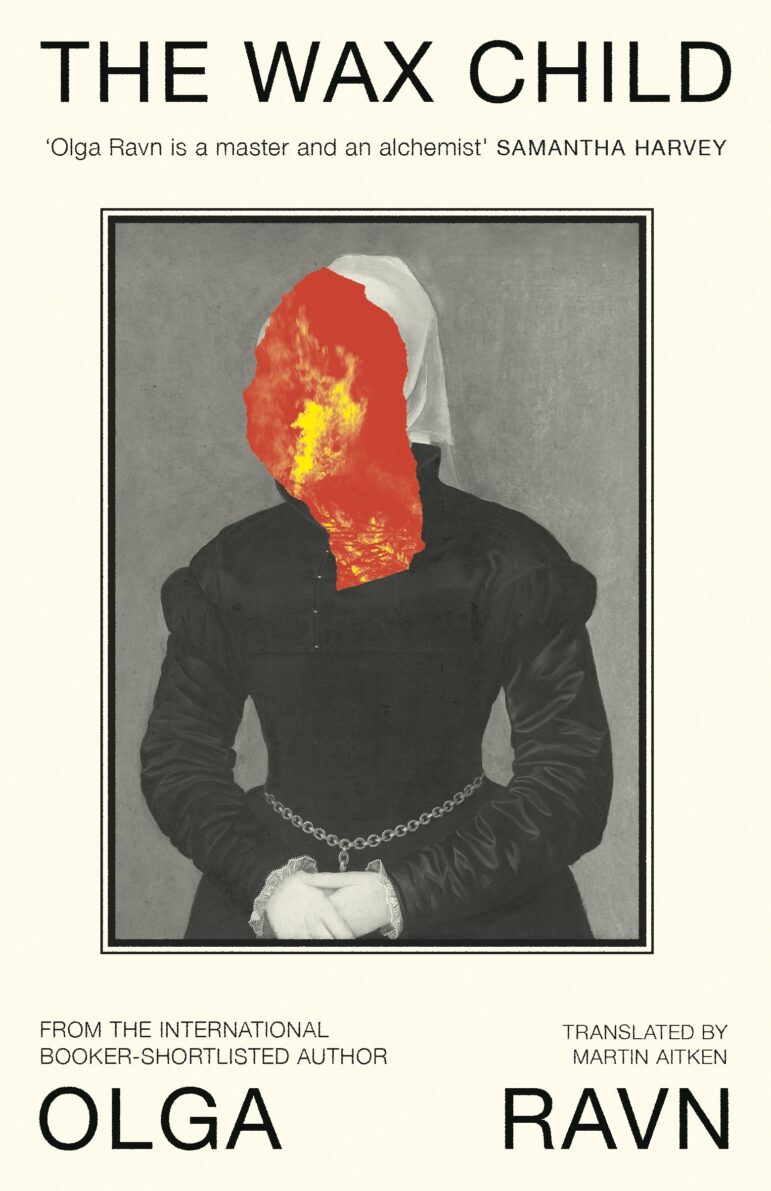
Cover to Olga Ravn’s “The Wax Child” [New Directions]
But The Wax Child is not historical fiction in any conventional sense. Ravn’s poetic roots show in her lyrical, fragmentary style that refuses linear time. Paragraphs blur into one another. Dialogue appears without quotation marks. The wax child narrates from “the distant future, the past, and the brutal present” simultaneously, and the prose mirrors this fluidity.
The wax child is not quite alive, not quite inert. It loves its mistress Christenze with what it calls a “bottomless, shaft-like longing,” but it also observes with detachment. This dual nature—loving and remote, material and mystical—makes it the perfect lens through which to examine the central ambiguity: were these women witches?
Unlike many contemporary retellings of witch trials, which typically frame accused women as innocent victims of superstitious persecution, The Wax Child refuses that comfortable narrative. The novel depicts the women gathering for “carding fests”—nights of wool-spinning during which they gossip, drink, sing and dance, as well as share folk remedies, protective charms, and healing spells passed down through generations.
The spells scattered throughout the text are for protection, healing, easing childbirth, warding off harm and other domestic magics of survival. What the accusers sought was diabolical witchcraft: pacts with the devil, malevolent curses, the causing of death and pestilence.
“They consulted their books of demonology, and there read: The woman is more easily tempted by Satan, for she is weaker than the man in both body and soul… When a woman thinks alone, she thinks evil… Where there are many women, there are many witches.”
The gap between what these women did and what they were accused of doing reveals the persecution’s true nature. Whether these practices were “real witchcraft” is irrelevant. The distinction between folk remedy and witchcraft is a tool of control, not a meaningful category.
The descriptions of the arrests, torture, and executions are visceral and bureaucratic in their horror. A passage details the costs of execution: barrels of tar, the executioner’s fee, for the witnesses, for the clerk, the cost of detention, and so forth. It is a chilling ledger-book accounting of murder, neat columns adding up to human death. “Witchcraft is a very grave business…”
For contemporary practitioners of Witchcraft, the novel demands wrestling with a complicated history. These women weren’t claiming the identity of “Witch.” They were sharing knowledge, building community, exercising what small control they could over their precarious lives. That their everyday practices now bear the name that got them killed creates a complex relationship between historical trauma and contemporary reclamation.
The wax child’s perspective makes this complexity bearable. While we never access the interiority of the accused women, the wax child can access information otherwise unavailable to readers, moving through time and space in ways human narrators generally don’t do in literary fiction. Its viewpoint is both tender and strange, deeply attached yet fundamentally other. Through the wax child, we observe, but cannot fully comprehend, and that distance mirrors our actual relationship to these long-dead women. We can study the archives, read the trial records, but we cannot truly know them.
The Wax Child won’t work for everyone. Readers seeking a conventional plot, clear timelines, or psychological interiority may find themselves frustrated. Those wanting definitive political arguments about witch persecution may be disappointed by Ravn’s commitment to ambiguity. But for readers willing to meet the book on its own terms, to accept a peculiar narrator, and to sit with questions that don’t resolve, this is an immersive and compelling read.
What makes the novel work is that its strangeness isn’t merely aesthetic; the experimental form serves the demands of the subject. Witch persecution doesn’t make sense. It can’t be rationalized or made comfortable. Ravn’s refusal of easy narrative, her embrace of the uncanny and unresolved, honors both the historical women and the impossibility of fully recovering their experience. The Wax Child is absorbing, unsettling, and haunting, bearing witness to what we may never fully know but must never forget.
The Wax Child by Olga Ravn, translated by Martin Aitken, is available now in hardback, paperback, on Kindle and Audible.
The Wild Hunt is not responsible for links to external content.
To join a conversation on this post:
Visit our The Wild Hunt subreddit! Point your favorite browser to https://www.reddit.com/r/The_Wild_Hunt_News/, then click “JOIN”. Make sure to click the bell, too, to be notified of new articles posted to our subreddit.