
SEATTLE— The Aquarian Tabernacle Church (ATC) has released a formal statement in response to recent comments from Tennessee gubernatorial candidate Re. Monty Frits.
Image via ATC’s formal statement
A Formal Statement from the Aquarian Tabernacle Church
The Aquarian Tabernacle Church, in support of the Pagans, Wiccans, and practitioners of earth-centered, polytheistic, and non-Abrahamic spiritual paths across Tennessee and the United States, issues this formal rebuttal to the recent public statements of Tennessee State Representative and gubernatorial candidate Monty Fritts.
Rep. Fritts has repeatedly declared that, if elected governor, he would seek to ban mosques and what he calls “pagan religions,”. He has further claimed that the First Amendment’s protections do not constrain state governments and that only worship of “Almighty God” as understood in his particular Christian interpretation is safeguarded under the Tennessee Constitution. These positions are not merely offensive, they are a direct repudiation of the constitutional order that defines the United States and the State of Tennessee.
Religious Freedom is not optional. The First Amendment to the United States Constitution states: “Congress shall make no law respecting an establishment of religion, or prohibiting the free exercise thereof.” Through the Fourteenth Amendment, these guarantees apply fully to the states. The free exercise of religion protects the right of every person to believe, practice, gather, and build houses of worship according to the dictates of conscience, whether Christian, Muslim, Buddhist, Hindu, Jewish, Pagan, atheist, or any other tradition. So long as those practices do not involve force or fraud against others.
Tennessee’s own Constitution, Article I, Section 3, is equally clear:
“That all men have a natural and indefeasible right to worship Almighty God according to the dictates of their own conscience; that no man can of right be compelled to attend, erect, or support any place of worship, or to maintain any minister against his consent; that no human authority can, in any case whatever, control or interfere with the rights of conscience; and that no preference shall ever be given, by law, to any religious establishment or mode of worship.”This language does not grant government the power to define which gods are legitimate or which traditions count as “religion.” It protects the rights of conscience of every individual. Courts have consistently rejected attempts to carve particular faiths out of constitutional protection by relabeling them as “political movements” or “pagan.” Such selective exclusion is precisely what the Establishment and Free Exercise Clauses forbid.
The Illegality of this proposed course is blatant. Any attempt by a state governor or legislature to ban the construction or operation of mosques, temples, or Pagan places of worship, or to criminalize the peaceful practice of Islam, Buddhism, Hinduism, or contemporary Pagan religions, would be unconstitutional on its face, and in its bones. It would violate both the Free Exercise Clause and the Establishment Clause. It would also violate the Equal Protection Clause of the Fourteenth Amendment by discriminating among citizens on the basis of religion.
Rep. Fritts’s assertion that the First Amendment applies only to the federal government is a long-discredited, prejudiced, and abusive reading of the Constitution. The Supreme Court has held for nearly a century that the religion clauses are incorporated against the states. No state official possesses the authority to declare one set of beliefs protected and another set subject to prohibition. Claims that certain religions are inherently incompatible with the Constitution do not create an exception. They simply reveal a desire to substitute personal theology for the rule of law.
We are deeply disappointed by the rise of religious nationalism that treats the machinery of government as an instrument for imposing one iminutive, sectarian, vision on an entire population. The United States was not founded as a theocracy. Its founders, many of them devout though many of them agnostic, deliberately rejected established churches and religious tests for office precisely because they had seen the suffering that follows when the state claims the power to decide whose worship is legitimate.
When a candidate for high office openly aspires to use the power of the state to make non-Christian religions “not exist” in America, and when he frames this aspiration as fidelity to “Godly values,” he abandons the American tradition of ordered liberty. He replaces it with a majoritarian religious test that, aside from being blatantly illegal in the United States, history has repeatedly shown leads to persecution, social fracture, and the erosion of rights for everyone. Including those who may think themselves immune, or currently hold majority status.
Tennessee’s slow slide toward becoming a place where constitutional guarantees of religious liberty are treated as negotiable is profoundly un-American. The American experiment rests on the premise that government exists to protect the rights of the individual, not to enforce a preferred orthodoxy. A state that elevates one religion’s supremacy over the equal citizenship of its non-Christian residents ceases to honor that premise.
The Pagan community does not ask for special privileges. We ask only for the same constitutional protections that every other citizen enjoys: The right to worship, to assemble, to teach our children, and to maintain our sacred spaces without fear that the next election will render those rights contingent on the personal theology of the governor. We stand with our other religious neighbors in insisting that these rights are inalienable and nonnegotiable.
We call upon elected officials, candidates, and citizens of every faith and of no faiths, to publicly and repeatedly reject the politics of religious exclusion. The Constitution is not a suggestion. Religious freedom is not a favor granted by those in power. It is a birthright of every American.
The Aquarian Tabernacle Church and the Pagan community will continue to defend that birthright. We will do so in the courts, in the public square, and at the ballot box, against any attempt to dismantle it.
In defense of conscience and the Constitution of the United States of America,
The Aquarian Tabernacle Church
working in trust for the Pagan Community
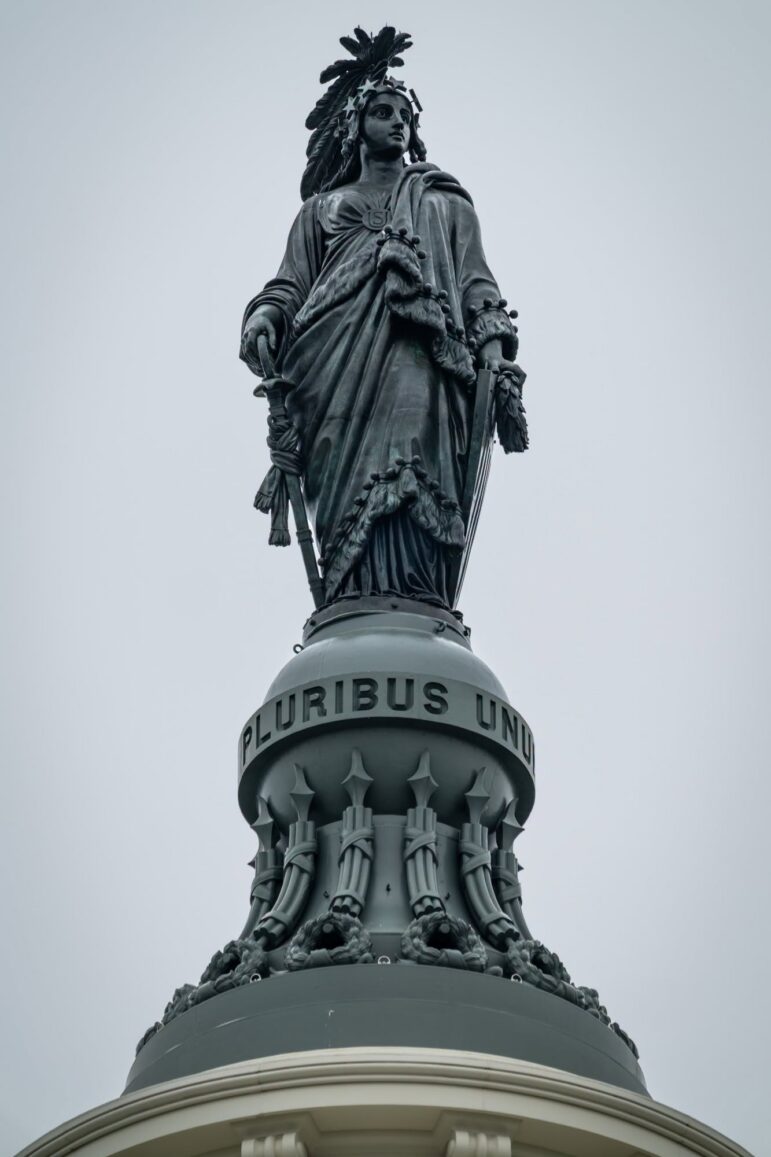

The Witch City Celebrates 400th birthday!
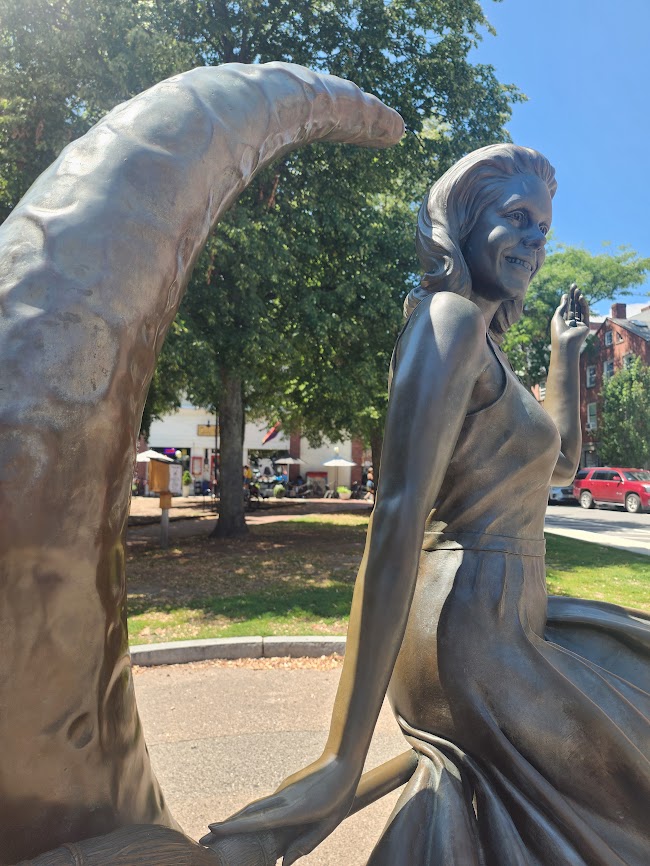
Statue of Samantha from the TV series Bewitched in Salem. Photo Credit: S. Ciotti
SALEM, Mass. — The City of Salem’s year-long Salem 400+ celebration is reaching its peak this summer with more than three months of festivals, concerts, exhibits, parades, and community events commemorating the city’s 400th anniversary. Rather than centering on a single weekend, organizers have planned an extensive program designed to celebrate Salem’s history while emphasizing the city’s future and the diversity of the community that calls it home.
Among the signature events are the return of the Salem Heritage Days Parade for the first time in more than three decades, a waterfront festival at Derby Wharf, visits by the historic tall ship Pride of Baltimore II, concerts, neighborhood celebrations, family field days, public art installations, and historical exhibits. The anniversary programming also coincides with national commemorations marking the United States’ 250th anniversary, creating opportunities to highlight Salem’s maritime heritage alongside its colonial, immigrant, and Indigenous histories.
City officials have emphasized that Salem 400+ is intended to be more than a historical commemoration. The initiative has encouraged residents, community organizations, nonprofits, and local businesses to participate in shaping the celebration through volunteer opportunities, neighborhood events, educational programming, and cultural activities that reflect both Salem’s past and its evolving identity. As Mayor Dominick Pangallo noted, the anniversary is meant to honor four centuries of history while looking ahead to the city’s next chapter.
While Salem is internationally known for the 1692 witch trials and its modern identity as “Witch City,” the Salem 400+ festivities broaden the narrative to encompass the community’s Indigenous roots, maritime legacy, industrial development, arts and culture, and civic life—inviting residents and visitors alike to experience the many stories that have shaped the city over the past four centuries.
NEPA Pagan Pride Makes Headlines

WILKES-BARRE, Penn. — Hundreds of Pagans, Witches, Druids, Heathens, and curious visitors gathered at Kirby Park in Wilkes-Barre on Aug. 1 for the fourth annual NEPA Pagan Pride Day, a free, family-friendly festival celebrating Earth-centered spirituality through education, community, and service.
Hosted by Wyoming Valley CUUPS in partnership with Grove of the Ancient River Coven, the event featured workshops, rituals, live music, drumming, vendors, food trucks, and community organizations. As in previous years, attendees were encouraged to bring nonperishable food donations for Bread Basket of NEPA, underscoring the Pagan Pride Project’s longstanding emphasis on combining public education with charitable outreach.
Local media coverage highlighted the welcoming atmosphere and the diversity of traditions represented, with organizers emphasizing that Pagan Pride Day is designed both to provide a gathering place for the regional Pagan community and to introduce the broader public to modern Pagan religions. Organizers described the festival as an opportunity to dispel stereotypes, celebrate spiritual diversity, and demonstrate that contemporary Paganism is rooted in respect for nature, community, and service.
Photographs published by The Citizens’ Voice captured vendors, performers, rituals, and attendees throughout the day, reflecting the continued growth of one of northeastern Pennsylvania’s largest annual Pagan community events.

Image via Chaos and Cunning
MINNEAPOLIS, Minn. — A feature in Lavender Magazine spotlights Chaos and Cunning, a podcast created by Twin Cities practitioners Cassandra Snow and Siri Vincent Plouff that explores accessible, queer-inclusive, and disability-friendly approaches to contemporary witchcraft. Rather than emphasizing elaborate rituals or expensive tools, the hosts advocate adapting magical practice to fit the realities of everyday life, particularly for people balancing work, disability, chronic illness, or other demands.
Both Snow and Plouff describe their spiritual journeys as emerging from experiences of feeling like outsiders within Christianity and finding alternative paths through witchcraft. Their podcast highlights a wide range of magical traditions—from tarot and spirit communication to green magic—while encouraging practitioners to question gatekeeping and rigid expectations about what “counts” as authentic practice. Plouff, who lives with fibromyalgia, discusses how adapting rituals to accommodate disability strengthened rather than diminished their spiritual practice.
The article also explores the intersection of queer identity and magical practice. Snow, author of Queering the Tarot, argues that identity is inseparable from spirituality, while both hosts note the importance of examining the cultural origins of magical traditions and avoiding appropriative or exclusionary practices. Through their podcast, Patreon community, and Discord server, they seek to make witchcraft more welcoming to LGBTQ+ practitioners, people with disabilities, and others who have often found themselves marginalized within both religious and magical spaces.
Thank you! Thank you! Thank you!
If you’ve been thinking about supporting The Wild Hunt, now is the time.
👉 This is how you can help:
As always, our deepest gratitude to everyone who has brought us this far.
Events and Announcements
Do you have news to share with our community?
Announcements? Festivals? Elevations? Events?
We’ll share it with the community in the
TWH Events Calendar featured on the Front Page.
(Yes, it’s free, we just need your information.)
Let us know at pcn@wildhunt.org
More Events at our new Events Calendar
👉 Don’t forget: supporting The Wild Hunt helps sustain independent Pagan journalism.
As always, our deepest gratitude to everyone who has brought us this far.
Crossings of the Veil
Carlo Ginzburg
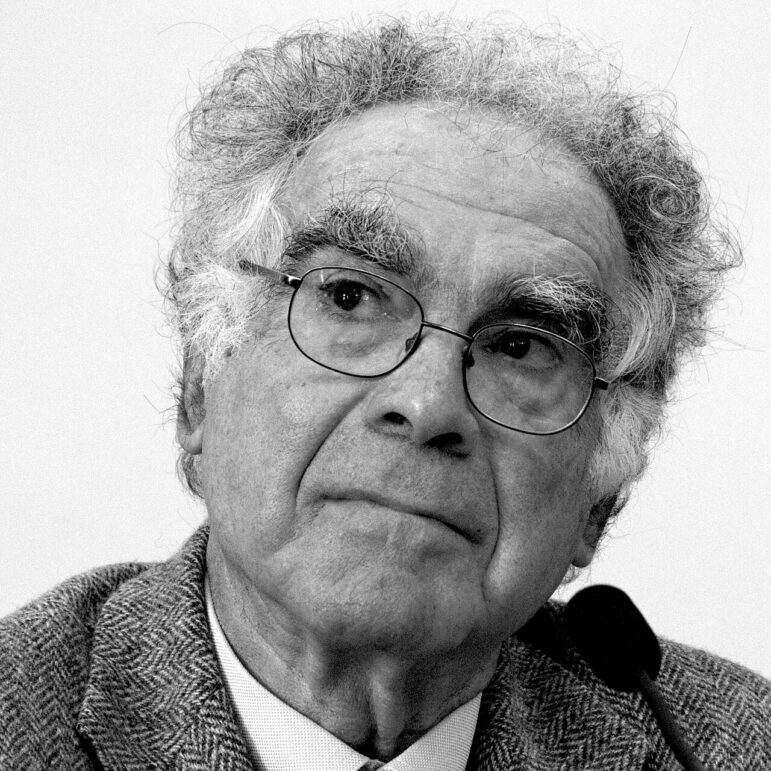
Carlo Ginzburg. Photo Credit: Claude Truong-Ngoc / Wikimedia Commons CCA-SA 3.0
Italian historian Carlo Ginzburg, whose pioneering scholarship transformed the study of European witchcraft, folklore, and popular religion, died June 17 at his home in Bologna. He was 87. His literary agent, Roberto Gilodi, confirmed his death, and no cause was reported.
Ginzburg was one of the founders of the microhistory method, an approach that shifted historical attention away from kings, wars, and political elites toward the lives and beliefs of ordinary people. At a time when few historians took peasant culture, witchcraft, or folk religion seriously, Ginzburg immersed himself in inquisitorial archives, searching for the voices of those whose lives had otherwise disappeared from history. His interdisciplinary work drew from anthropology, literary criticism, psychoanalysis, and art history, using seemingly insignificant clues to reconstruct entire worlds of belief.
Born in Turin in 1939 to a Jewish family, Ginzburg lost his father, the noted anti-fascist intellectual Leone Ginzburg, who was tortured and killed by the Nazis in 1944. The experience of persecution and marginalization later informed his lifelong interest in recovering the voices of people excluded from history.
For modern Pagans, Ginzburg’s significance extends well beyond the academy. His work suggested that beneath the confessions extracted by inquisitors lay traces of older folk traditions, visionary experiences, seasonal rites, and ecstatic practices that had persisted for centuries in rural Europe. Although many of his broader historical interpretations remain the subject of scholarly debate, his willingness to treat popular religion as worthy of serious historical inquiry fundamentally changed how historians and many Pagans understood the relationship between medieval folk belief and the European witch trials.
Few twentieth-century historians have had a greater influence on how modern Pagans understand the historical relationship between European folk traditions, witchcraft, and Christianity than Carlo Ginzburg.
His first major work, The Night Battles (I benandanti, 1966), examined the trial records of the benandanti, or “Good Walkers,” from the Friuli region of northeastern Italy. These villagers claimed that during the Ember Days their spirits left their sleeping bodies to battle witches with fennel stalks in order to protect the fertility of crops and livestock. Ginzburg argued that these accounts preserved elements of an older agrarian visionary tradition that had gradually been reinterpreted by inquisitors through the lens of diabolical witchcraft.
He expanded these ideas in Ecstasies: Deciphering the Witches’ Sabbath (1989), where he proposed that many recurring features of the witches’ sabbath—night flight, transformation into animals, journeys among the dead, and ecstatic gatherings—reflected fragments of much older Eurasian visionary traditions that had later been incorporated into Christian demonology. While this ambitious synthesis remains one of the most debated aspects of his scholarship, it also became one of its most influential.
Many readers first encountered Ginzburg through The Cheese and the Worms (1976), his reconstruction of the worldview of Menocchio, a sixteenth-century Italian miller executed by the Inquisition. Rather than treating Menocchio as an isolated eccentric, Ginzburg demonstrated how popular folklore, oral tradition, literacy, and religious dissent could combine to produce remarkably original ways of understanding the cosmos. The book remains one of the defining works of microhistory.
Ginzburg occupied a distinctive position within the historiography of European witchcraft. Rejecting Margaret Murray’s theory of a single organized pan-European witch religion, he nevertheless argued that inquisitorial records preserved evidence of older visionary traditions and pre-Christian folk beliefs. His work helped move the discussion beyond the simple question of whether witchcraft was either entirely invented by inquisitors or represented the survival of an organized pagan religion, opening new avenues for exploring the complex relationship between folklore, popular religion, and ecclesiastical authority.
His influence on modern Paganism has been considerable. Writers within Wicca, Traditional Witchcraft, Stregheria, and other Pagan traditions drew inspiration from his explorations of spirit flight, seasonal ritual, ancestral traditions, and the persistence of folk belief. While historians continue to debate the extent to which his interpretations demonstrate the survival of pre-Christian religious traditions, few dispute the lasting importance of his methodology or the questions he encouraged scholars to ask.
Carlo Ginzburg is survived by his wife, art historian Luisa Ciammitti, two daughters, and three grandchildren. His scholarship challenged generations of historians to listen more closely to the voices hidden within the archives. In doing so, he helped transform the study of witchcraft, folk religion, and the religious lives of ordinary people, leaving a legacy that continues to shape historical scholarship and the way many modern Pagans understand Europe’s religious past.
What is remembered, Lives!
For readers interested in hearing Ginzburg discuss his work in his own words, this lecture provides an excellent introduction to his thinking:
Tarot of the Week by Star Bustamonte
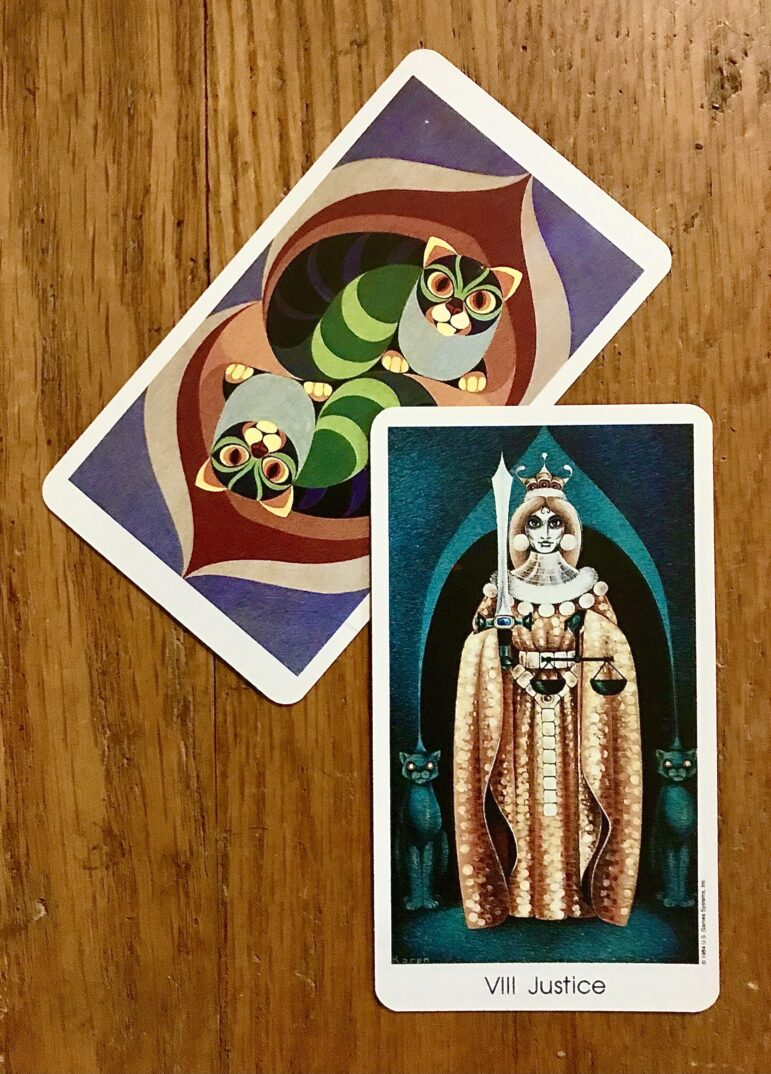 Deck: Tarot of the Cat People by Karen Kuykendall, published by U.S. Games Systems, Inc.
Card: Major Arcana (VIII) – Justice
This week is likely to have a focus on accountability, fairness, and truth. Actions taken that reflect standing up for the greater good of others and are based in honesty are more likely to be judged favorably. Major decisions should be weighed very carefully with an eye to the long-term impacts. Overall, truth and the search for it are liable to be at the center of matters but may be less black and white than originally thought.
In contrast, past missteps and misdeeds are apt to be revealed. Failure to accept responsibility or accountability could have impacts that go far beyond the moment. Bias, intolerance, and dishonesty could also provide fuel for false accusations this week. Having one’s ducks in a row and being prepared to bring the receipts if needed is liable to be the best approach.
And Some Good News Beyond the Pagan Community…

Cape Cod near Provincetown [Photo Credit MJTM]
CAPE COD, Mass. — Members of Old Ladies Against Underwater Garbage (OLAUG) have now removed more than 6,000 pounds of debris from Cape Cod’s freshwater ponds, recovering everything from tires and batteries to fishing tackle, fireworks, and even abandoned toilets. Founded in 2018 by retired psychologist Susan Baur, the volunteer group of women—most in their 60s, 70s, and 80s—uses free-diving, snorkeling, and kayaking to restore aquatic habitats while protecting turtles, fish, and other wildlife.
Beyond the environmental impact, members describe the work as a deeply meaningful practice. The repetitive rhythm of swimming, the focus required to search beneath the surface, and the shared purpose of caring for the natural world have led many participants to describe their dives as meditative, restorative, and even transformative. Founder Susan Baur has said the project is driven not by guilt or obligation but by the joy of working together in service of nature, a perspective that resonates with many Earth-centered spiritual traditions.
The group’s efforts have inspired similar cleanup initiatives and attracted widespread attention, demonstrating that environmental stewardship can foster community, personal renewal, and a profound sense of connection to place. As OLAUG’s members continue clearing Cape Cod’s ponds one dive at a time, they offer a reminder that caring for the waters can be both an act of conservation and, for many, a form of spiritual practice.
The Wild Hunt is not responsible for links to external content.
To join a conversation on this post:
Visit our The Wild Hunt subreddit! Point your favorite browser to https://www.reddit.com/r/The_Wild_Hunt_News/, then click “JOIN”. Make sure to click the bell, too, to be notified of new articles posted to our subreddit.