
ROCCA DI PAPA, Italy — One of the most important sacred landscapes of the ancient Latin world has received stronger legal protection from the Italian government, potentially opening a new chapter in the preservation of Monte Cavo, the mountain once crowned by the Temple of Jupiter Latiaris.
Italy’s Ministry of Culture and the Soprintendenza Archeologia, Belle Arti e Paesaggio have formally declared the monumental and archaeological complex encompassing Monte Cavo, the ancient Via Sacra, and nearby Prato Fabio an area of “particularly important cultural interest.” The designation places the complex under protections established by Italy’s Cultural Heritage Code and strengthens restrictions on development and alterations to the landscape.
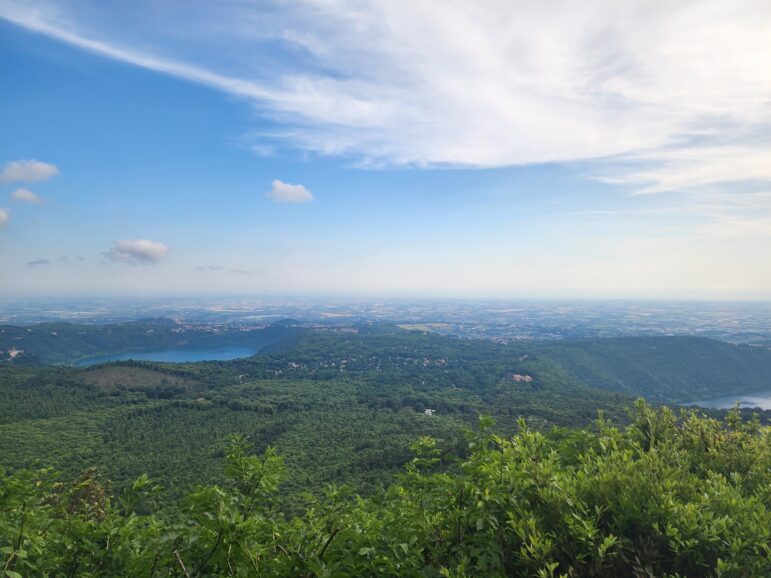
S.Ciotti
The view from near the summit of Monte Cavo, with Lake Nemi and Diana’s sacred woods to the left, Lake Albano to the right, and the Mediterranean coast visible in the distance. [Photo Credit: S. Ciotti
Known in antiquity as Mons Albanus, Monte Cavo rises above the Alban Hills southeast of Rome. Its summit was home to the Temple of Jupiter Latiaris (Templum Iovis Latiaris), the principal sanctuary of the Latin League, a confederation of Latin communities that existed before Rome established political dominance over the region.
Jupiter Latiaris, or Jupiter of the Latins, served as a divine focus for communities sharing Latin religious and cultural traditions. The mountaintop sanctuary became the setting for the Feriae Latinae, the Latin Festival, during which representatives of the Latin peoples ascended the mountain to make offerings and reaffirm their relationships with one another and the deity.
After Rome emerged as the dominant power in Latium, Roman magistrates continued the observance. The rites consequently became intertwined with Roman political authority while retaining their association with the older Latin communities. The sanctuary was therefore more than a temple: the mountain formed part of a sacred landscape connecting religion, political legitimacy, and collective identity.
Worshippers approached the summit along the Via Sacra, or Sacred Way, portions of whose ancient stone pavement survive today. The road climbed through the sacred landscape of Mons Albanus toward the sanctuary, and surviving sections remain among the most visible remnants of the ancient religious complex.
Little of the Temple of Jupiter Latiaris itself remains above ground. The summit was repeatedly altered over the centuries. A church dedicated to Saint Peter was eventually constructed there, followed in the eighteenth century by a monastery occupied first by Trinitarians and later by Passionists.
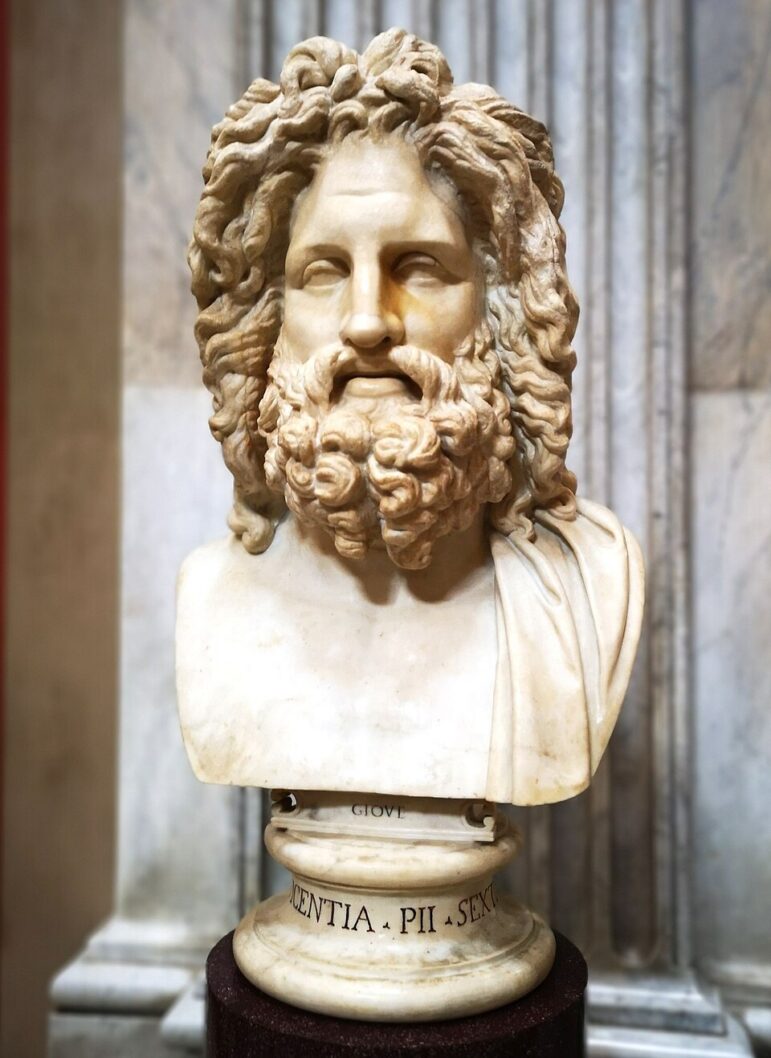
Statue of Jupiter, Vatican, Rome. Photo Credit: Biser Todorov CC BY 4.0
Modern development created another problem. Monte Cavo became crowded with telecommunications towers and broadcast antennas, some of which became the subject of lengthy legal disputes over their authorization and removal. Former military facilities and telecommunications infrastructure have further complicated preservation of the site. Although sections of the Via Sacra are accessible to walkers and parts of the surrounding landscape fall within the Castelli Romani Regional Park, the summit itself remains largely inaccessible to the public.
The new heritage designation establishes both direct and indirect protections. Direct restrictions cover archaeological remains, including the ancient pavement of the Via Sacra and areas around Monte Cavo’s summit. Indirect protections extend into surrounding woodland and landscape, recognizing the importance of preserving the environmental setting of the archaeological complex.
Activities including tree removal, excavation, roadwork, and new construction will require authorization from heritage authorities.
The decree follows years of pressure from local preservation advocates. In 2020, the Comitato Promotore per una Legge per il Monte Albano, or Promoting Committee for a Law for Monte Albano, called for national and regional action to restore the mountain. The organization argued that decades of telecommunications development, environmental degradation, and inadequate enforcement had seriously damaged a site fundamental to the history of Latium.
The committee described the situation as a “scandal of European dimensions” and called for the removal of unauthorized antennas, restoration of the natural landscape, archaeological excavations, and improved public access. Advocates also proposed restoring and repurposing the former Passionist monastery for cultural and research purposes.
The new designation does not itself accomplish all those goals, but it provides authorities with stronger legal tools to regulate what happens on and around the mountain. Preservation advocates hope those protections will eventually allow Monte Cavo to move away from decades of piecemeal development toward archaeological research, environmental restoration, and carefully managed foot tourism.
For the mountain once climbed by the peoples of Latium to honor Jupiter and renew their bonds with one another, the designation also protects something inherent in the ancient sanctuary itself. The Temple of Jupiter stood within a larger sacred landscape that included the summit, sacred woodland, and the road by which worshippers approached the supreme god. Protecting Monte Cavo therefore means preserving not simply the remnants of a temple, but the landscape through which ancient religious practice took place.
The Wild Hunt is not responsible for links to external content.
To join a conversation on this post:
Visit our The Wild Hunt subreddit! Point your favorite browser to https://www.reddit.com/r/The_Wild_Hunt_News/, then click “JOIN”. Make sure to click the bell, too, to be notified of new articles posted to our subreddit.