
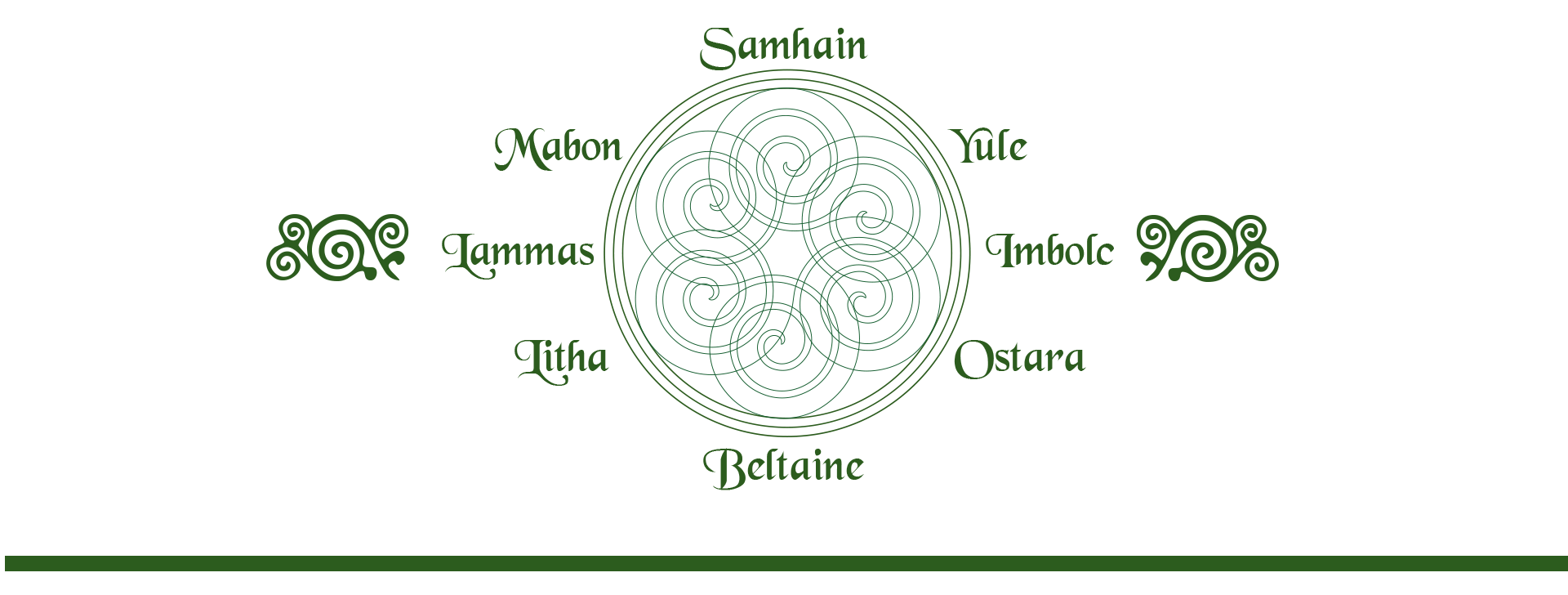
In the northern hemisphere, this weekend marks the festival of Lughnasadh, also celebrated under the names of Lammas, the first of the three harvest festival in the Wheel of the Year observed by many modern Pagans. In the southern hemisphere, many Pagans are celebrating its counterpart, the winter festival of Imbolc.
Lughnasadh is named for the Irish god Lugh Lámfada, the “long-armed” deity who is master over many skills and crafts. Lugh is sometimes thought of a solar deity, based on the idea that his name derives from an ancient word for “light;” while linguists do not usually support the theory, many modern Pagans still find that the association fits. Lugh is famous for his role in defeating the Fomorians, enemies of the Irish deities known as the Tuatha Dé Danann, including defeating the Fomorian leader Balor, who is Lugh’s own grandfather.
He is also known for being the divine father of the Irish culture hero Cú Chulainn, the main character of the epic Táin Bó Cúailnge, in which Cú Chulainn fends off the forces of Queen Medb and King Ailill single-handedly as they attempt to steal the sacred bull of the Ulaid. At one point in the Táin, Lugh appears to heal and protect his son while he sleeps for three days, overcome by exhaustion and grievous wounds.

A three-headed altar discovered in 1852 in Reims (rue Houzeau-Muiron), sometimes identified as Lugus / Lugh, now housed in the Musée Saint-Remi, Reims, France [Wikimedia Commons, CC 3.0, QuartierLatin1968]
According to one tradition, Lugh created the festival as funeral games for his foster-mother, Tailtu, who died of exhaustion while working in the harvest fields. Tailtiu may be seen as an earth goddess, and her death a representation of the end of summer and the oncoming of autumn. The modern city of Teltown or Tailtin in County Meath, Ireland, was named for Tailtiu, and a festival and athletic games were held there during the Middle Ages at Lughnasadh. In the 20th century there were attempts to revive the Tailteann Games as a modern “Irish Olympics,” and today the Tailteann Cup is awarded to the championship team in Irish Football.
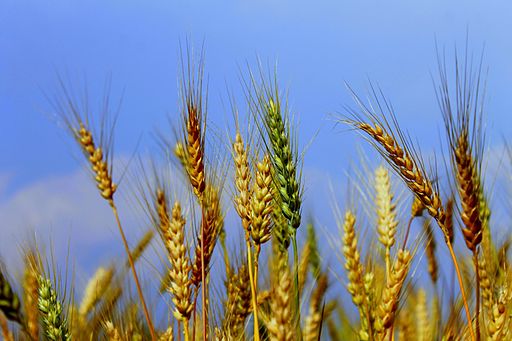
Wheat [By Shree Krishna Dhital via Wikimedia Commons]
In English, meanwhile, the day is known as Lammas, derived from Old Engish hlāfmæsse, literally the “loaf-mass,” which indicates its role as a grain-harvest festival. The weeks before Lammas were a difficult and hungry time of year, as the new wheat was not yet ready and the stores of flour from the past year were running out. The first harvest was a time to celebrate, as it meant the continuity of life for another year.
Lammas traditionally marked a time when the first loaf of the newly-harvested wheat would be baked and taken to a church for blessing. For modern Pagans, the tradition of baking ritual bread remains popular for Lammas and Lughnasadh rituals.
In the Middle Ages, Lammas could be a time of change and portent, as seen in this incident from the Anglo-Saxon Chronicle for the year 1100:
…on the morning after Lammas day, King William was shot with an arrow by his own men, as he was hunting, and he was carried to Winchester and buried there. This was in the thirteenth year from his accession. He was very powerful, and stern over his lands and subjects, and towards all his neighbours, and much to be dreaded, and through the counsels of evil men which were always pleasing to him, and through his own avarice, he was ever vexing the people with armies and with cruel taxes; for in his days all justice sank, and all unrighteousness arose, in the sight of God and the world. He trampled on the Church of God, and as to the Bishopricks and Abbacies, the incumbents of which died in his reign, he either sold them outright, or kept them in his own hands, and set them out to renters; for he desired to be the heir of every one, churchman or layman, so that the day on which he was killed he had in his own hands the Archbishoprick of Canterbury, the Bishopricks of Winchester and Salisbury, and eleven Abbacies, all let out to farm, and in fine, however long I may delay mention of it, all that was abominable to God and oppressive to men was common in this island in William’s time: and therefore he was hated by almost all his people, and abhorred by God as his end sheweth, in that he died in the midst of his unrighteousness, without repentance or any reparation made for his evil deeds. He was slain on a Thursday, and buried the next morning, and after he was buried, the Witan who were then near at hand, chose his brother Henry as King, and he forthwith gave the Bishoprick of Winchester to William Giffard, and then went to London; and on the Sunday following he made a promise to God and all the people, before the altar at Westminster, that he would abolish the injustice which prevailed in his brother’s time, and that he would observe the most equitable of the laws established in the days of any of the Kings before him: and after this Maurice Bishop of London consecrated him as King, and all the men of this land submitted to him, and swore oaths and became his liege-men.
Some have seen this episode in a mythic light, as an example of the death of a sacred king and the ascent of his rival, in the mode of the battle between the Holly King and the Oak King.
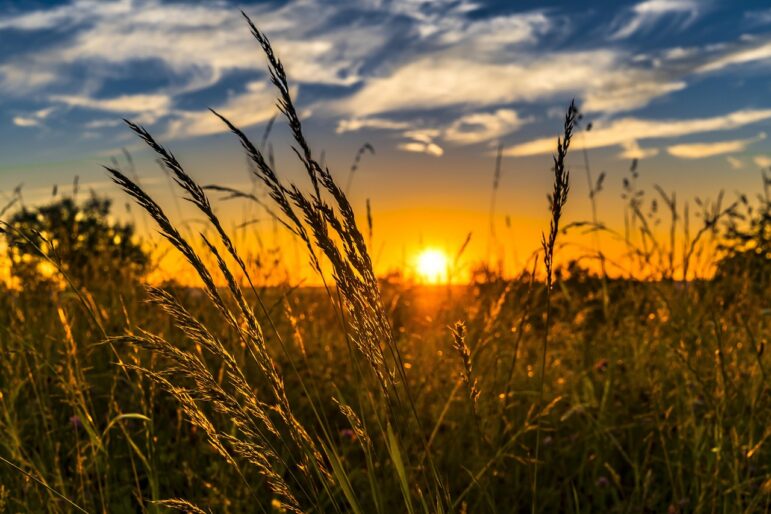
Sunset on a wheat field [Pixabay, Felix-Mittermeier]
For those celebrating Lughnasadh or Lammas today, may the fruits of your labor be gathered with gratitude. May you recognize what has ripened, release what has run its course, and carry forward only what will sustain you through the darker months ahead.
And for those celebrating Imbolc, may the returning sun find you where you stand—at the threshold of winter and spring, hope and endurance. May Brigid’s fire warm what has grown cold, sharpen what has grown dull, and illuminate the work still waiting to be done.
Wherever you are on the Wheel, may your harvests be rich, physical, magical, and spiritual. May your heart be as light as the grain that sways in the summer wind.
Blessed Lughnasadh!
The Wild Hunt is not responsible for links to external content.
To join a conversation on this post:
Visit our The Wild Hunt subreddit! Point your favorite browser to https://www.reddit.com/r/The_Wild_Hunt_News/, then click “JOIN”. Make sure to click the bell, too, to be notified of new articles posted to our subreddit.