Pagan Community Notes: Week of Yule 2025


This has been a busy week at The Wild Hunt. We’re tired, we’re happy, and somehow there’s still more coming. Pagan calendars wait for no one!
Yesterday began Saturnalia.

Saturnalia was the ancient Roman festival honoring Saturn, god of agriculture, wealth, and time—and it was one of the most beloved celebrations in the Roman world. Marked by feasting, revelry, and a temporary suspension of social norms, Saturnalia encouraged gratitude for the harvest and optimism for what lay ahead. It was a season of abundance, joy, and playful inversion.

During Saturnalia, social hierarchies were briefly set aside. Gambling—normally frowned upon—was encouraged. People ditched their formal togas, exchanged gifts, and appointed a “Lord of Misrule” (sometimes called the Saturnalia King) whose job was to issue absurd commands that everyone else was expected to obey. Order relaxed, laughter ruled, and for a few days, the world turned delightfully upside down.

Today, December 18, is the Feast of Epona (Eponalia).

Eponalia honors Epona, a goddess revered in ancient Gaulish traditions and uniquely adopted into Roman religious life—the only Celtic goddess officially venerated in Rome. She is associated with horses, fertility, abundance, and protection, especially for travelers.

Epona’s worship extended across Gaul, Britannia, and Germania, where she was invoked for safe journeys, agricultural prosperity, and the well-being of both animals and people. Her veneration continues today in modern Roman and Celtic spiritual traditions, reminding us that some devotions travel remarkably well.

Tomorrow is the Feast of Opalia.

Opalia is the Roman festival honoring Ops, goddess of fertility, abundance, and the harvest. Often depicted seated and holding a cornucopia, Ops personifies the earth’s capacity to sustain life. She was revered both as the consort of Saturn and as a living symbol of agricultural wealth.

The festival celebrates the blessings of the land and humanity’s dependence on the natural world—timely themes as the year winds down and the soil rests. In ancient Roman religion, festivals associated with Ops were traditionally observed in August, with a related December observance connected to grain storage and agricultural accounting. Contemporary Pagan calendars place Opalia in December, reflecting a modern devotional adaptation rather than a strictly attested ancient Roman practice.


Looking Ahead: Yule / Jul

At sunset on Saturday, Yule (or Jul) begins, carrying us through the longest night as we await the return of the sun.

The Winter Solstice in the Northern Hemisphere occurs this year on Sunday, December 21, 2025, at 09:20 UTC, 10:03 a.m. EST, and 7:03 a.m. PST. Astronomically, this marks the moment when the sun stands still at its southernmost point, shining directly over the Tropic of Capricorn.

Several sacred sites will livestream solstice sunrise ceremonies, allowing people around the world to witness these ancient alignments:


Summer Solstice in the Southern Hemisphere

Meanwhile, our friends south of the equator are celebrating the Summer Solstice—known as Midsummer in some traditions and Litha in others—marking the height of light and the fullness of the sun’s power.

Indeed, in honor of the wealth of sunshine, many cultures have celebrated with outdoor festivals well into the “night” and building bonfires along with dancing and music as part of both traditional religious rituals and secular celebrations.

In some modern Pagan practices, it is believed that this holiday represents the highest ascendancy of masculine divinity. The power of the plentiful light is a reminder to enjoy the moment, for the light begins to wane as the Southern Hemisphere turns toward the dark.

And as if that weren’t enough…

Tuesday brings the honoring of Sulis in some traditions, the goddess of healing waters revered in Celtic and Roman Britain. Associated with the sacred hot springs at Aquae Sulis (modern Bath, England), Sulis embodies healing, solar energy, and justice. During the Roman period, she was syncretized with Minerva, blending local and imperial traditions.

Archaeological discoveries—including curse tablets dedicated to Sulis—suggest she was also called upon for protection and redress against wrongdoing. Her worship remains a powerful example of spiritual continuity and cultural blending.

And then there’s the Festival of Sol Invictus, but that will be next week’s Pagan Community Notes.

Yes, we know—it’s a lot of Paganism happening all at once.

Especially for Pete Hegseth.

Bless his heart.


Thank you again!

As many of you know, since January, The Wild Hunt’s site has grown incredibly, with over 500 visitors to our site per hour and 400,000 per month, and with that real costs.

Your support this past month has been incredibly moving. We’re grateful for every single contribution—large or small. Every dollar makes a difference. And because we’re a nonprofit, 100% of your donation goes directly toward our mission: providing accurate, engaging, and meaningful coverage of modern Paganism and religion that deepens understanding and sparks conversation.

Our editors are unpaid, and some of our staff volunteer their time. Yet we believe that good journalism—and good people—deserve to be paid for their work.

If you’ve been thinking about supporting The Wild Hunt, now is the time.

👉 This is how you can help:

Tax-Deductible Donation
PayPal
Patreon

As always, our deepest gratitude to everyone who has brought us this far.


Crossings of the Veil

Rae Beth, Hedge Witch Author and Beloved Teacher 

Rae Beth, the British author, mystic, and pioneering voice in modern witchcraft whose writings helped define the contemporary understanding of the “hedge witch,” has crossed on 11 December in Dorchester Hospital after a short illness. She was a cherished spiritual teacher, environmental advocate, and guide to generations of solitary practitioners.

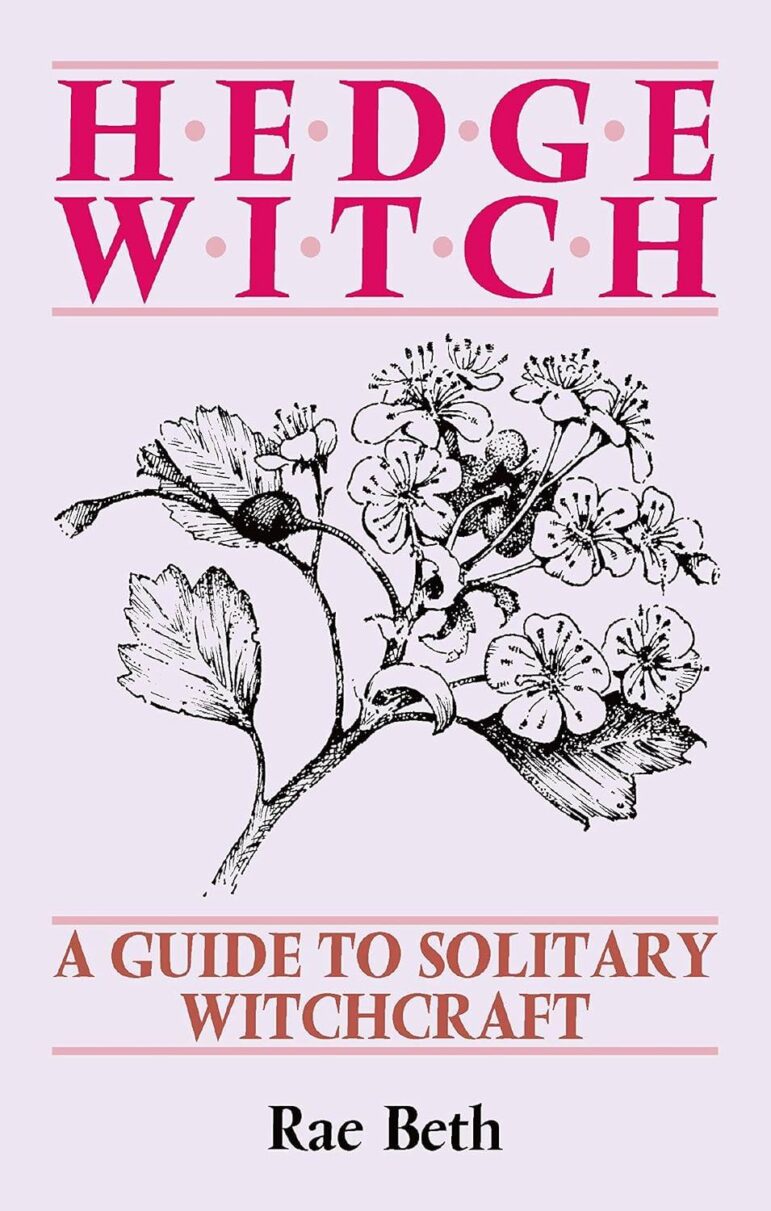
Beth was best known for Hedge Witch: A Guide to Solitary Witchcraft (1990), the book credited with bringing the term “hedge witch” into modern parlance. Written in the intimate form of letters to apprentices, it became a touchstone for readers seeking a nature-rooted, spirit-centered craft outside of formal coven structures. Her work framed the hedge witch as a modern descendant of the village wise woman or cunning man: a solitary practitioner who communes with land, spirits, and the unseen world to bring healing, insight, and balance.

Her spirituality was grounded in wildwood mysticism and deep ecological reverence. A passionate environmentalist, Beth frequently wrote about the sacred relationship between humans and the natural world, urging magical practitioners to act on behalf of threatened species and damaged ecosystems. She emphasized liminal spaces—hedgerows, boundaries, thresholds, and the realms of faerie—as places where magic is most alive.

Her practice drew upon Wiccan-influenced devotion to the Goddess and the Horned God, whom she described as enduring sources of protection, wisdom, and renewal. Yet she also championed “magic in the midst of life,” encouraging accessible ritual work using everyday items—from birthday candles to common herbs—rather than elaborate ceremonial tools.

Across her career, Beth authored several influential books that shaped modern hedgewitchcraft and solitary spirituality, including The Green Hedge Witch, The Hedge Witch’s Way, Spellcraft for Hedge Witches, and Lamp of the Goddess. Her writings blended folklore, spirit-work, environmental consciousness, and practical guidance in ways that resonated deeply with newcomers and seasoned practitioners alike.

Beyond the page, Beth was known as a wildwood mystic, psychic counselor, and spellcaster. She offered talks, readings, and teachings aimed at helping people connect with the spirits of land and liminal places, as well as with the faerie realms she described with such care and clarity.

News of her passing was shared widely within the Pagan and witchcraft communities. The Pagan Federation wrote, “It is with profound sadness that we share the news of the passing of Rae Beth, beloved hedgewitch, author, and teacher… Her legacy of curiosity, connection to the natural world, and devotion to authentic practice will continue to influence and uplift those walking the hedge for years to come.”

Rae Beth is survived by her family, including her beloved Ashley, and by the countless readers, students, and practitioners whose lives were touched by her wisdom. Her legacy endures in every hedge crossed, every spell cast in service of the land, and every quiet moment when the veils between worlds grow thin.

Now at the darkest time, when all of nature is still and cold, the change is made. There is a pause, as though between breaths, all nature awaits and then – the dawn comes early! There is rebirth of light and we begin again. Let hope and joyfulness be reborn, therefore, in our hearts and let none be lonely. Let all see, as new light grows, how we may live peacefully and in shared happiness. Let war cease. Let us make a world fit for children.’

Part of the Winter Solstice Prayer by Rae Beth
The Hedge Witch’s Way (2001)

Hail the Traveler!
What is Remembered, Lives!


Events and Announcements

Do you have news to share with our community?

Announcements? Festivals? Elevations? Events?

We’ll share it with the community in the

TWH Events Calendar featured on the Front Page.

(Yes, it’s free, we just need your information.)

Let us know at pcn@wildhunt.org


More Events at our new Events Calendar


Tarot of the Week by Star Bustamonte

Deck: Wicked Tarot Deck, by Casey Gilly, illustrations by Cinthya Álvarez, published by Insight Editions.

Card: Ten (10) of Coins

The week ahead is likely to have an emphasis on the recognition of being surrounded and supported by like-minded folks who hold genuine affection for one another. Aspects of community cohesion, common goals, and the realization of having found a spiritual home may all be evident this week. There may also be a renewed effort in creating new traditions or modifying old ones that better express shifts in awareness and new realities.

Conversely, if there is a sense of being continually embattled and never coming out on top, it is probably a time to consider shifting one’s perception. Rather than focusing on what others have or are doing, time might be better spent digging into what really matters—and how to best manifest one’s heart’s desire. It can be easy to fall into the trap of worrying about the perceptions of others, but that is a distraction and should be avoided.


☀️ ☀️ ☀️


The Tropic of Capricorn from TWH HQ


At TWH HQ, we are in the northern hemisphere and a mere hundred and fifty miles from the Tropic of Cancer. So, it’s not cold enough outside for traditional Yule celebrations, and the day is too short for Midsummer. But we will play some music to enjoy both seasons from the tropics. We leave you with a few links to some songs that we enjoy at this time of year.

☀️ ☀️ ☀️

We begin with a “classic,” by Jethro Tull.

SKÁLD released Jólanótt a few years ago

The Lviv National Opera performed Щедрик (Shchedryk) introduced to English as Carol of the Bells.

Damh the Bard’s ever-popular “Midwinter’s Day.”

Loreena McKennitt’s “Gloucestershire Wassail.”

SJ Tucker sings “Solstice Night.”

Michelle Sarasin debuted “Solstice” in 2021.

Daridel paganfolk released “Yule” in 2020.

From FAUN, “Diese kalt Nacht” [This cold night].

Keith Boegel shared the Galician Carole.

The ever-popular Wiccan Wonderland is covered here by Bunny Lo.

Of course, the Southern hemisphere is celebrating Litha, so Vivaldi’s Summer is a beautiful homage to the season.

Sebastián Sánchez-Botta shared Music for Midsummer.

The Latvian folk group Tautumeitas says we would celebrate the season and reminds us all that we should walk with the witches.

☀️ ☀️ ☀️

Whether it breaks through the deepest dark or shines at the height of abundant light, may the Sun’s returning warmth bring many blessings to our worldwide community. Most of all, we are grateful for you—your presence, your visits, and the shared spirit that binds us together. We are deeply grateful for your presence and for the community we share together.

Happy Solstice!


👉 One more reminder: supporting The Wild Hunt helps sustain independent Pagan journalism.

And remember, countless Pagan and Pagan-allied groups are doing extraordinary work and would welcome your support as well.

Tax-Deductible Donation
PayPal
Patreon

As always, our deepest gratitude to everyone who has brought us this far.


The Wild Hunt is not responsible for links to external content.


To join a conversation on this post:

Visit our The Wild Hunt subreddit! Point your favorite browser to https://www.reddit.com/r/The_Wild_Hunt_News/, then click “JOIN”. Make sure to click the bell, too, to be notified of new articles posted to our subreddit.

Comments are closed.
