

Uncovering the Past
LONDON – Archaeologists excavating at Kani Shaie in northern Iraq have uncovered what they describe as a monumental building that may have served as a cultic space, a place of ritual or worship, dating to the Uruk period (c. 3300–3100 BCE). The discovery offers new insights into the spread of early Mesopotamian civilization into the Zagros Mountains and helps clarify how highland communities interacted with the world’s first urban centers. Uruk, often described as the world’s first metropolis, influenced the surrounding region, including highland settlements like Kani Shaie.
The finding, announced by the Kani Shaie Archaeological Project (KSAP) in a press release last week, reveals an “official monumental building on the upper part of the Kani Shaie mound, which may have served as a cultic space,” according to researchers from the Centre for Studies in Archaeology, Arts, and Heritage Sciences (CEAACP) of the University of Coimbra, in collaboration with the University of Cambridge and the Slemani Directorate of Antiquities. Featuring decorative wall cones typical of Uruk architecture, the structure may mark one of the earliest ceremonial complexes known from the Zagros region.
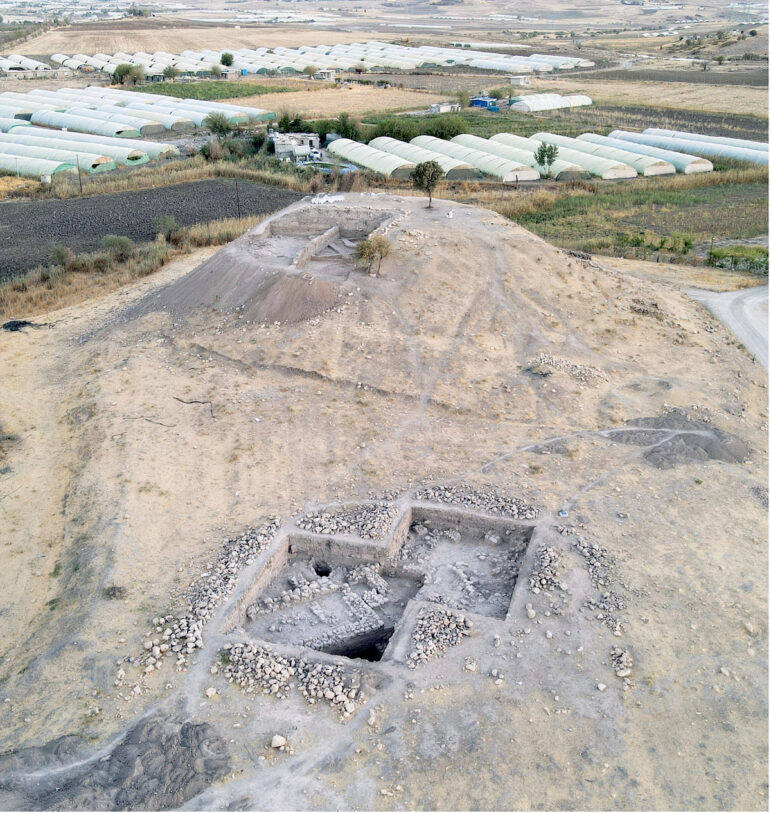
View of the Kani Shaie excavations. Courtesy: © Projeto Arqueológico de Kani Shaie
A Small Site with a Long History
Kani Shaie lies near the modern town of Bazyan in the Sulaymaniyah Governorate of Iraqi Kurdistan, nestled in the foothills of the Zagros Mountains, an area that formed the eastern edge of the ancient Mesopotamian world. The mound rises about 15 meters high and spans roughly half a hectare at its summit, with a lower town extending northward. Despite its modest scale, Kani Shaie preserves a remarkably deep record of human occupation stretching back seven millennia, from about 7000 BCE to the medieval period.
First noted by archaeologists over a century ago, the site became the focus of systematic excavation only in 2013. The team identified 15 occupational layers spanning the Late Chalcolithic through the Early Bronze Age, supported by radiocarbon dating and extensive artifact evidence. By the late 4th millennium BCE, Kani Shaie was part of a network of highland settlements linked to the expanding Uruk world, the same cultural horizon that produced the first cities, writing systems, and temples in southern Mesopotamia.
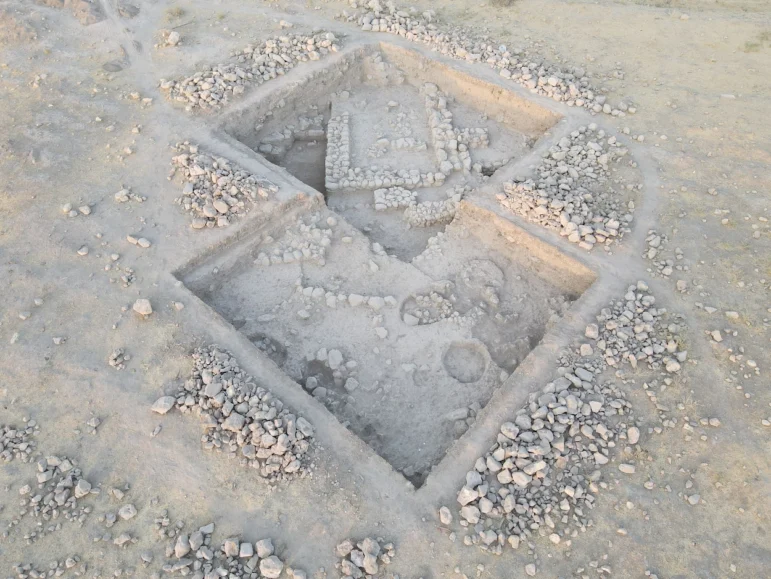
Neo-Assyrian and Post-Assyrian period levels at Kani Shaie site: Courtesy: ©Projeto Arqueológico de Kani Shaie
Layers of Complexity
Kani Shaie’s history reflects cycles of settlement, destruction, and rebuilding. Late Chalcolithic layers (ca. 4000–3300 BCE) show growing social complexity, culminating in a conflagration that destroyed part of the settlement. During the Early Bronze Age, the site was rebuilt and included large circular storage structures, possibly for grain collection and redistribution. Excavations in 2024 revealed one such complex containing 62 clay sealings and plant remains of barley, emmer, lentil, chickpea, and pea, evidence of an organized food administration system.
The monumental building uncovered in 2025 appears to belong to this later phase. Its scale and ornamentation suggest both administrative and ceremonial functions. Fragments of a gold pendant and a finely carved Uruk-period cylinder seal point to displays of wealth and authority, while the decorative wall cones, a hallmark of Uruk monumental architecture, indicate that this was a public or ritual structure rather than a domestic one. Uruk’s architectural style ultimately established the sacred building traditions, such as stepped temple towers connecting heaven and earth, that would later evolve into ziggurats and inspire legends like the Tower of Babel.
In archaeological terms, “cultic space” does not refer to a cult in the modern sense but to a structure potentially linked to ritual or religious activity. The Kani Shaie team likely used the term because the building’s monumental design, wall cones, and prestige artifacts resemble known Uruk temples and ceremonial complexes. Described as an “official” and “public or ceremonial” structure, it may have served both administrative and sacred roles, functions often intertwined in early Mesopotamian society. The label “cultic” therefore signals the potential for ritual use without asserting a specific religious interpretation.
“If the monumental nature of this building is confirmed, which we are now investigating in detail, the discovery could transform our understanding of Uruk’s relationship with surrounding regions,” the project directors said. “It would show that sites such as Kani Shaie were not marginal, but key actors in shaping cultural and political networks.”
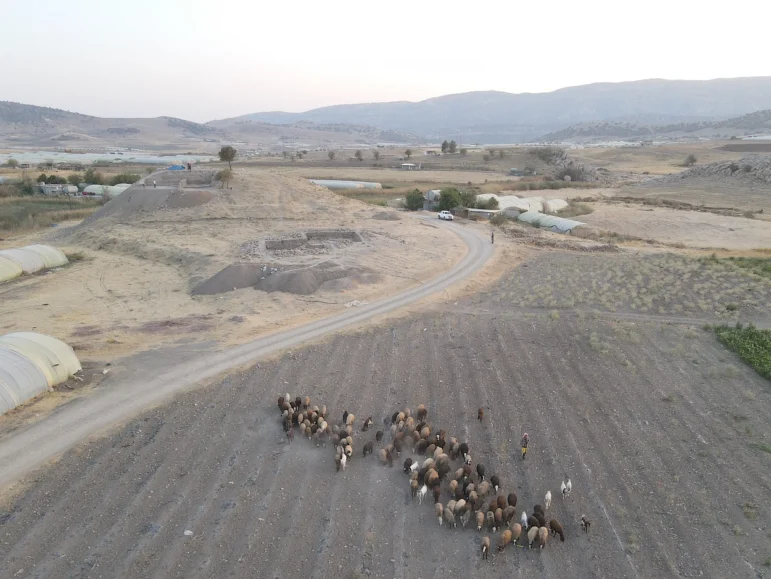
A view of the Kani Shaie site: Courtesy : ©Projeto Arqueológico de Kani Shaie
Significance for Mesopotamian Studies
The discovery challenges the traditional view that the highlands east of Mesopotamia were peripheral to the rise of early cities. Evidence from Kani Shaie suggests that communities in the Zagros foothills actively participated in the exchange of goods, ideas, and religious practices that characterized the world’s first urban revolution. Strategically positioned between the Mesopotamian plain and the mountain corridors of Iran, Kani Shaie was ideally located to mediate trade routes and cultural and religious contact. Its monumental building, if indeed a cultic or ceremonial space, demonstrates that even small settlements contributed to the symbolic and administrative innovations that defined early state formation.
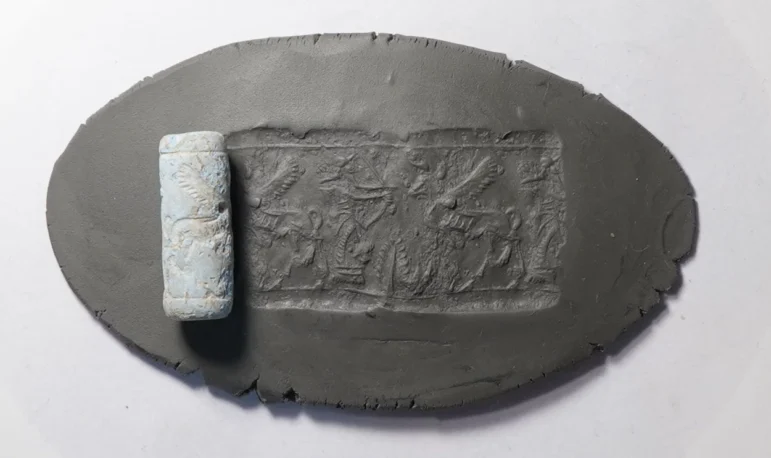
Cylinder seal from the Neo-Assyrian/Post-Assyrian period. Courtesy : ©Projeto Arqueológico de Kani Shaie
Reassessing the “Cradle of Civilization”
The 2025 discoveries underscore that the “Cradle of Civilization” extended beyond the great southern cities. The monumental building at Kani Shaie, possibly a shrine or temple, offers a rare window into the spiritual and social life of a mountain people whose connections with Uruk redefined the limits of early urban influence. While archaeologists have not identified artifacts such as altars, figurines, or offerings that would confirm a ritual purpose, the combination of monumental scale, symbolic materials, and fine craftsmanship supports a cautious interpretation of a possible cultic space.
Kani Shaie carries a special resonance for some modern spiritual traditions. The discovery of a possible communal or ceremonial space offers a glimpse into humanity’s earliest expressions of reverence. It affirms that the impulse to honor nature, community, and the sacred has deep roots extending far beyond modern organized religion. Set in a landscape of mountains and fertile valleys that once shaped early spiritual life, Kani Shaie reflects themes central to contemporary Pagan practices including connection to land, and the blending of sacred and civic life. Whether or not its builders worshiped deities later known as Inanna or others of the Uruk pantheon, the site stands as a reminder that the earliest forms of ritual and shared meaning were embedded in the first cities and temples that founded civilization itself.
The Wild Hunt is not responsible for links to external content.
To join a conversation on this post:
Visit our The Wild Hunt subreddit! Point your favorite browser to https://www.reddit.com/r/The_Wild_Hunt_News/, then click “JOIN”. Make sure to click the bell, too, to be notified of new articles posted to our subreddit.