

Scroll through TikTok today and you’ll see tarot spreads, astrology forecasts, and candlelit rituals going viral. Bookstores carry entire sections on Witchcraft, while podcasts dissect everything from conspiracy theories to séances. The occult is everywhere again — not tucked away in hidden corners, but right out in the open. And this resurgence isn’t new. In fact, we’ve been here before.
Two centuries ago, readers devoured Gothic novels brimming with haunted castles, forbidden books, and ghostly visitations. These weren’t simply tales meant to thrill; they asked dangerous questions. What happens when reason fails us? Who controls hidden knowledge? What unseen forces shape our world? Gothic literature leaned heavily on the imagery of Western esotericism — alchemy, secret brotherhoods, necromancy, Witchcraft, and the symbolic language of magic. Through these stories, readers glimpsed the tension between a rational, modern world and its stubborn, lingering shadows.
The first Gothic novel appeared in 1764 with Horace Walpole’s The Castle of Otranto. It landed in the midst of the Enlightenment, when science and reason promised to banish superstition once and for all. Yet fascination with the occult did not disappear; it simply went underground, finding new life in secret societies like the Freemasons (founded in their modern form in the early 18th century) and Rosicrucians, whose influence stretched back to the early 1600s but flourished again in the 1700s. That fascination resurfaced in fiction. A cursed object or a forbidden manuscript in a Gothic tale wasn’t just a literary invention — it echoed a very real appetite for grimoires, talismans, and hermetic texts quietly circulating among seekers of hidden knowledge.
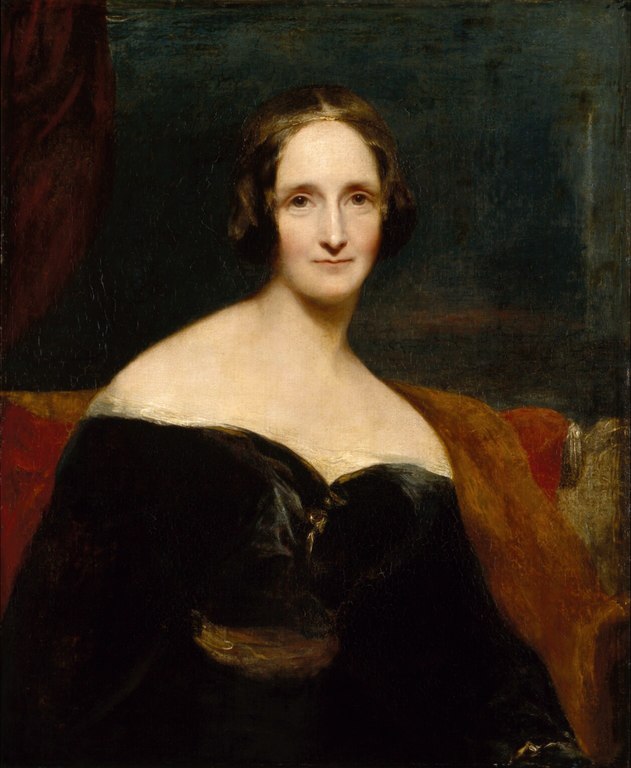
Portrait of Mary Shelley by Richard Rothwell, 1840-41 [public domain]
Mary Shelley’s Frankenstein (1818) dramatizes this tension most vividly. Victor Frankenstein begins his quest not with chemistry or physics, but with the writings of occult philosophers like Cornelius Agrippa (1486–1535) and Paracelsus (1493–1541). His monster is not only a product of Enlightenment science but of esoteric longing—the ancient human desire to touch hidden truths and command life itself. Shelley understood what Gothic writers intuited: rational progress might illuminate, but it could never completely banish mystery.
The occult in Gothic novels also gave voice to anxieties about gender and power. In Ann Radcliffe’s The Mysteries of Udolpho (1794), Emily St. Aubert wanders a castle alive with shadows, whispers, and veiled secrets. Though Radcliffe often reveals the “supernatural” as trickery, the emotional truth remains: women’s dreams, intuition, and spiritual sensitivity were framed as powerful — yet always suspect. Shelley shifted the terrain in Frankenstein by deliberately removing women from the act of creation, exposing the masculine drive to control mysteries traditionally tied to the feminine and divine. The occult became a language for both fear and fascination with women’s knowledge, whether as witches, visionaries, or figures of uncanny authority.
Bram Stoker’s Dracula (1897) sharpened these tensions further. Vampirism in his novel is more than horror — it is transgression made flesh. Lucy Westenra’s transformation from innocent maiden into vampiric seductress mirrored Victorian unease with women stepping outside the bounds of “proper” femininity. Once again, the Gothic leaned on esoteric imagery — blood as vitality, immortality as forbidden wisdom, initiation into darkness as a twisted rite.
In many ways, the Gothic was never just about the trappings of horror. It used occult symbols to critique society itself. Haunted abbeys reflected disillusionment with the church, especially in post-Reformation Europe. Cursed aristocratic lineages revealed discomfort with hereditary privilege in a period when revolutions — the American Revolution in 1776 and the French Revolution in 1789 — were reshaping ideas of power. Charles Maturin’s Melmoth the Wanderer (1820) introduced secret orders and infernal bargains that echoed contemporary fears of clandestine groups — Freemasons, Illuminists, and other “hidden hands” rumored to manipulate politics and culture from behind the curtain. Gothic novels gave popular form to ideas that were already circulating in esoteric circles: that hidden knowledge exists, that symbols conceal truths, and that the visible world rests on mysteries not everyone is meant to access.
We return to these stories because the questions they ask remain unresolved. In an era of algorithms and artificial intelligence, we wrestle with mysteries of a different kind. Our haunted houses may now be streaming series, internet rabbit holes, or viral conspiracy theories, but the impulse is the same: to confront unseen forces shaping our lives. Just as Gothic novels reflected the anxieties of modernity in the late 18th and 19th centuries, today’s occult revival speaks to our own unease. Tarot, astrology, and Witchcraft are not only personal practices—they are also acts of resistance against systems that feel too rational, too mechanical, too dehumanizing. The Gothic reminds us that the occult thrives wherever reason leaves gaps, whispering that there is always more beneath the surface.
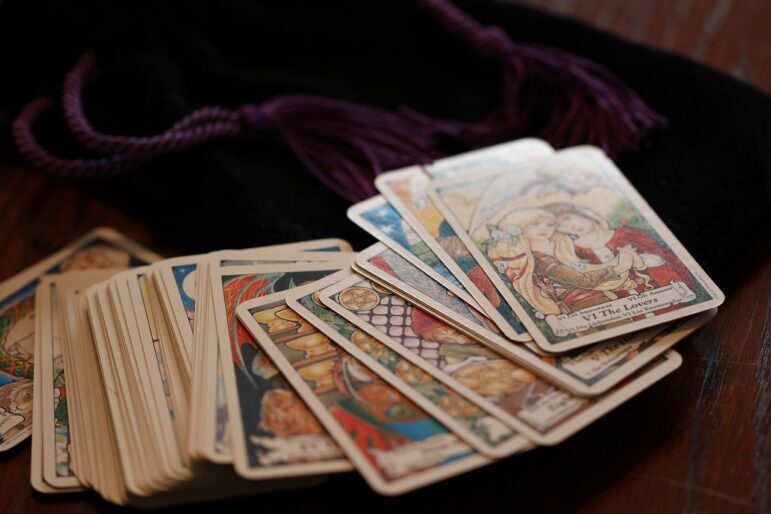
Tarot cards [Pixabay]
In the end, Gothic novels are not only about ghosts and monsters. They are about us—our fears, our desires, our fragile balance between reason and mystery. They remind us that progress always casts a shadow, and that every society is defined not just by what it illuminates but also by what it represses. To read the Gothic is to step willingly into those shadows. And whether we’re pacing Walpole’s haunted castle in 1764, staring at Shelley’s stitched-together creation in 1818, or recoiling from Stoker’s blood-drinking count in 1897, we find the same truth that today’s witches, tarot readers, and mystics continue to affirm: the occult is never just about the supernatural. It is about the mysteries we live with every day — and the wisdom that comes when we finally stop running from our shadows and start listening to them.
For modern Pagans, these novels offer more than literary pleasure; they offer a mirror. The haunted castle reminds us that the past is never gone, that ancestors, traditions, and even unhealed wounds shape the present. The vampire warns of unchecked desire and the dangers of power that consumes rather than nourishes, becoming a meditation on the ethics of energy, intimacy, and exchange. The forbidden book recalls the grimoire and the responsibility that comes with knowledge—reminding us that wisdom lies not only in seeking but in discerning. The restless ghost embodies unfinished business, calling us to honor what lingers unacknowledged in our lives and communities.
In this sense, the Gothic is not only a genre of fiction but a kind of spiritual teaching. Its symbols invite modern Pagans to deepen their practice, to embrace mystery alongside clarity, and to remember that both shadow and light are essential to a full and honest path. The Gothic teaches what Pagan traditions already know—that true wisdom lies not in banishing shadows, but in learning to walk with them.
The Wild Hunt is not responsible for links to external content.
To join a conversation on this post:
Visit our The Wild Hunt subreddit! Point your favorite browser to https://www.reddit.com/r/The_Wild_Hunt_News/, then click “JOIN”. Make sure to click the bell, too, to be notified of new articles posted to our subreddit.