Christian priviledge
Editorial: Netflix’s “Messiah” and the intersections of privilege
|
Weekend Editor Eric O. Scott examines the trailer for the new Netflix series “Messiah.”
The Wild Hunt (https://wildhunt.org/tag/islam/page/3)
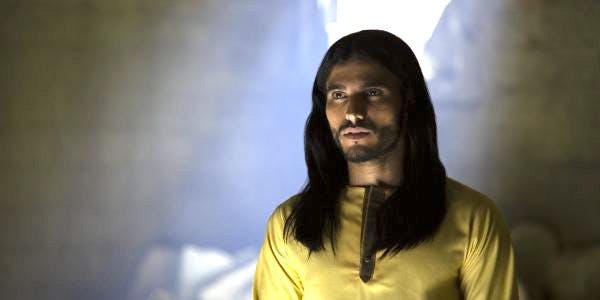
Weekend Editor Eric O. Scott examines the trailer for the new Netflix series “Messiah.”

The recent case of three Chechens accused of Witchcraft and humiliated on television may reflect an increasing scrutiny and persecution of folk magic practitioners, healers, and other occult practitioners.

This past week we learned that the US Supreme Court denied the request of a man executed in Alabama to have his spiritual clergy available to him during his execution.
From the point of view of many global onlookers, most of Western and Northern Europe might seem an oddly secular, even religion-less place. Despite a history of (ofttimes violent) religious upheaval during the Christian era and a relative growth of Islam in the present day, there is no denying that religion, and more specifically the expression of religious sentiment, has little to no place in the public sphere in many European nations. As such, even simply discussing religion, and especially Pagan and magical ones, isn’t something nearly as self-evident as in other regions, like North America, where a similar degree of religious freedom is the law of the land. In such a context, the experiences of individuals who might want to experiment with various spiritual paths are rarely if ever publicized or talked about. Yet under this veneer of secularism lies a dynamic and ever-changing religious landscape that has much to offer to those willing to get real with religion.
“These are radical Islamic terrorists, and she won’t even mention the word, and nor will President Obama. He won’t use the term radical Islamic terrorism. Now, to solve a problem, you have to be able to state what the problem is or at least say the name.”
So said Donald Trump back in his second presidential debate with Hillary Clinton. Leaving aside the fact that Clinton had publicly used the terms radical jihadism and radical Islamism four months earlier, is the larger point valid? To solve a problem, do we have to be able to state what the problem is?