
WASHINGTON — The U.S. Department of Defense has revised its controversial overhaul of military religious affiliation codes after acknowledging what officials described as “mistakes,” even as the Army moves forward with a separate initiative to emphasize chaplains’ religious identities over their military rank.
The revisions are some of the latest developments in a broader overhaul of how the military recognizes and categorizes the religious affiliations of service members.
As The Wild Hunt previously reported, the Department of Defense has dramatically reduced the number of recognized religious affiliation codes from more than 200 faith and belief categories to just 31. The changes, outlined in a May 20 memorandum signed by Under Secretary of Defense for Personnel and Readiness Anthony Tata, were described as an effort to provide chaplains with “clear, readily available information” to better anticipate the religious needs of service members and deliver religious support consistent with their faith traditions. Multiple news organizations have since confirmed the changes.
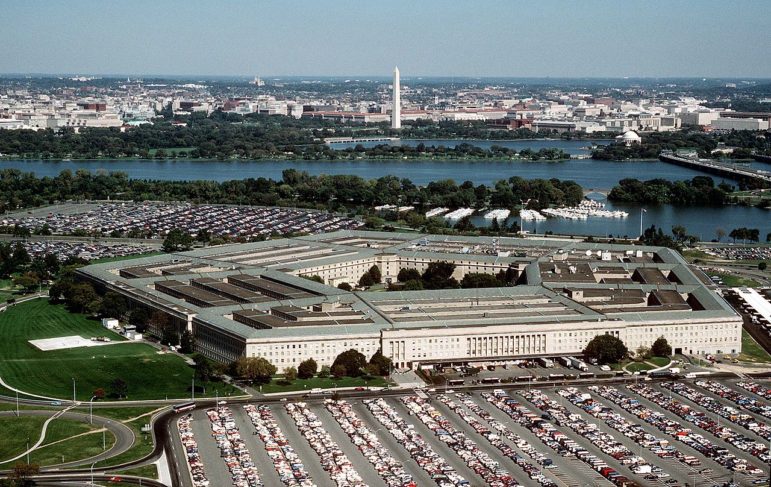
US Pentagon [Public Domain
One aspect of the revised list quickly drew criticism from lawmakers. The new list initially omitted The Church of Jesus Christ of Latter-day Saints from the Christian category, prompting objections from church members and elected officials. Sen. Mike Lee (R-Utah), a close ally of President Donald Trump, said he raised the issue directly with the president, arguing that the federal government should not be in the position of deciding theological questions or determining which faiths qualify as Christian.
In response, the Pentagon revised the document by removing the “Christian” heading altogether. Rather than grouping denominations under religious categories, the updated “Religious Affiliation Codes” presents a single alphabetical list that includes Christian denominations, The Church of Jesus Christ of Latter-day Saints, Judaism, Islam, Buddhism, Hinduism, Sikhism, Agnostic, “No Religion,” and “Other Religions.” The change sidesteps the doctrinal question while leaving all listed affiliations available for selection.
The Wild Hunt has confirmed that the revised affiliation codes do not affect the information service members may choose to engrave on their military identification tags, commonly known as dog tags. While the personnel database has been reduced to 31 affiliation codes, service members remain free to list their specific faith, belief system, or no religious preference on their identification tags to help ensure their religious preferences are known during medical treatment or casualty response.
The Pentagon’s revisions come as the Army begins implementing another significant change to military religious policy. Last week, the Army issued guidance giving chaplains 90 days to remove rank insignia from their Army Combat Uniforms and 180 days to remove them from cold-weather uniforms, implementing a directive championed by Defense Secretary Pete Hegseth.
The policy stems from Hegseth’s March announcement that a military chaplain “is first and foremost a chaplain and an officer second.” “This change is a visual representation of that fact,” he said at the time.

29th Secretary of Defense Pete Hegseth Official Portrait (DoD photo by Chad J. McNeeley)
Under the directive signed by Secretary of the Army Dan Driscoll, chaplains will replace rank insignia on combat and field uniforms with religious branch insignia identifying their faith tradition. Approved insignia currently exist for Christian, Jewish, Muslim, Buddhist, and Hindu chaplains. The insignia will appear on uniform collars, patrol caps, and berets, while rank patches will be removed from the center chest of the Army Combat Uniform.
Army officials say the change is intended to make chaplains more approachable and encourage soldiers to seek pastoral care without focusing on military rank. “This emphasizes a chaplain’s primary role as a pastoral care provider and enhances approachability, ensuring all Soldiers feel comfortable accessing religious support,” the directive states.
The Army emphasized that chaplains remain commissioned officers and retain all authority, customs, and courtesies associated with their rank. Rank insignia will continue to be worn on service and dress uniforms, and enlisted personnel are still required to salute chaplains despite the absence of visible rank on combat uniforms. The policy does not apply to chaplain candidates.
The directive applies only to the Army. Neither the Department of the Navy nor the Department of the Air Force has announced whether similar guidance will be issued for their chaplains.
The new developments reflect a broader effort by the Pentagon to reshape how religion is recognized and presented within the armed forces. While officials have described the affiliation code reductions as an administrative simplification and the chaplain uniform changes as a way to improve access to pastoral care, both initiatives have generated questions about religious representation, visibility, and the practical effects of the new coding system, particularly whether the streamlined list can adequately serve minority faith communities.
Organizations representing Pagans, Heathens, Humanists, and other minority faiths have argued that the eliminated affiliation codes helped ensure their communities could be accurately counted, supported, and understood within the military. They have called on the Department of Defense to explain how the new system will continue to meet those needs. Faith leaders have also challenged the revision of codes.
The Wild Hunt will continue to follow developments as additional guidance and responses emerge.
The Wild Hunt is not responsible for links to external content.
To join a conversation on this post:
Visit our The Wild Hunt subreddit! Point your favorite browser to https://www.reddit.com/r/The_Wild_Hunt_News/, then click “JOIN”. Make sure to click the bell, too, to be notified of new articles posted to our subreddit.