
NEW YORK — There is something surreal about receiving a federal agency’s advice on transporting fake blood, broomsticks, and jack-o’-lanterns. Nevertheless, here we are.
With Halloween and Samhain approaching, we thought the community should know how costumes and ritual items might complicate an otherwise uneventful flight.
The Transportation Security Administration welcomes costumed travelers, but holiday enthusiasm doesn’t exempt anyone from screening. Masks, elaborate outfits, and accessories can mean additional inspection, while certain props should never make the trip.
In Halloween travel advice shared with The Wild Hunt, TSA offers practical reminders for the season. For readers flying to Halloween celebrations, Samhain gatherings, or a weekend away, preparation could help keep the journey moving.
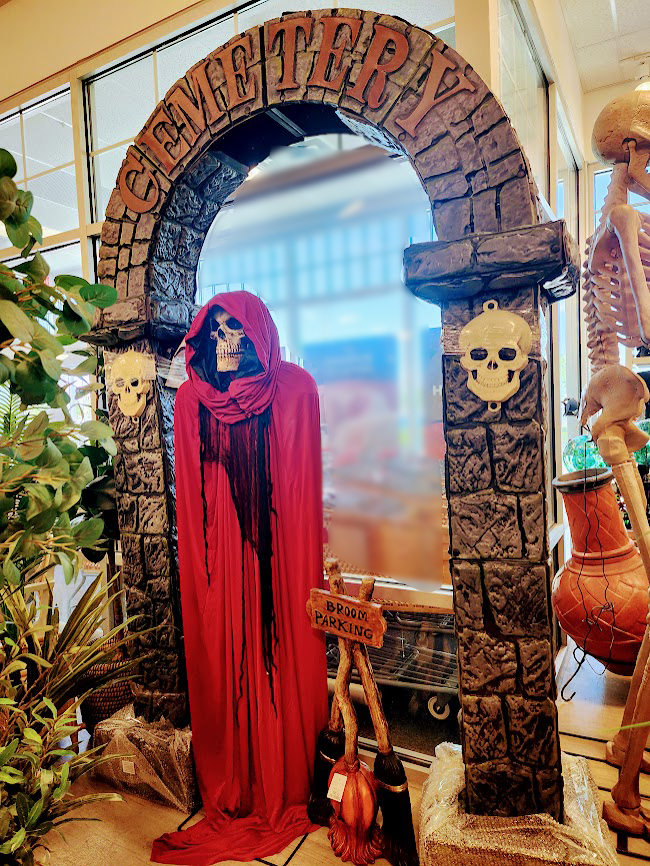
A Halloween Display at a store [photo credit: MJTM]
Start with the costume. Metal armor, chains, and accessories can trigger alarms. They do not automatically make an outfit prohibited, but travelers should be prepared to remove detachable pieces and follow officers’ instructions.
Masks present another challenge: identification. Leave costume masks off at the checkpoint, and save elaborate face painting for later if it would prevent officers from matching your appearance to your identification photograph.
A convincing zombie transformation may impress partygoers, but recognizable facial features are more useful at airport security.
Props require particular care. TSA’s Halloween advice directs travelers to check knives, hatchets, pitchforks, swords, scythes, and broomsticks.
Lightsabers present a wrinkle: although the seasonal advice includes them among items to check, TSA’s specific online listing permits toy lightsabers in both carry-on and checked bags. Consult item-specific guidance before departure. Replica bombs, grenades, and other explosives are prohibited in either type of luggage.
Fake blood, liquid latex, creams, gels, and lotions fall under the usual liquids restrictions. Carry-on containers must have capacities of 3.4 ounces, or 100 milliliters, or less and fit together inside one clear, quart-sized, resealable bag. Each passenger gets one liquids bag; a nearly empty oversized bottle still exceeds the limit.
Solid candy is permitted, although officers may ask travelers to separate food for screening. Liquid or gel sweets follow the liquids rule. TSA’s Halloween advice even permits decorated or carved pumpkins in carry-ons, while pumpkin butter and pumpkin spice drinks remain subject to restrictions on spreads and liquids.
Finally, to quote Edna Mode in The Incredibles, “No capes!” at least while going through security. TSA recommends placing capes in a screening bin for X-ray inspection rather than wearing them through the body scanner.
For many readers, however, packing for Samhain involves sacred objects rather than costume accessories. These deserve careful preparation.
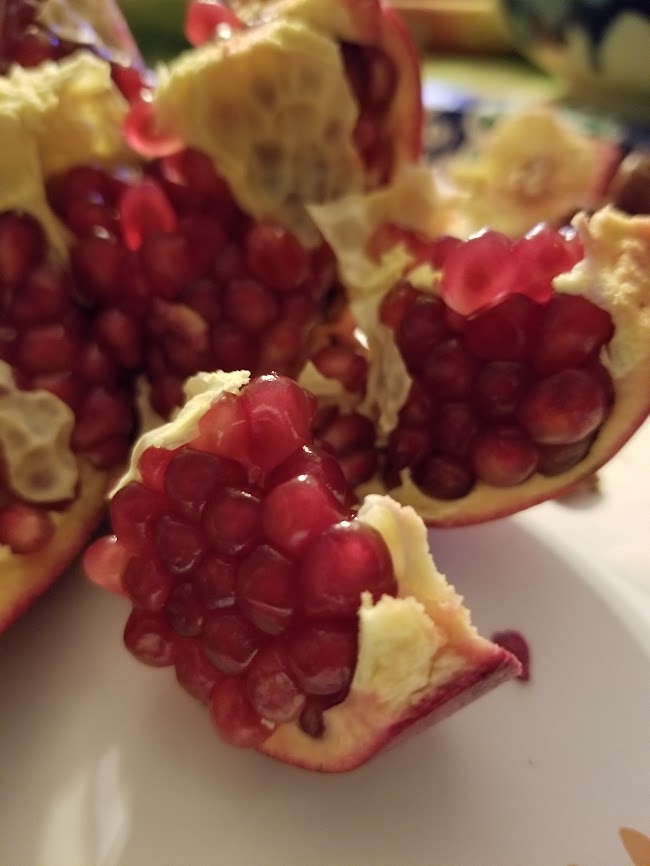
Pomegranates for Samhain Celebration [photo credit: S. Ciotti]
If your carry-on baggage contains sacred objects that require special handling, tell officers before screening.
TSA’s published guidance for Native American religious items recommends placing them separately in screening bins to facilitate inspection. Travelers carrying sacred objects from other traditions should notify officers about special handling needs and ask what screening arrangements are available.
Travelers may ask to hold or display an item themselves, request a supervisor, or ask officers to collect an explosives-detection sample without picking it up. They may also request fresh gloves. These are requests for respectful handling, but not exemptions from screening. Clear, easily opened packaging may help; metal containers can complicate inspection.
Athames and other sharp items, including ceremonial swords, must go in checked baggage, with blades sheathed or securely wrapped. Religious significance does not override restrictions on knives. Holy water, anointing oils, and liquid offerings generally follow the carry-on liquids rule. Larger quantities belong in checked luggage, subject to applicable restrictions.
Powdered ritual materials may require separate or additional screening, particularly in quantities exceeding TSA’s stated threshold of 12 ounces or 350 milliliters. Ask about unfamiliar materials before packing them.
TSA also has handling instructions for repatriation, which is the process of returning human remains and cultural items. They advise contacting the TSA and other appropriate authorities such as the State Department before organizing travel.
For questions, consult TSA’s “What Can I Bring?” database or text “Travel” to AskTSA at 275-872. Travelers needing screening assistance can contact TSA Cares at 855-787-2227, preferably at least 72 hours before departure. Officers retain final authority at the checkpoint. Check airline baggage limits, too: clearing security does not guarantee that a bulky accessory will fit aboard.
Yes, the broom may need checking, too. And casting dimension door to bypass the checkpoint will almost certainly draw suspicion.
The Wild Hunt is not responsible for links to external content.
To join a conversation on this post:
Visit our The Wild Hunt subreddit! Point your favorite browser to https://www.reddit.com/r/The_Wild_Hunt_News/, then click “JOIN”. Make sure to click the bell, too, to be notified of new articles posted to our subreddit.