
WASHINGTON — The Trump administration has taken two actions that could alter conservation policy and potentially affect wildlife and ecosystems across large areas of the United States.
One is an executive order directing a review of federal protections for gray wolves and Mexican wolves under the Endangered Species Act (ESA), while seeking greater state involvement and more flexibility for lethal predator control. The second is an active federal rulemaking that would eliminate nationwide conservation restrictions on millions of acres of national forest and return more management authority to individual national forests.
Starting with the wolves, conservation involves considerably more than the animals’ legal status. Habitat connectivity, undeveloped landscapes, prey populations, roads, human access and mortality are intertwined with the conservation of large carnivores.
President Donald Trump signed the executive order, titled “Supporting America’s Ranchers,” on September 4 as part of a broader package of measures aimed at assisting the livestock industry. During an Oval Office event announcing the measures, Agriculture Secretary Brooke Rollins said ranchers in areas where wolves remain federally protected cannot simply shoot animals attacking their herds.
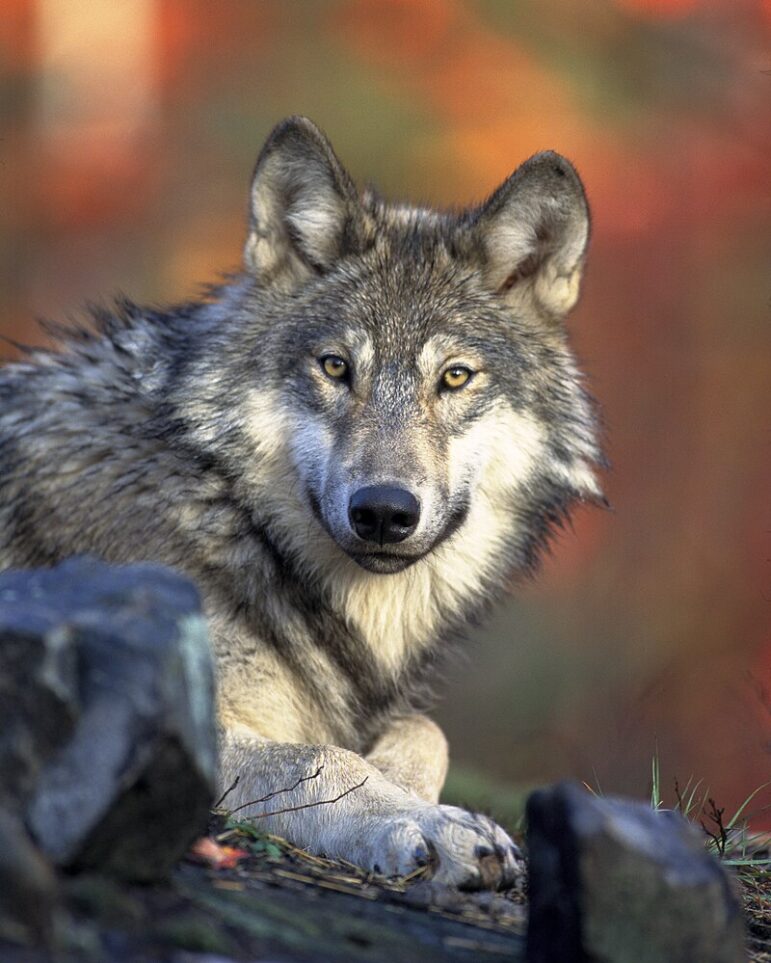
A North American wolf [This image originates from the National Digital Library of the United States Fish and Wildlife Service – Public Domain
“But you can shoot them as of today,” Trump responded. Rollins qualified the president’s statement, saying Interior Secretary Doug Burgum would first “have to do a little magic.” The executive order itself does not immediately authorize the killing of federally protected wolves.
The order begins by emphasizing the economic and cultural importance of ranching, stating that ranchers “play a vital role in our Nation’s food supply chain and cultural heritage.” It notes that the national cattle herd is at a 75-year low while beef consumption has increased and points to earlier administration actions involving federal grazing lands, voluntary “Product of USA” labeling, taxes and the withdrawal of Biden-era regulations.
The order then turns specifically to predators.
Under a section titled “Helping Ranchers Combat Predation,” Interior Secretary Doug Burgum has 90 days to determine whether the gray wolf and Mexican wolf have met recovery criteria for delisting or downlisting under the ESA. If Burgum determines that those criteria have been met, the order directs him to begin the process of delisting or downlisting them.
The administration must also prepare a legislative recommendation to Congress concerning delisting or downlisting the wolves. If Interior finds that federal recovery criteria have been met, the order further directs administration officials to encourage states to remove wolves from state-specific protected-species lists and “revise their standards for lethal takings” to assist ranchers in combating predation.
Interior is separately directed to consider revising federal criteria governing authorized lethal removal of wolves when they threaten livestock or human safety. Agriculture and Interior are also instructed to review compensation programs and the evidentiary standards used to determine whether livestock losses resulted from wolf predation.
The Sierra Club and other environmental organizations argue that these populations have not fully recovered and warn that removing federal protections could expose them to increased hunting and other lethal control.
“Once again, we see this administration attempting to override the checks and balances provided by bedrock environmental laws like the Endangered Species Act in order to create industry carveouts and distract from other bad policies that are proving unpopular,” said Leia Barnett, New Mexico conservation lead for WildEarth Guardians. “Directing federal agencies to pressure states into rolling back their own wildlife protections isn’t just bad policy, it’s an attempt to bypass the very framework Congress built to keep species recovery decisions insulated from political whims.”
Groups like Humane World for Animals have pushed back against White House rhetoric suggesting wolves pose an active public safety crisis or a catastrophic threat to herds. Citing USDA data, the organization says native carnivores, including wolves, kill fewer than 1% of cattle and sheep.

Country road in FL [MJTM
In a separate development, the U.S. Department of Agriculture is proposing to rescind the 2001 Roadless Area Conservation Rule, which established broad restrictions on road construction, road reconstruction and timber harvesting within inventoried roadless areas on National Forest System lands.
The original Roadless Rule covered approximately 58.5 million acres. Separate roadless rules were subsequently established for Idaho and Colorado, leaving approximately 44.7 million acres currently governed by the nationwide rule. The Idaho and Colorado rules would remain in place under the current proposal.
Rescinding the national rule would not automatically authorize logging, drilling or road construction throughout those 44.7 million acres. Instead, it would eliminate the nationwide Roadless Rule restrictions and return more management decisions to individual national forests under existing forest-management plans and other applicable federal requirements.
The Forest Service argues that the existing rule limits the ability of local land managers to respond to conditions that have changed considerably since the rule was adopted 25 years ago. The agency points particularly to wildfire, insects and disease and says road restrictions can complicate projects intended to reduce hazardous fuels or improve forest health.
Agriculture Secretary Brooke Rollins said when announcing the proposal that rescinding the rule would give Forest Service managers greater flexibility to protect communities from wildfire and manage national forests according to local conditions.
Conservation organizations dispute both the administration’s reasoning and its assessment of the Roadless Rule’s effects.
The Natural Resources Defense Council (NRDC) responded.
“The Trump administration is moving to gut our most iconic national forests by giving loggers and drillers free rein to turn them into industrial wastelands,” Andrew Wetzler, NRDC senior vice president for nature, said in a statement. “It is trying to walk away from the most successful land conservation policy in modern U.S. history. The American people will not let this plan stand.”
NRDC notes that the Roadless Area Conservation Rule, adopted in 2001, originally protected 58.5 million acres of inventoried roadless areas from most new road construction and commercial logging. The organization also cited 2025 polling showing that 76 percent of likely voters supported retaining the rule, with majority support across political affiliations.
The conservation implications extend beyond timber harvesting. National forests provide drinking water to approximately 180 million Americans, while inventoried roadless areas include 354 municipal watersheds. NRDC also says roughly 25 percent of animal species and 13 percent of plant species listed as endangered in the United States have habitat within roadless areas.
“Twenty-five years ago, NRDC worked to establish the roadless rule because Americans, across every political stripe, told the Forest Service they wanted the last wild corners of their national forests kept wild,” Wetzler said. “For more than two decades this rule has successfully delivered on that promise.”
Wetzler also pointed to consequences that can follow the construction of roads through previously undeveloped forests.
“These are the places where grizzlies raise their cubs, where trout streams run cold, and where more than 25 million Americans get their clean drinking water,” he said. “Once we cut a road through these forests, we don’t get their values back. The forest fragments. The streams and rivers are degraded by runoff. Iconic wildlife struggles to find suitable habitat. And we get stuck with even more roads in a vast network the agency already can’t maintain.”
“The public made itself heard on this rule again and again, in comment after comment, poll after poll,” Wetzler added. “But the Trump administration is choosing not to listen. We are going to make sure that decision does not stand.”
The Forest Service is accepting public comments on the proposed repeal and its draft environmental impact statement until September 21.
Although the two federal actions involve different agencies, laws, and regulatory processes, they intersect at a basic conservation question: whether protecting wildlife can be separated from protecting the landscapes wildlife needs to survive.
The Wild Hunt is not responsible for links to external content.
To join a conversation on this post:
Visit our The Wild Hunt subreddit! Point your favorite browser to https://www.reddit.com/r/The_Wild_Hunt_News/, then click “JOIN”. Make sure to click the bell, too, to be notified of new articles posted to our subreddit.