
WASHINGTON — On July 4, the White House released a 135-page report sharply criticizing the National Museum of American History (NMAH), alleging that one of the nation’s premier historical museums has abandoned its educational mission in favor of political activism.
Titled Saving America’s Story: How Ideological Capture at the Smithsonian Institution’s National Museum of American History Erases Our Heritage, the report was prepared by the White House Domestic Policy Council pursuant to President Donald Trump’s March executive order directing a review of the Smithsonian Institution and other federally supported historical sites. Although the executive order encompasses the broader Smithsonian Institution, the report focuses specifically on the National Museum of American History.
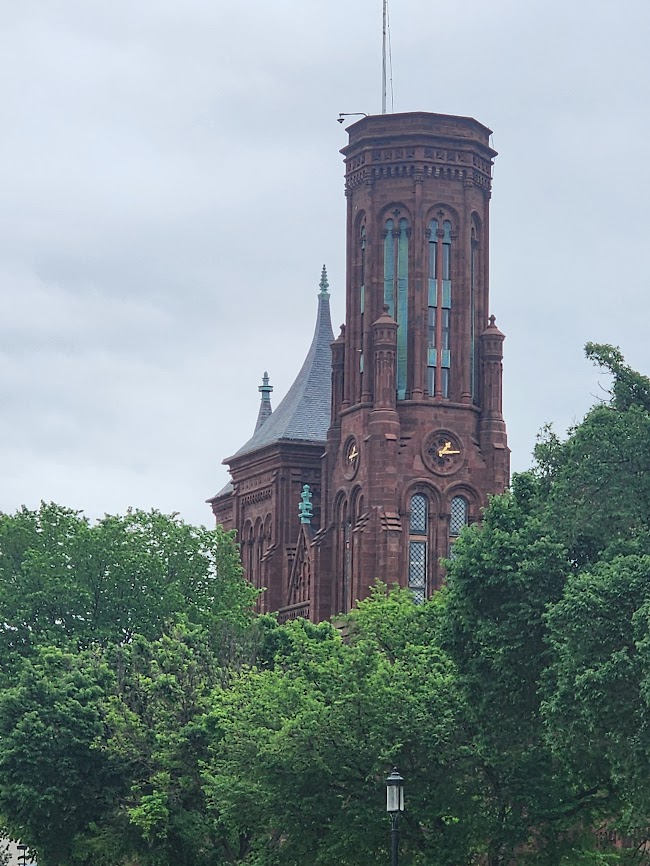
Smithsonian Institution Building Photo Credit : S. Ciotti
The report follows President Trump’s March executive order, Restoring Truth and Sanity to American History, which directed federal agencies to restore museums, monuments, and historic sites to what the administration described as “solemn and uplifting public monuments” reflecting the nation’s “extraordinary heritage,” “consistent progress toward becoming a more perfect Union,” and “unmatched record of advancing liberty, prosperity, and human flourishing.”
Opened in 1964, the National Museum of American History is among the Smithsonian’s most visited museums. Its collections document the political, scientific, technological, military, cultural, and social history of the United States through more than three million artifacts. Permanent exhibitions explore subjects ranging from the presidency and the First Ladies to transportation, medicine, innovation, immigration, civil rights, women’s suffrage, popular culture, foodways, philanthropy, and the everyday lives of Americans.
Beyond its galleries, the museum maintains an extensive online educational program featuring essays, videos, and digital collections on topics ranging from medical history and the evolution of consumer products to lesser-known aspects of American culture. Recent features have examined the history of menstrual products and their impact on women’s lives and opportunities, while others have explored the changing traditions surrounding American birthday celebrations.
As part of the nation’s 250th anniversary, the museum recently opened In Pursuit of Life, Liberty & Happiness, a building-wide exhibition featuring 250 objects that examine how successive generations of Americans have sought to realize the ideals expressed in the Declaration of Independence. Museum staff have described the exhibition as an opportunity to explore both the nation’s founding principles and the diverse experiences of those who have pursued them over two and a half centuries.
The White House report argues that such programming reflects a broader institutional shift away from traditional historical interpretation. Its central finding states that the museum has not merely broadened its historical scope or incorporated previously overlooked stories, but has instead “explicitly adopted an ideological framework” that treats American history “as a political instrument to divide, dispirit, and discourage our citizens.”
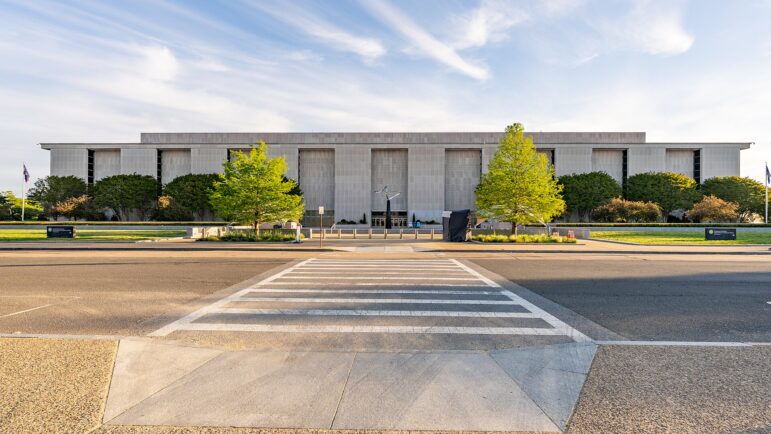
National Museum of American History – The south facade of the museum [Photo Credit: ajay_suresh CC BY 4.0]
Among its principal criticisms, the report contends that the museum devotes insufficient attention to the nation’s Founders and the American Revolution, minimizes the role of Christianity in shaping the United States, and presents colonialism, westward expansion, immigration, and race primarily through frameworks of oppression and systemic injustice. It further argues that museum leadership has intentionally sought to “reframe the traditional celebratory narrative of U.S. history” and transform the museum from a center of historical scholarship into an instrument of social activism.
The report specifically criticizes exhibitions including Many Voices, One Nation and Upending 1620: Where Do We Begin?, asserting that they portray Christianity principally as a force of conquest and cultural erasure while giving little attention to its historical role in the abolitionist movement, the Civil Rights Movement, and the development of American civil society. It also objects to exhibits describing Thanksgiving alongside the National Day of Mourning observed by many Indigenous peoples and to interpretations of the Pilgrims that emphasize colonization rather than religious liberty.
The report also points to public statements by museum director Anthea Hartig, including remarks describing history as a tool for advancing social justice, as evidence that museum leadership has embraced an activist mission inconsistent with what the administration views as the Smithsonian’s congressional mandate.
Beyond its critique of museum exhibits, the executive order carries significant governance implications. It directs Vice President JD Vance, if necessary, to work with Speaker Mike Johnson (R-La.) and Senate Majority Leader John Thune (R-S.D.) in appointing citizen members to the Smithsonian Board of Regents, signaling the administration’s intention to influence not only the interpretation of American history but also the institution’s future leadership.
The Smithsonian had not publicly responded to the White House report as of press time.
The report reflects an expanding federal effort to shape how publicly supported institutions present religion, national identity, colonialism, and the experiences of minority communities. Those subjects have become recurring points of contention across education, public history, and federal cultural policy, raising broader questions about whose histories are emphasized, whose religious traditions receive recognition, and how governments balance patriotic narratives with increasingly diverse understandings of the American past. For minority religious communities whose histories and perspectives often figure in broader discussions of religious diversity and American identity, the debate extends well beyond museum policy.
The Wild Hunt is not responsible for links to external content.
To join a conversation on this post:
Visit our The Wild Hunt subreddit! Point your favorite browser to https://www.reddit.com/r/The_Wild_Hunt_News/, then click “JOIN”. Make sure to click the bell, too, to be notified of new articles posted to our subreddit.