
Essay Connects Ancient Views with Trumpism
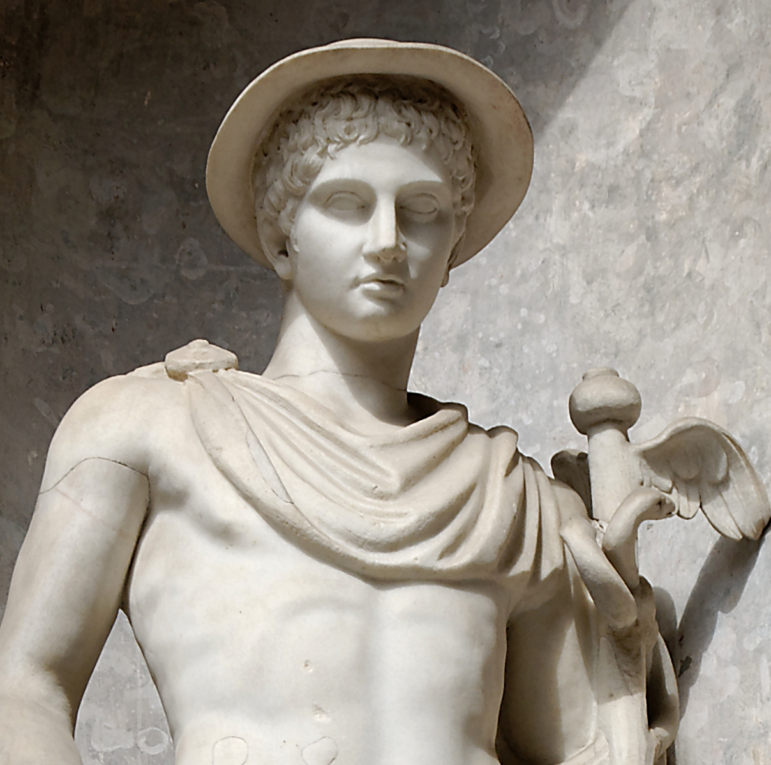
Statue of the Hermes, so-called “Hermes Ingenui”, carrying a winged caduceus upright in his left hand. Roman copy after a Greek original of the 5th century BCE. Museo Pio-Clementino, Vatican Museums, Rome [public domain
MILWAUKEE — In a recent essay published by the Milwaukee Independent, columnist Mitchell A. Sobieski argues that many supporters of President Donald Trump who identify as Christian are embracing values more aligned with pre-Christian “pagan” systems centered on power, dominance, wealth, and tribal loyalty than with the teachings of Jesus. The article uses the term “pagan” not in reference to contemporary Pagan or Earth-centered spiritualities, but in its historical and philosophical sense tied to ancient imperial cultures.
Sobieski contends that the political and cultural priorities often associated with the MAGA movement, including nationalism, hostility toward immigrants, glorification of wealth, and aggressive displays of strength, stand in tension with Christian teachings emphasizing compassion, humility, mercy, and care for marginalized people. Rather than describing this contradiction as simple hypocrisy, the author argues that it reflects a fundamentally different moral worldview rooted in conquest and hierarchy.
The essay also critiques forms of Christian nationalism that portray Trump as divinely chosen or spiritually ordained, noting how some supporters frame political conflict in apocalyptic religious terms. Similar themes have been widely discussed by scholars and commentators examining the overlap between Trumpism, Christian nationalism, and authoritarian populism in the United States.
Nevertheless, the piece resonates as an example of how the word “pagan” continues to be used in broader political and cultural debates in ways that differ significantly from the identities and practices of modern Pagan communities. Contemporary Pagans have long challenged portrayals that equate Paganism with moral corruption or authoritarian values, instead emphasizing pluralism, reverence for nature, community ethics, and spiritual diversity.

CBC on Witchcraft in Canada
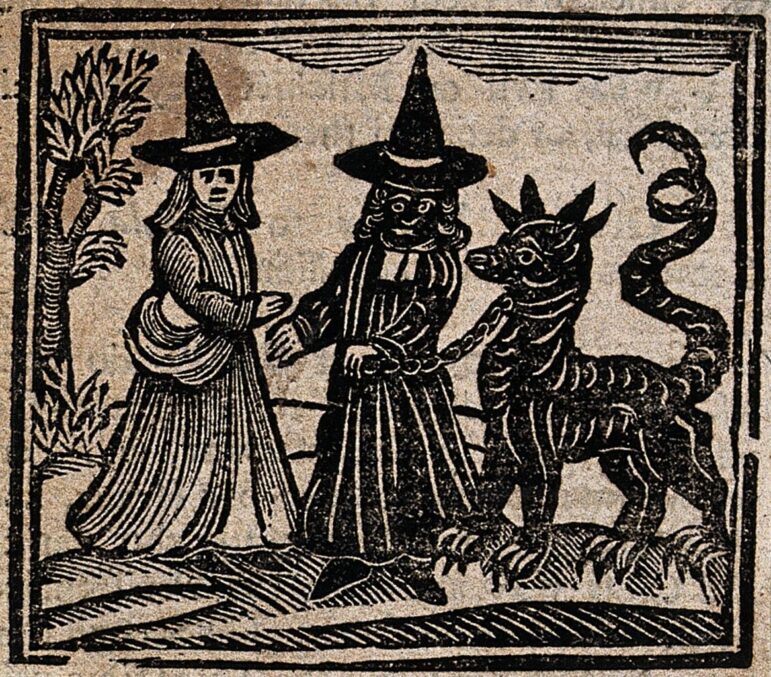
Two witches meeting with a great beast in a woodcut from 1720 [public domain
TORONTO — Last week, CBC News examined the growing visibility and popularity of Witchcraft, Pagan spirituality, and occult practices across Canada, particularly among younger generations seeking alternatives to organized religion and traditional social structures. The article explores how practices once marginalized or misunderstood are increasingly entering mainstream culture through social media, independent spiritual communities, festivals, bookstores, and online spaces devoted to tarot, herbalism, astrology, spellwork, and modern witchcraft.
The report notes that contemporary Witchcraft in Canada is highly diverse, encompassing traditions such as Wicca, folk magic, eclectic Paganism, and spiritually focused wellness practices.
Practitioners interviewed in the piece describe witchcraft less as a rejection of modern life and more as a means of reclaiming personal agency, building community, connecting with nature, and creating rituals that provide grounding during periods of political uncertainty, economic stress, and social isolation. Many participants also emphasized feminist and LGBTQ-inclusive aspects of modern Pagan and witchcraft communities.
CBC suggests that part of the resurgence is related to the COVID-19 pandemic, when many people turned inward and sought spiritual practices that could be performed individually or in small groups. Online communities flourished during lockdowns, introducing new audiences to Witchcraft-themed content on platforms like TikTok, YouTube, and Instagram. The article also highlights the commercialization of witchcraft aesthetics and spiritual products, raising questions about cultural appropriation, authenticity, and the blending of spirituality with consumer culture.
The practitioners interviewed in the story stress that Witchcraft is often misunderstood by the broader public. Many reject stereotypes linking witchcraft to evil or sensationalized depictions in popular entertainment. Instead, they describe their practices as rooted in healing, mindfulness, ancestral traditions, seasonal observances, and spiritual empowerment.
The CBC article portrays modern Witchcraft in Canada as part of a broader shift away from institutional religion toward individualized forms of spirituality. For many Canadians, especially younger adults, these practices offer both personal meaning and a sense of belonging in an era marked by rapid social and cultural change.
Kent Council Votes to Say ‘Lord’s Prayer’ at Meetings

KENT, England — In a follow-up to last week’s story, The National Secular Society (NSS) warns the vote serves “a Christian nationalist agenda.”
The NSS expressed disappointment that a Kent council has voted to introduce prayers at meetings.
Today, Kent County Council voted 46-15 in favour of changing the council’s constitution to specify that meetings will start with a recital of the ‘Lord’s Prayer’, despite opposition from multiple parties. There were six abstentions.
Amendments to have a moment of silent reflection, or for the prayers to be said prior to the official agenda beginning, were defeated.
Prayers have not been said at Kent County Council meetings since 1987.
The NSS, which urged all councillors prior to the meeting to oppose the plans, called the proposal “a regressive and divisive move which sends entirely the wrong message to the people of Kent.”
Councillors call plans “ridiculous farce”, “performative virtue-signalling.”
The plans were put forward by Reform UK councillor Christopher Hespe. Kent County Council came under Reform control this year. Reform UK councillors also imposed prayers on Derbyshire County Council last year after the party took control of the council.
Opposing the amendment to have a silent moment of reflection, Council Leader Linden Kemkaran said she wanted the lord’s prayer to “take up the space” of that silence.
She said the lord’s prayer is a “profound unifier”.
Reform councillor Spencer Dixon called the opposition to the plans “fake outrage”.
Fellow Reform councillor Terry Mole said that while he does not know if he’s a Christian and he doesn’t go to church, he does pray to win the lottery and said that councillors who do not want to listen to the lord’s prayer should just ‘bow their head’.
Cllr Mole also said most councillors would be buried in a churchyard. In fact, 78% of people in Britain are cremated.
Paul Webb, another Reform councillor, appeared to suggest that Islamic prayers said in Birmingham City Council were a reason to bring Christian prayers into Kent County Council.
Several Reform councillors said the UK is a “Christian country”.
But Liberal Democrat councillors and opposition leader Antony Hood pointed to census data which shows Christians are a minority in the UK. He added it was “appalling” to suggest that there was fake outrage about the plans, and that this change in the constitution was taking place without consultation because local people would find it “horrifying”.
Mike Sole (pictured), another Lib Dem councillor, said he had spoken to local religious leaders who had said they “don’t think the lord’s prayer is appropriate”.
Green Party councillor Stuart Heaver called the debate “a lot of nonsense”, saying he was “embarrassed” to be discussing prayers amid other “really pressing” issues in Kent.
Fellow Green Cllr Rob Yates said it was a “ridiculous farce” to be paid by taxpayers to pray. Cllr Paul Stepto, another Green, called it “performative virtue-signalling”, and said meetings and other business “should be secular”.
Conservative councillor Bill Barret said he “wasn’t elected to say prayers in this chamber” and that the plan represents “a slight creep on the agenda we were elected on”. He added that as an atheist, introducing prayers made him feel “slightly uncomfortable”.
Many councils have stopped holding prayers before meetings to make them inclusive of people of all religions and beliefs. This includes St Albans City and District Council, which voted last year to end prayers because they may “exclude or alienate individuals of different faiths or those without religious beliefs”.
Kent County Council also voted to end meetings by singing the national anthem.
The prayers will be introduced at the next council meeting on July 16th.
“This is a regressive and divisive move which sends entirely the wrong message to the people of Kent,” said Megan Manson, NSS head of campaigns. “It places Christianity on a pedestal above all religions and beliefs, contradicting values like tolerance, inclusion and equality.
She added, “It also serves a Christian nationalist agenda which seeks to equate Christian identity with Britishness, and further break down the separation of religion and state. This is not the way to foster community cohesion or equal citizenship.”
Thank you! Thank you! Thank you!
If you’ve been thinking about supporting The Wild Hunt, now is the time.
👉 This is how you can help:
Tax-Deductible Donation
PayPal
Patreon
As always, our deepest gratitude to everyone who has brought us this far.
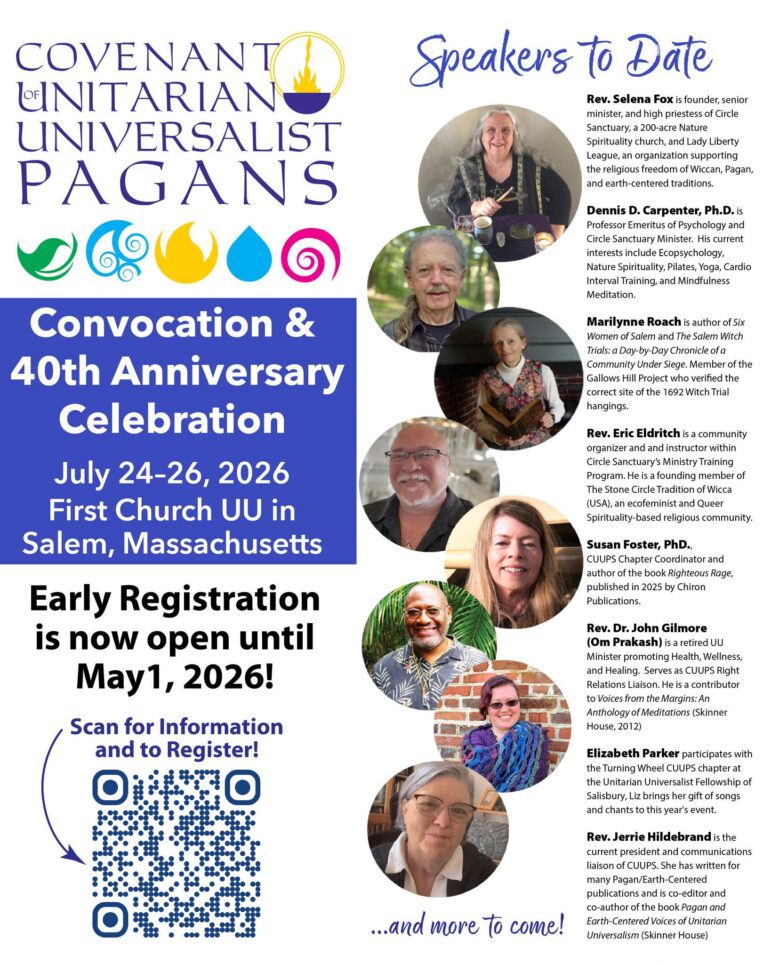
Events and Announcements
Do you have news to share with our community?
Announcements? Festivals? Elevations? Events?
We’ll share it with the community in the
TWH Events Calendar featured on the Front Page.
(Yes, it’s free, we just need your information.)
Let us know at pcn@wildhunt.org
More Events at our new Events Calendar
Tarot of the Week by Star Bustamonte
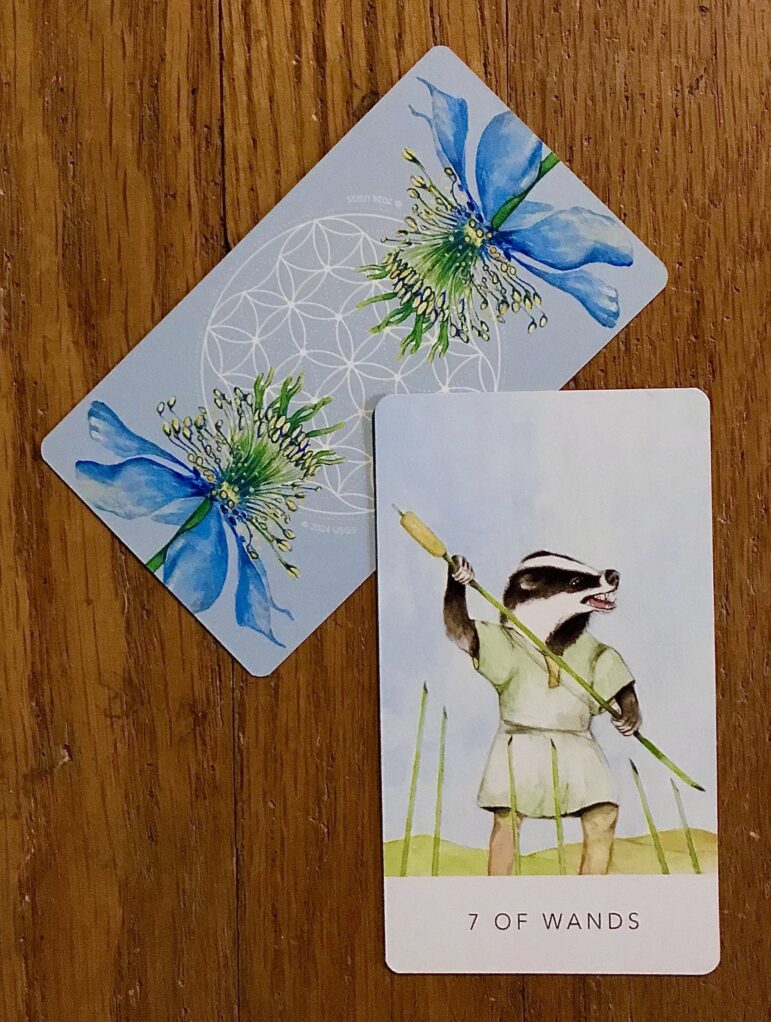
Deck: Black Seed Tarot, by Theresa Hutch, published by U.S. Games Systems, Inc.
Card: Seven (7) of Wands
This week is likely to involve opportunities for engaging in battles that may or may not be righteous at their core. Before picking up the staff or wand, consider whether this is a just cause and actually worth fighting for. It’s also worth considering whether conflict can be avoided. If engagement is not negotiable and required, refusal to use underhanded or dirty tactics is still taking the high road.
Conversely, now is unlikely to be the time to go second-guessing decisions already made. Tapping into one’s inner courage by continuing to fight for values held dear and believed in is key this week. Banishing doubt and pushing forward, no matter what the opposition might toss out there, is liable to be equally important.
👉 Don’t forget: supporting The Wild Hunt helps sustain independent Pagan journalism.
Tax-Deductible Donation
PayPal
Patreon
As always, our deepest gratitude to everyone who has brought us this far.
Tactical Nuclear Penguins
It’s that time when many start wondering what the hit of the summer will be, and new releases are every. The Italian indie rock band, Pinguini Tattici Nucleari, often called just PTN, caught our attention with a new release this past week that had distinctly Witchy resonance.
Croatia’s submission to the Eurovision song contest, LELEK by the group Andromeda, also had a distinctly witchy sense with amazing visuals and feminist Pagan strength.
And finally, a reminder from Luxembourg’s Eva Mairja that “Mother Nature, she knows.”
The Wild Hunt is not responsible for links to external content.
To join a conversation on this post:
Visit our The Wild Hunt subreddit! Point your favorite browser to https://www.reddit.com/r/The_Wild_Hunt_News/, then click “JOIN”. Make sure to click the bell, too, to be notified of new articles posted to our subreddit.