

Uncovering the Past
COPENHAGEN — When we received this press release, we had to share it. You’ll see why. Beer has appeared in these pages before, often with a sense of reverence and never about pour decision. As our weekend columnist Siobhan Ball wrote last year, it is “the source of civilization.” And a few years ago, Sean McShee reported evidence of brewing dating back to 11,000 BCE at a site in Haifa, Israel.
But this latest discovery offers something different: not just beer, but beer alongside magic, specifically, with a nod to witchcraft embedded in some of the oldest written records humanity has left behind. It was too compelling not to share.
The findings come from a collaborative effort involving researchers at the University of Copenhagen and the National Museum of Denmark, particularly through the University’s Department of Cross-Cultural Studies. The project, titled Hidden Treasures: The National Museum’s Cuneiform Collection, represents the first comprehensive effort to analyze, identify, and digitize a vast collection of ancient clay tablets that have, until recently, remained largely unstudied.
For over a century, the National Museum has housed these artifacts, many more than 4,000 years old, written in ancient languages such as Sumerian and Akkadian. Though they sat quietly in storage, the recent push to digitize and examine them has revealed a remarkably diverse archive: texts on governance, correspondence, medicine, and magic, alongside everyday administrative records.
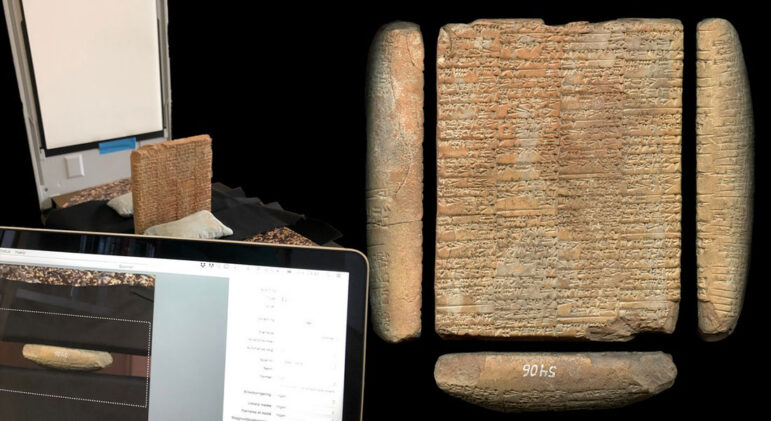
Researchers from the National Museum of Denmark and the University of Copenhagen have analysed, identified and digitised a large collection of cuneiform tablets. Photo via National Museum of Denmark Credit: Troels Pank Arbøll
Emerging roughly 5,200 years ago in ancient Mesopotamia (modern-day Iraq and Syria), cuneiform is one of the earliest known writing systems. Its name derives from the Latin cuneus, meaning “wedge,” referencing the wedge-shaped impressions pressed into clay tablets using a stylus. Unlike alphabetic writing, cuneiform combined pictographic and phonetic elements, symbols that could represent entire words or sounds. Over time, it became the backbone of administration, literature, and cultural memory in early urban societies. Cuneiform has documented and preserved some of the most amazing marvels of the ancient world.
Now, these ancient tablets are being digitized and thus made more broadly available for research.
The Copenhagen-led research has breathed new life into these texts. As one project statement notes, “This is what happens when a 5,000-year-old technology meets the digital age.” The result is not only preservation, but reinterpretation, opening a window into how ancient people understood power, illness, spirituality, and daily life.
Among the most striking discoveries is a group of tablets originating from the Syrian city of Hama, dating back nearly 3,000 years. According to Assyriologist Troels Pank Arbøll, these texts were likely part of a temple library that survived the city’s destruction by Assyrian forces in 720 BCE. In the chaos of plunder, these tablets were left behind, only to be rediscovered centuries later.
What makes these particular texts remarkable is their content. They include detailed medical treatments and magical incantations, evidence of a worldview in which healing and spirituality were deeply intertwined. Among them is an especially significant tablet describing an anti-witchcraft ritual.
“One of the clay tablets turned out to contain a so-called anti-witchcraft ritual,” Arbøll explains, “which was of enormous importance to the royal authority in Assyria because it had the remarkable ability to ward off misfortunes, such as political instability, that might befall a king.”
The ritual itself was elaborate, lasting through the night and involving the burning of small wax and clay figures while an exorcist recited fixed incantations. That such a text was found far from the Assyrian capital, and in a region considered peripheral, surprised researchers, suggesting a wider geographic spread of these practices than previously understood.
At the same time, the collection also reveals the mundane alongside the mystical. Among the tablets is a simple administrative record: what appears to be an ancient receipt for beer.
“A great many of the cuneiform tablets we have today bear witness to a highly developed bureaucracy,” Arbøll notes. “There was a need to keep track of the advanced societies that were being built… It is therefore not surprising that one of the tablets… contains something as commonplace as a very old receipt for beer.”
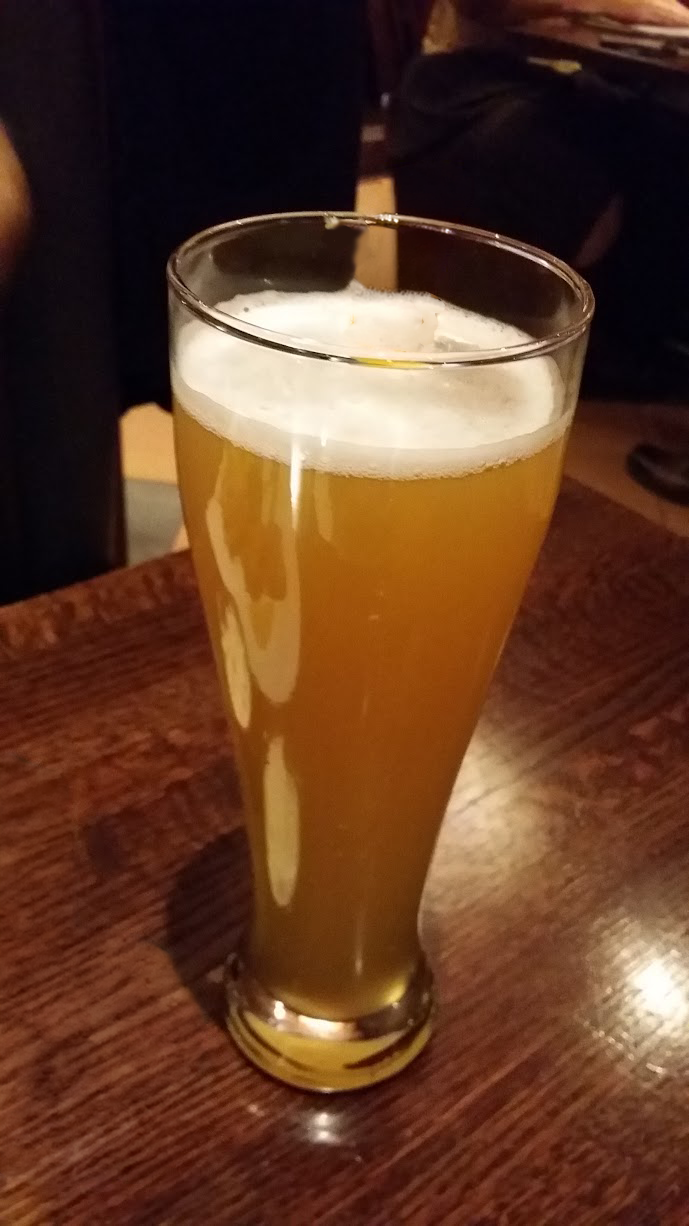
Beer [Photo Credit: S. Ciotti
This beer and bureaucracy, alongside ritual and witchcraft, offer a powerful reminder of how meticulous record-keeping was in that culture. What once appeared as static artifacts are now digitized and dynamic sources, revealing economies, fears, rituals, and even their drinks of choice- not unlike today. Cheers!
Hidden Treasures: The National Museum’s Cuneiform Collection is led by Nicole Brisch (University of Hamburg) and Anne Haslund Hansen (National Museum), and the project is supported by the Carlsberg Foundation, the Augustinus Foundation and the Edubba Foundation.
The Wild Hunt is not responsible for links to external content.
To join a conversation on this post:
Visit our The Wild Hunt subreddit! Point your favorite browser to https://www.reddit.com/r/The_Wild_Hunt_News/, then click “JOIN”. Make sure to click the bell, too, to be notified of new articles posted to our subreddit.