
TWH — Friday, March 20, 2026, marked not only the Spring Equinox, celebrated by many Pagans and Wiccans as Ostara, but also World Rewilding Day. The global observance is intentionally aligned with the spring equinox in the Northern Hemisphere, a moment long associated with balance, renewal, and the awakening of the natural world. Established in 2021 by the Global Rewilding Alliance, the day highlights a growing movement grounded in a deceptively simple premise: when given space and time, nature has an extraordinary capacity to recover.
Rewilding has emerged as one of the more compelling approaches within contemporary conservation. At its core, it seeks to restore ecosystems not through intensive management, but by reestablishing natural processes and allowing landscapes to become self-sustaining. This distinguishes it from more traditional conservation models, which often rely on continuous intervention. Rewilding instead prioritizes ecological autonomy, removing barriers, reintroducing species, and stepping back.
The movement is often framed through the “Three Cs”: cores, corridors, and carnivores. Core areas are large, protected landscapes where ecosystems can function with minimal disturbance. Corridors connect these areas, enabling wildlife to migrate, disperse, and maintain genetic diversity. The third element, carnivores or keystone species, recognizes that certain animals disproportionately shape ecosystems. Wolves, beavers, and bison, for example, influence vegetation patterns, water systems, and even the behavior of other species, creating cascading ecological effects, often referred to as trophic cascades, where changes at the top of the food chain reshape entire ecosystems.
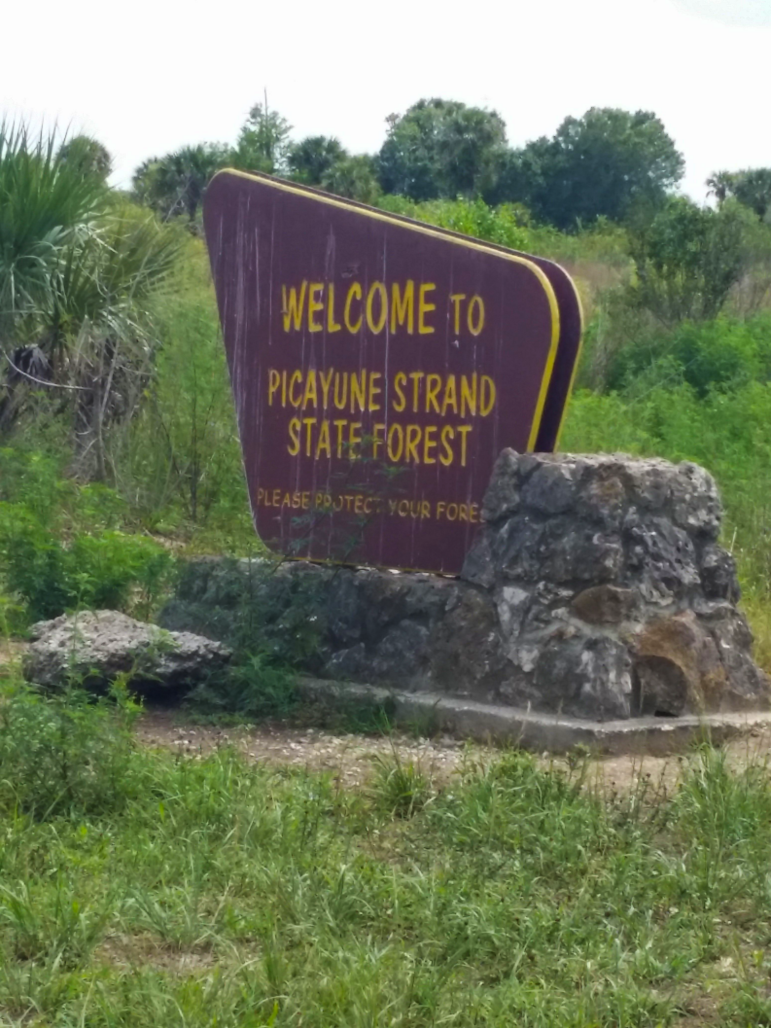
Picayune Strand State Forest in Florida [MJTM
The importance of rewilding extends well beyond wildlife. Restored ecosystems support biodiversity, stabilize climates, and provide essential services such as clean water and flood mitigation. Wetlands absorb storm surges, forests store carbon, and healthy soils retain moisture. In an era of intensifying climate disruption and habitat fragmentation, these functions are not abstract; they are increasingly central to human survival.
Rewilding can take multiple forms. Passive approaches involve simply removing pressures, ending logging, halting development, or allowing abandoned land to regenerate. Active strategies may include dismantling dams, reintroducing extirpated species, or restoring hydrological systems. Increasingly, rewilding is also entering urban contexts, where cities replace manicured landscapes with native plantings and micro-forests that support pollinators and reduce heat.
Despite its promise, rewilding remains a contested approach. Critics argue that some projects risk romanticizing “pristine” landscapes that never truly existed, particularly in regions long shaped by Indigenous land stewardship. Others raise concerns about the social and economic impacts of reintroducing large predators, especially in agricultural communities. Questions of land use, property rights, and governance often complicate implementation. These critiques have prompted many rewilding initiatives to adopt more inclusive, community-based approaches that integrate local knowledge and address human concerns alongside ecological goals.
Nevertheless, even with these tensions, the evidence for rewilding’s effectiveness continues to grow. Around the world, projects are demonstrating that ecosystems can recover with surprising speed when constraints are removed.
One of the most striking examples in the United States is the restoration of the Klamath River along the California–Oregon border. Following the removal of major dams in 2024, widely considered the largest dam removal project in history, the river has begun to reclaim its natural flow. By early 2026, thousands of Chinook salmon had already returned upstream, marking a dramatic resurgence. The effort, led in part by the Yurok Tribe alongside state agencies and conservation groups, also included the replanting of tens of thousands of native plants to stabilize riverbanks and rebuild habitat.
In Florida, a different but equally transformative project is unfolding at Picayune Strand State Forest, often locally referred to as “The Squares.” Once a failed housing development crisscrossed by roads and drainage canals, the area is being restored to its original wetland system. Engineers have removed miles of infrastructure to reestablish natural water flow, allowing the landscape to rehydrate and reestablish natural flow patterns. As a result, wildlife is returning, including the endangered Florida panther and wood stork, demonstrating how even heavily altered environments can be brought back into ecological balance.
Beyond the United States, rewilding efforts are gaining momentum globally. In Canada, the reintroduction of plains bison into protected areas such as Banff National Park has restored a key ecological force absent for over a century. The herd, which began with just a handful of animals, now numbers over one hundred and is once again shaping grassland ecosystems through grazing and movement.
In Italy, rewilding initiatives are focusing on reconnecting fragmented habitats in the Apennine Mountains. Plans announced for 2026 include the removal of extensive fencing to allow species such as wolves and Marsican brown bears to move freely across the landscape. Efforts are also underway to reintroduce vultures, restoring scavenger roles that are critical to ecosystem health.
Scotland has emerged as a leader in the European rewilding movement, with ambitions to become the world’s first “Rewilding Nation.” Large-scale initiatives such as the Affric Highlands project aim to restore native woodlands and reestablish ecological connectivity across vast landscapes. Early results are striking: rewilded areas have seen dramatic increases in bird populations, pollinators, and overall biodiversity.
These examples illustrate a central principle of rewilding: ecosystems are not static. They are dynamic systems capable of renewal when ecological relationships are restored.
This growing body of success has begun to influence conservation policy, as well.

The Seal of the State of Illinois
In a historic development, Illinois became the first U.S. state to formally adopt rewilding as a conservation strategy. Enacted through HB 2726 and codified in state law, the measure grants the Illinois Department of Natural Resources broad authority to implement rewilding practices, including habitat restoration, species reintroduction, and the recovery of ecological processes. The legislation, championed by State Senator Rachael Ventura and State Representative Anna Moeller, took effect on January 1, 2026, making Illinois the first state in the nation to formally embed rewilding into law.
The law is particularly notable given Illinois’s landscape, where approximately 76 percent of the land is dedicated to agriculture, and only a fraction remains in its original ecological state. Supporters argue that this makes rewilding not only relevant but necessary. The statute explicitly recognizes the role of keystone species and emphasizes long-term ecological resilience, including benefits such as flood mitigation, wildfire reduction, and pollinator support.
At the same time, the law reflects the broader challenges facing the movement. Its success will depend not only on legislative authority but on public engagement and sustained implementation. As with rewilding efforts elsewhere, the balance between ecological restoration and human interests will shape its trajectory.
Rewilding does not offer a single blueprint. Instead, it represents a shift in perspective, one that recognizes that healing ecosystems may require, at times, stepping aside. As projects from California to Scotland demonstrate, the results can be profound. And as Illinois’s new law suggests, rewilding is moving from the margins of conservation into its policy future, inviting a reconsideration of how humans live in relationship with the more-than-human world.
The Wild Hunt is not responsible for links to external content.
To join a conversation on this post:
Visit our The Wild Hunt subreddit! Point your favorite browser to https://www.reddit.com/r/The_Wild_Hunt_News/, then click “JOIN”. Make sure to click the bell, too, to be notified of new articles posted to our subreddit.