

The ghost didn’t get up to much. I think he might have, if he had chosen a less busy place to spend his afterlife. As it was, he stuck to the archives.
It was a single room on the second floor of the museum with a long glass wall along one side to let visitors watch the volunteers and researchers work. We figured that the ghost favored it because he had donated so many of the books – but honestly, it might have been the windows. They were certainly how he most often made himself known, waiting until someone’s back was turned to hoist something up against the outside of glass in the hopes that the researcher would spook.
Next door in one direction was a massive desk that, when nobody was in the room, would open and slam its own drawers. In the other direction, the stairway where we once photographed the face of a woman, hugely tall and disproportional, wrapped in black. There was a corner where people occasionally heard drumming, a theater where one of the volunteers swore she had her hair pulled – and that was just in the museum. It took up one side of an old brick railroad station, and the library that took up the other side had their own cast of spectral characters. There was the woman who sobbed in the restroom, the old conductor who walked the main stair, the figure that watched you from the office.
And yet, when the ghost hunters came, they left with very little. We set up in each room in turn, calling on the occupants to make themselves known. We pulled out the artifacts that guests had seen move, shared our own stories – and got nothing when these strangers were in the room. It was only after they left, when the volunteers who were familiar with the place pulled out our own divination tools, that anything happened.
At the time, we chalked it up to orneriness on the parts of the ghosts. Sure, of course they’d talk to us – but heaven forfend they give any proof they were there when it would have mattered.
Now, looking back, I think about the people who come into my neighborhood from outside. I wouldn’t talk to them, either.
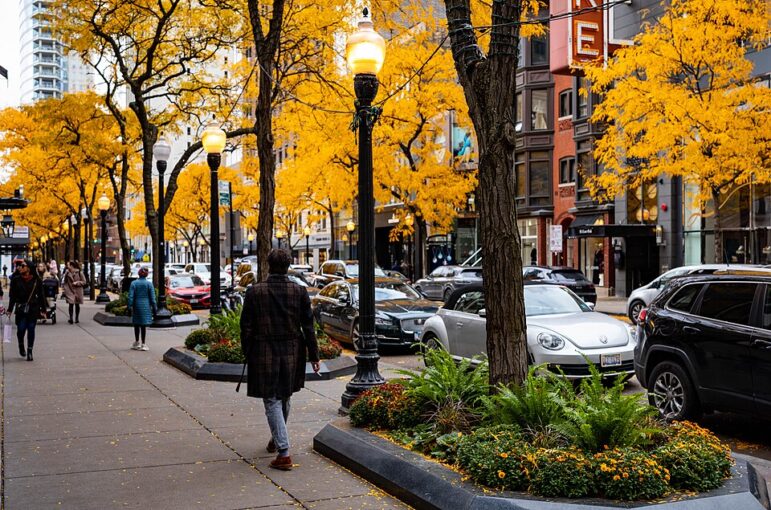
Oak Street, Chicago [rboed*, Flickr, CC 2.0]
We know it’s a pain to ask for money—but here are the facts.
Since January, The Wild Hunt’s readership has soared past 400,000 views a month. That’s humbling—but higher reach also means higher costs. Hosting, technology, and reporting all add up.
Our editors are unpaid, and some of our staff volunteer their time. But we believe everyone deserves to be paid for their work.
We tried advertising once, and readers were flooded with Christian ads. That’s not who we are. The Wild Hunt is dedicated to providing Pagan readers perspectives they won’t see anywhere else.
We’ll never hide our stories behind a paywall—our community deserves access, no matter their ability to pay. To keep Pagan news free, independent, and authentic, we rely on you.
A few hundred supporters pledging $10 a month — or more if you can — would keep The Wild Hunt secure for the year. If you’ve been thinking about supporting us, now is the time.
👉 This is how you can help:
Tax-Deductible Donation
PayPal
Patreon
As always, our deepest gratitude to everyone who has brought us this far.

I think that there are a lot of different things that can happen to us after we die. The exact metaphysics of it are beyond me. Do different parts of our souls go to different places? Are those places determined before our deaths, or do we get a say? I wonder, but I don’t care what the answer is, particularly. What I believe is that there are a whole host of spirits – ancestors, some of the Gentry, and of course ghosts – that used to be human. What makes ghosts interesting is that most of the time they still seem human. Ghosts are the kind of person I could meet at the grocery store.
Take, for example, Fred, who I met on the ouija board. Fred was interested, primarily, in talking about the impact the right shoes have on playing a good game of golf. After talking to him, I met a woman named Phyllis who was looking for her daughter. Watching the planchette drag itself across the table, spelling out the words, was spooky. Telling Phyllis that I wasn’t Marion, that I didn’t know if a Marion had ever lived here – that was just a little sad. Every ghost that I’ve interacted with as a practitioner has been the same kind of conversation, mundane in the details and mystical only in the medium.
This isn’t to say that all ghosts are pleasant. I wouldn’t expect every stranger I walked up to on the bus to receive the intrusion with equanimity and curiosity. But that’s what they are – just strangers, just people going through their own stories.
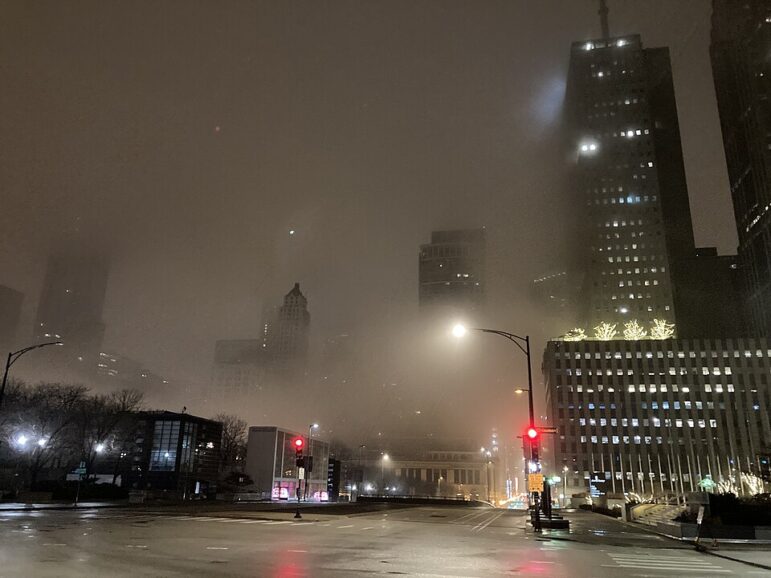
East Randolph Street in Chicago, Illinois [Michael Barera, Wikimedia Commons, CC 4.0]
When I moved to Chicago, I was poor and so was the neighborhood I ended up in. When I moved, the landlord who ran my building looked me over and said, in his Midwestern twang, that my neighbors “didn’t mind the bugs” because they “were used to being dirty” but if I had any problem with pests I only needed to call. What he meant was that the families who shared the building with me needed places to stay badly enough that they let him get away without treating the cockroaches, the bedbugs, or whatever made the loud skittering noises in the wall behind my stove.
We were packed close enough that we could hear each other through the floor and ceiling, and the problems we had were the problems that poverty brings knocking. The man upstairs, who took an hour to help me move in when my friends fell through, struggled with addiction. The family downstairs had some sort of confrontation about child support that brought everyone in the building out onto their patios to listen to the raised voices. Afterwards, my neighbor knocked on my door and apologized for the scene.
I was a small-town kid, just out of grad school and new to the big city. Even then, I knew I wasn’t in danger. Living with so many people around meant that I saw more of their lives than I was used to, but it also meant that I slowly grew into the community. People at the bus stop recognized me and chatted idly about where they had come from, where I was off to. I learned when to mind my own business, and when my attention was welcome. I, and everyone I knew, struggled to pay rent. But we weren’t scary.
Which is why it was so surprising to me when I heard that the Greater Chicagoland Pagan Pride had such a hard time getting vendors this year. “It’s because we’re really in Chicago and not a suburb,” my friend said, taking off their organizer’s hat for a moment. “People think they’ll be in danger.”
I looked around the park. A family barbeque a few yards away had started to fill the area with the smell of late summer. Someone was laying beneath a tree on a blanket, picnic discarded for a book. “Danger?”
“Or that they won’t be able to park,” my friend agreed, nodding to the parking lot. The look I gave them must have been frankly disbelieving – they shrugged. “Because it’s Chicago.”
I snorted. “When I moved to town, I had family who told me to roll through stop signs because someone might try to steal my car,” I said, dryly. “I’ve never had a car.”
They shrugged again. “People are just afraid. They’ve never been here.”
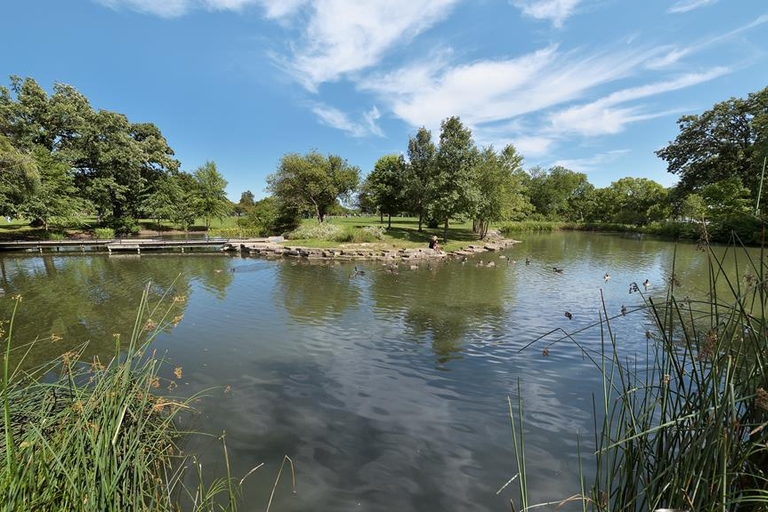
Riis Park Natural Area, Chicago [City of Chicago]
I’m still getting used to my new neighborhood. I don’t know the children on my street, don’t recognize the language that they yell in when they race up and down my sidewalk on summer afternoons. The building I live in is kept fastidiously clean and my neighbors are quiet and a little awkward – even the family with the newborn, who somehow only appears in the halls when she is smiling and beatific in her father’s arms. When we are forced to talk by an accident of mail or laundry, it’s mundane pleasantries – but we do talk. It’ll just be a while before I’m part of the landscape.
There is nothing scary here. I am not afraid when I walk down the street. The only time I’ve been afraid in Chicago – truly afraid, concerned for my own health – is when the cops are out. It happens more often, now. There are videos filmed blocks from my work of them trying to pull people off of bikes. Occasionally I’ll get off the bus and come around the corner to a line of unmarked SUVs that make the bluetooth in my headphones buzz and struggle. I don’t know what they are – plainclothes, ICE, Secret Service? I don’t know why they’re active on one day and not another, or what this particular show of force is meant to accomplish. All I know is that my walk along the river is rushed, that the streets downtown are emptier, that the tactical gear and guns are the only weapons I’ve ever seen in the city.
The government is threatening to send in the National Guard, and the city I love is going silent. Some of my friends are making tactical decisions on when and whether to go outside. Other neighborhoods, I know, are being raided – families pulled out of their beds, children stolen. I can’t imagine anything more terrifying. I know that it will probably not happen this far north. I repeat that to myself every time I see my neighbors’ children.
There are plastic ghosts in the windows of the house next door to me – the antique ones, with the painted features on hard surfaces, illuminated from within. The family there has a dog they leash outside while they mow the lawn. We are three blocks from the nearest police station. It’s a big concrete building, and I don’t think it’s supposed to make me afraid. But I know if a cruiser came down the street, we’d all be quiet as the grave.
The Wild Hunt is not responsible for links to external content.
To join a conversation on this post:
Visit our The Wild Hunt subreddit! Point your favorite browser to https://www.reddit.com/r/The_Wild_Hunt_News/, then click “JOIN”. Make sure to click the bell, too, to be notified of new articles posted to our subreddit.