
MIAMI – Dr. Leo Igwe, a Nigerian human rights advocate and secular humanist, has once again demonstrated his rare combination of moral clarity and intellectual courage. Renowned for challenging superstition and defending victims of witchcraft accusations across Africa, Igwe blends academic rigor with grassroots activism in a way few others can. With a Ph.D. in Philosophy and Religious Studies from the University of Bayreuth, and a fearless history of advocacy, he remains a leading voice for secularism and human dignity on the continent.
As founder of the Advocacy for Alleged Witches (AfAW), Igwe works to protect individuals, often women, children, and the elderly, who are targeted in witchcraft-related violence. His initiatives include public education campaigns, critical thinking workshops, and international advocacy. His mission: to dismantle the myth-based justifications for abuse and promote science-based reasoning in African public life.
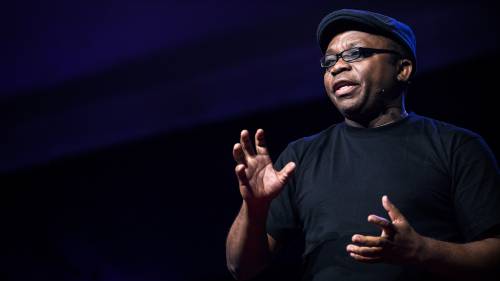
Dr. Leo Igwe [via X
Despite arrests, physical assaults, and defamation lawsuits from powerful forces opposed to his work, Igwe continues to press forward. Recognized by global institutions such as Humanists International and the James Randi Educational Foundation, his voice has never been more necessary.
I hope many Africans will read this….the existence of modern witches in the west does not validate witch persecution and witch hunting. The European witch then is different from European witch now. @Dillisyp @witchesofscotl1 https://t.co/RoV4cY4zPk
— Leo Igwe (@LeoIgwe) June 9, 2025
As many TWH readers know, witchcraft accusations are profoundly serious in many parts of the world. These accusations are often targeted against women and the elderly, and too often lead to the murder of the accused. Typically, the accused person is assumed to have brought on some misfortune against another individual, but more often, the accusation has economic motivations with devastating consequences.
That world of witchcraft accusations relies on fear masquerading as fact. Dr. Igwe wrote on X yesterday, “I hope many Africans will read this….the existence of modern witches in the west does not validate witch persecution and witch hunting. The European witch then is different from European witch now.”
He then released an opinion piece shared across news services in West Africa. His exposition, a response to a comment in his WhatsApp group, is extremely helpful to the Craft and provides a delineation of modern Witchcraft from beliefs developed from the panic fueled by medieval assumptions surrounding witchcraft accusations. His article confronts the confusion surrounding witchcraft in Africa, and is not only timely—it is essential, given the rise of forces combining religion, nationalism, and violence.
Dr. Igwe draws a critical line between myth, history, and modernity, imploring Africans – but really everyone- to rescue the term “witch” from centuries of misunderstanding and reclaim it for those who walk spiritual paths rooted in nature, ritual, and healing. He confronts the conflation of two radically different concepts: the “European witch then”—a product of medieval paranoia, Christian demonology, and patriarchal scapegoating—and the “European witch now”, a modern identity rooted in nature spirituality, personal empowerment, and healing.
As he notes, “these days witchy things, WitchTok, WitchCore, and witch romance fiction are gaining popularity across Europe and the rest of the Western world. Neopagan and modern witch practices are on the rise. ”
At the heart of Dr. Igwe’s argument is a simple fact: modern witches exist—and they are not what many have been led to believe. He targets his statement to Africans, but it can readily apply in many other parts of the world, including Europe and the Americas.
Igwe notes that witches are not the devil’s agents of medieval nightmares, nor the scapegoats of ancestral hysteria. Igwe also notes that practitioners of Neopagan paths such as Wicca and other forms of contemporary witchcraft have gained respect and recognition across Europe and the Americas.
By disentangling historical myth from spiritual reality, Igwe invites not just Africans, but everyone, to reevaluate how we talk about Witches, and whom we place in that category. In doing so, he affirms the religious freedom of modern Pagans while defending the human rights of those falsely accused. He bridges a critical gap between spiritual recognition and legal protection.
He invites readers to step away from colonial-era demonology and embrace the complicated spirituality of modernity. His work challenges the assumption—still tragically common across many parts of Africa and Asia—that all witches are malevolent and that suspicion justifies violence. It is a message sorely needed in communities where accusations of witchcraft continue to ruin lives, especially the lives of women, children, the elderly, and those suffering from mental illness.
Dr. Igwe’s message both dismantles superstition and affirms religious freedom as well. He underscores a shift already well underway in other parts of the world, where those once labeled “witches” are now honored as historical victims—and where modern Witches are respected as members of spiritual and artistic communities.
Igwe calls out the absurdity and danger of conflating misogynistic and bigoted folklore with fact. He pleads for critical thinking, asking why many are so eager to accept sensationalism and fear over the visible suffering of victims. “My goal is to rally all thinking Africans against witch hunts and the widespread witch-then mindset that enable and sanctify witch hunting,” He writes. “My objective is to defend, protect, and empower victims of witch hunts across the region.”
Without mentioning the ruminations about Witchcraft in Abrahamic faiths, Igwe calls for rejecting violence in favor of a richer, more nuanced understanding of the spiritual diversity and rejection of violence.
“Do I think that modern witches exist? Of course yes, they do.” Ige writes. “Like other religious practitioners, modern witches engage in nature worship, tarot, magic, and rituals with herbs and crystals.” He pognantly adds, “There are no witches who perpetrate evil acts as popularly believed.”
The Wild Hunt is not responsible for links to external content.
To join a conversation on this post:
Visit our The Wild Hunt subreddit! Point your favorite browser to https://www.reddit.com/r/The_Wild_Hunt_News/, then click “JOIN”. Make sure to click the bell, too, to be notified of new articles posted to our subreddit.