Archives For Hawaii

This week the 113th Congress of the United States of America convened, and while this is a routine part of our government’s normal functioning, both the House of Representatives and the U.S. Senate saw some historic firsts that should appeal to those hoping for a more religiously diverse representative body. Perhaps the most high-profile is Hawaii Rep. Tulsi Gabbard, the first Hindu to be elected to Congress, and the first person to swear their oath of office on the Bhagavad Gita.

Hawaii Rep. Tulsi Gabbard

Hawaii Rep. Tulsi Gabbard

“I chose to take the oath of office with my personal copy of the Bhagavad-Gita because its teachings have inspired me to strive to be a servant-leader, dedicating my life in the service of others and to my country.” – Rep. Tulsi Gabbard

In addition to Gabbard, Sen. Mazie Hirono, also of Hawaii, became the first Buddhist elected to the U.S. Senate (she had already served in the House), and the first Asian-American female senator.

Sen. Mazie Hirono of Hawaii

Sen. Mazie Hirono of Hawaii

“I don’t have a book [...] But I certainly believe in the precepts of Buddhism and that of tolerance of other religions and integrity and honesty [...] It’s about time that we have people of other backgrounds and faiths in Congress…”Sen. Mazie Hirono (in 2007)

A third first comes from Arizona where Rep. Kyrsten Sinema, the first openly bisexual member of Congress, also happens to be the first explicitly religious “none” elected to Congress.

Rep. Kyrsten Sinema

Rep. Kyrsten Sinema

Democratic Arizona Rep. Kyrsten Sinema, who was raised a Mormon, is religiously unaffiliated but does not describe herself as an atheist. Her campaign was unavailable for comment to Whispers due to the swearing in, but spokesman Justin Unga told the Religion News Service in November that Sinema favors a “secular approach.” He told the New York Times the same month that Sinema “believes the terms ‘nontheist,’ ‘atheist’ or ‘nonbeliever’ are not befitting of her life’s work or personal character.”

There are other interesting religious facts about the 113th Congress, but I think these three women are representative of the shifts happening in the United States right now. Specifically the rise of “nones” who aren’t necessarily atheists, but also don’t claim a religious identity,  and the ongoing growth of non-Christian minority religions. We are fast approaching the day where hot-button moral issues in this country can no longer be discussed solely within a Judeo-Christian context, and we are already seeing the end of the “white Christian strategy” in national politics. It’s a new dawn, one that started with the November elections, and is now enacted with this new Congress.

It’s election day here in the United States, and most Americans are glued to their news sources of choice to see who will guide this nation for the next four years. In addition, control of our Senate, and the outcome of several local ballot initiatives will decided this day, making for an exciting evening for those invested in our democratic republic. Many American Pagans, like every other group in this country, also find themselves deeply invested in our political process if my Facebook wall is any indicator, and so they should, as the very notions of democracy, of a republic, originated in pagan thought, in pre-Christian societies.  Thomas Jefferson, a key architect of America’s religious freedoms, was proud that our country, in principle, encompassed “the Jew and the Gentile, the Christian and Mahometan, the Hindoo, and Infidel of every denomination.” 

So on this election day, as we wait for the results to roll in, let’s focus on some electoral/election stories of interest to, or involving, modern Pagans.

Selena Fox of Circle Sanctuary, shortly after voting this morning in Wisconsin.

Selena Fox of Circle Sanctuary, shortly after voting this morning in Wisconsin.

  • The ever-politically active Starhawk shares some final thoughts on the election, making her endorsements, but also stressing the importance of voting in general. Quote: “Still need inspiration?  Consider the sixty years women struggled to get the right to vote.  Think of those suffragists on hunger strike, force-fed through tubes, lying in rat-infested prisons—they want you to vote!  Think of the civil rights workers in the South, risking their lives to register voters, think of the three who were murdered in 1964, Shwerner, Chaney and Goodman.  They want you to vote!”
  • A Witch-Doctor from the Kenyan village where Barack Obama’s father is buried says his reading predicts our current president will win in a landslide. Quote: “Mr Dimo, who claims to be 105, says that the mystical items dispute news that the election will be a close call.  Pointing to a white shell, he declared: ‘Obama is very far ahead and is definitely going to win.’” I’m sure Nate Silver won’t argue too much with that prediction.
  • AlterNet digs up some rather embarrassing assertions from Republican Massachusetts State Senate candidate  Sandi Martinez, including how popular children’s shows of the 1980s will turn you towards Witchcraft. Quote: “On her cable access show in 2004, Martinez warned that trick-or-treating, Harry Potter books, and the “new age images” presented in 1980s-era programming such as “The Smurfs” and “The Care Bears” could destigmatize the occult and leave children vulnerable to the lure of witchcraft.” Awesome. Well, good thing there aren’t any Witches in Massachusetts … oh, wait.
  • An activist is trying to engage the Buddhist-derived mindfulness movement in politics, and voting. Quote: “If meditation can calm hyperactive kids, ease the pain of drug addicts and tame the egos of Fortune 500 CEOs, it can surely help a stressed-out and polarized country choose a president, says the Rev. Angel Kyodo Williams. An artist and veteran activist from Berkeley, Williams is the force behind MindfulVOTES, a nonpartisan campaign that she believes is the first attempt to mobilize mindfulness meditators.” Here’s the MindfulVOTES website.
  • It looks very likely that Tulsi Gabbard, the Democrat running for Congress in Hawaii’s 2nd district, will win her race and become the first Hindu to serve in the United States Congress. Quote: “It is clear that there needs to be a closer working relationship between the United States and India. How can we have a close relationship if decision-makers in Washington know very little, if anything, about the religious beliefs, values, and practices of India’s 800 million Hindus?” How exciting!
  • Meanwhile, you do know there’s a Heathen running for Congress this election, right? New York’s Dan Halloran, a conservative, Republican, Tea Party politician, is facing off against Grace Meng in the newly drawn 6th Congressional District. There hasn’t been too much non-partisan polling for this race, so each are holding up their internal polls to claim the race is will be won by their campaign. Odds are long for Halloran in this Democratic-leaning district, but who knows for sure? You can read my pretty extensive coverage of Dan Halloran here.
  • Let’s not forget the same sex marriage-related initiatives being voted on today, and the role “nones” might play in how those races turn out. However, Saumya Arya Haas, a Hindu and Vodou priestess, reminds us that nobodies vote on gay marriage should matter. Quote: “American is not a religion; it is a nation. We claim to hold certain truths to be self-evident. That means some truths should be a given — not debated, not voted on. Given. By virtue of being a citizen of this country, each American should have access to the same rights. Instead, we have created, in America, in the year 2012, a priestly caste of people who believe that their interpretation of certain Scriptures should be used to decide others’ fate.”
  • Americans United is fed up with the IRS not enforcing the ban on partisan endorsements from the pulpit, exclaiming “enforce the law already!” Quote: “This is a critically important issue for our democracy. We already have serious problems with vast amounts of money being dropped into campaigns. Imagine how much more devastating it would be if every house of worship jumped into elections, too.”
  • Finally, Jason Mankey over at Patheos reminds everyone that voting is “ours.” Quote: “Voting is one of the great legacies of ancient paganism. All democracies have a bit of classical paganism in their DNA, even when they don’t want to admit it. Want to make your Evangelical uncle’s head explode today? Remind him that democracy began in a town dedicated to the Goddess Athena! Democracy and the vote are our legacy as Pagans!”

No matter who you vote for, don’t forget to vote, and honor the struggles, and origins, of our political system. We’ll check in post-Election Day to what the results might mean for modern Pagans.

Oh, and yes, I already voted. Oregon has a mail-in system that’s quite convenient.

With the world’s focus turned to Japan as it deals with the aftermath of a cascade of earthquakes, a massive tsunami, and dangerously damaged nuclear reactors, press and commentators are starting to touch on the question of religion, and how belief is informing Japanese reaction to these events. However, this approach as been somewhat tentative so far, partly because we’ve been riveted by the immediate disaster response, and partly because Japan’s religious makeup is so very different from that of the United States and other Western nations. In Japan, Christianity is a tiny minority, while religions like Shinto and Buddhism dominate, and several smaller syncretic faiths thrive. In addition, Japan is highly secular, with few of the culture war issues that seem to constantly haunt us.

Rescue workers in front of a Shinto shrine. Photo: Reuters/Damir Sagolj

Rescue workers in front of Shinto shrine. Photo: Reuters/Damir Sagolj

CNN was one of the first mainstream news outlets to foray into how religion interacts with these current events, with Religion Editor Dan Gilgoff exploring how Japanese faiths confront tragedy.

“Japanese are not religious in the way that people in North America are religious,” says John Nelson, chair of theology and religious studies at the University of San Francisco. “They’ll move back and forth between two or more religious traditions, seeing them as tools that are appropriate for certain situations. For things connected to life-affirming events, they’ll turn to Shinto-style rituals or understandings,” Nelson says. “But in connection to tragedy or suffering, it’s Buddhism.”

Next to weigh in is USA Today, with religion reporter Cathy Lynn Grossman focusing on the role of tradition, and how Japanese Buddhism isn’t necessarily the Buddhism many Americans would be familiar with.

“Such talk of gods and hell kings doesn’t sound like the meditative Buddhism better known in the West, cultural anthropologist John Nelson said. He’s an expert on Shinto and Buddhist shrines and chairman of the department of theology and religious studies at University of San Francisco [...] ”Japanese Buddhism is similar to Western religions with deities that can be petitioned and can intervene in worldly affairs, and there are many mechanisms to appeal to them, to pray for miracles,” he said.”

Andrew Sullivan at The Atlantic points to a short essay by former Anglican priest and journalist Mark Vernon, who meditates on the difference between the Shinto and Christian responses to natural disasters.

“In Christianity, human beings are at the centre of nature: creation is for humanity, along with other creatures, and it’s humanity’s task to care for it. Hence, in part, the offence we feel when nature turns against us. In Shintoism, nature is recognised as infinitely more powerful than humankind – as in the wave – and that humankind is in nature with the permission of the gods but with no particular concern from the gods. Shinto rituals show respect for the gods of nature, befriending the enormity of the forces, if you like.”

From there we have many smaller nods and mentions, the Telegraph explores the “tradition of rebuilding the great Shinto shrines,” the Washington Post evokes the image of a woman praying at “a small Shinto-inspired shrine to her ancestors,” while ABC News noted that local funeral homes “volunteered to provide traditional Shinto rites to the dead, donating white shrouds and cremating the bodies,” before becoming overwhelmed by the demand. Disappointingly, the Religion News Service’s coverage has so far been disproportionately focused on Christian reactions to the tragedy. One hopes that more robust reports on Shinto and Buddhist perspectives are forthcoming.

As things progress, we can hope that a larger sense of the importance of ancestor worship, tradition, the divine within nature, and the multiplicity of spiritual beings within Japanese culture will shine through in future aftermath coverage. In this disaster there is a rare opportunity to understand how a culture outside the Christian context grapples with universal questions and problems. Religion journalists should rise to this occasion, and minority faiths in the West should ask for the true diversity of faith in our world be accurately and fairly covered.

In one final related note, I also want to point to an article up now at PNC-Minnesota, where Hawaiian Pagan Lamyka, a former resident of Japan, is interviewed about how Hawaii’s experience with the tsunami triggered by the Japanese earthquake was, in her opinion, ignored in favor of California by the media.

“Hawai’i is seen as ‘foreign’ by many Americans, as evident by people’s reactions to the President coming here for holidays.  We’re never included in national dialogue, probably because it’s incredibly obvious that we shouldn’t be part of the USA to begin with.  Hawaiians have been protesting since being illegally usurped, fighting for our rights since statehood, and continue to fight for sovereignty rights denied to us.  We’ve had protests here numbering from 50,000-60,000 but never once made national news like in Wisconsin.”

Yet another perspective that should likely get more attention by the mainstream media. Do check out the entire article, and share your perspective.

ADDENDUM: You can find resources for donations here, and here.

Top Story: The Catholic Bishops’ Conference of Italy is holding a special two-day conference with the theme of “God today: with Him or without Him, that changes everything”. Normally I’m not overly interested in the day-to-day goings on of the Vatican, but a couple quotes reveal, I believe, the under-riding fear behind Benedict XVI’s ongoing smears of both classical and modern forms of Paganism. In short, they believe secularism will hasten the growth of modern Paganism(s).

“Pope Benedict XVI sent a message to CEI President Card Angelo Bagnasco for the occasion. In it, the Holy Father said, … “When God disappears from man’s horizon, humanity loses its sense of direction and could take steps towards its destruction.” … In his opening address, Cardinal Bagnasco said that the question of God is linked to that of truth, which “separates man from animals and machine.” For the cardinal, the more the ‘question of God’ is “marginalised and psychologically removed” from culture, the more it “reappears in disguise” and takes the form of today’s interest in the paranormal, the occult, and esoteric religiosity in which reason “is defeated”.”

The process they describe is known to scholars as “re-enchantment”, and far from being antithetical to reason, some see the current trend as one that embraces “secular rationalism” alongside  new-found “esoteric religiosity”.

“To Pagans, the “spiritual but not religious”, the scores of “no religion” agnostics who believe in God, and the many other groupings taking part in the West’s re-enchantment, it isn’t a choice of Dawkins or Pope Benedict. Instead, it is melding of the best aspects of rational and secular progress with the immanent and transcendent spiritual experiences provided by various religions and philosophies. While the old binary view of religion and rationalism continues to duke it out, Pagans are having their (secular re-enchantment) cake and eating it too.”

The Catholic fear, I believe, isn’t (primarily) of the death of reason, but of the birth of competition. Of a post-Christian Christianity that doesn’t mind dabbling in the supernatural now and then, of a coalition of non-Christian faiths who won’t sit quietly and allow the Vatican to continue “asserting the reasonableness of the Gospel” to the exclusion of any other point of view. Of a world that has no problem being religious and living in an age secular rationalism.

In Other News: Author and Pagan scholar Michael York, who attended and presented at the Parliament of the World’s Religions in Melbourne (check out my audio interview with him), has added his two cents to the wide-ranging post-Parliament discussion over identity and terminology in Wednesday’s post.

“The Indigenous Peoples issued a Statement to the World in which the Inter Caetera papal bull of 1493 and the Doctrine of Christian Discovery were exposed for the evils that they were. Angie Buchanan’s argument is that we pagans who follow a European tradition are examples of an earlier and more complete eradication that the indigenous peoples of today are themselves facing. We are allies and not enemies. _Some_ were sympathetic to this reasoning; others less so. Andras’ classification of paganism into Neo-pagan, Reconstructionists and Indigenous I have trouble with – especially when he described the second as intellectual reconstructions as opposed to revivals of indigenous survivals. For me, Neo-pagan includes Wicca as well as much contemporary Druidry and comprises a specific alignment of elements and directions as well as the eight festival calendar. Reco-paganism is ethnic reconstructions _and_ revivals. Geo-pagan is something else that is more vernacular and often less self-conscious.”

I urge you to read the full comment, his follow-up statement, and the exchange between him and Celtic Reconstructionist Erynn Laurie (among others) for some thoughtful expansion on the hot-button issues brought up in the main post. I’d also like to recognize and thank all my commenters for their thoughtful, challenging and respectful discussion on these issues. I like to think that this blog’s reader-commenters present a unique cross-section of the diverse theological, political, and social backgrounds, to be found under modern Paganism’s wide umbrella. As a result of this we often generate more light than heat on controversial subject matters. So thank you.

An extremist Russian pagan group is being blamed for an explosion inside an Orthodox church in Vladimir.

“A suspect detained as part of the authorities’ investigation into an explosion inside an Orthodox church in Vladimir is believed to be a member of a pagan group that is in conflict with traditional faiths, a spokesman for the Russian Interior Ministry’s department for the fight against extremism told Interfax on Friday. An explosion occurred at the Sts Cyril and Methodius Church on the premises of the Vladimir State University on December 6, the spokesman said. A pamphlet that was written on behalf of the White Storm group and contained remarks “aimed at inciting ethnic and religious hatred” was found inside the church, he said. “A 28-year-old resident of Vladimir was detained for his suspected role in the crime. The information available to us suggests that he is an active member of a pagan group that is in conflict with traditional faiths,” the spokesman said.”

Luckily, no one was hurt in the explosion. There have been serious ongoing tensions between modern Russian Pagan groups (both extremist and otherwise), and the state-approved Russian Orthodox Church. Extremist Pagans groups have been listed as suspects in the recent murder of an Orthodox priest, and one group was recently tried and convicted for the murder and harassment of non-Slavic immigrants. The various forms of Paganism in Russia are a complex matter for outsiders to grasp, especially when press coverage focuses almost solely on violent and racist gangs instead of the broader Pagan impulse in the country. I await a serious expose’ on this issue, one that separates the peaceful productive groups from the thuggish gangs who terrorize Orthodox priests and immigrants. Perhaps some Russian Pagans or Russian Pagan ex-pats can shed some light on the matter?

Lahaina News reports on a Goddess Movement conference coming to West Maui in January, organized by Dr. Apela Colorado, founder of the Worldwide Indigenous Science Network, and featuring Kathy Jones and Lydia Ruyle.

“Organizing gatherings is old hat to Colorado. “I’ve done hundreds of them. This is the first one I’ve done about the theme of the goddess, with the central focus on the goddess. Normally, I’m doing gatherings that pertain to indigenous wisdom and spirituality and bringing it together with western science,” she said. “What’s the same about this is that it’s bringing out the ancient ways of understanding life,” she added. Colorado reasoned why the conference is being held on the West Side. “All of West Maui is dedicated to the feminine powers of life. It’s all about the waters, the fresh waters. In the West Maui Mountains up there, it has a big lizard (mo‘o) in the landscape that’s at the headwaters of Kauaula, the red rain. The red water is an allusion to the menses, the blood flow of giving birth,” she explained.”

Oh, and Starhawk is also attending, though that strangely wasn’t mentioned in the article. I do find it somewhat curious that a Goddess Conference held in West Maui doesn’t feature any native Hawaiians on the speakers list (that I can ascertain, there are several names I don’t recognize), an oversight perhaps? Is there some sort of social/political tension that I’m not clued in on? Perhaps some of my Hawaiian readers can fill me in.

In a final note, I normally don’t plug individual business on my blog, but I think this is a good cause. Witchy Moon is teaming up with Operation Circle Care to make it super-easy to send a Pagan solider a care package this holiday season.

“WitchyMoon Magickal Pagan Superstore today announced that is supporting Circle Sanctuary’s “Operation Circle Care” program to collect Yule gifts for Pagan soldiers stationed overseas. As part of this sponsorship, WitchyMoon will be selling care packages on its web site, which can be sent to Pagan service members abroad. WitchyMoon will be offering a 25% discount on all care package items. “Through this Yule program, we are sending a very powerful message that we care about our Pagan troops, which are working hard to defend America,” says Lady Falcona, proprietor of Witchy Moon”

You can find out more about Operation Circle Care’s care package program, here. Perhaps Witchy Moon’s generosity of spirit will inspire other Pagan retailers to offer similar deals. If you have a business that is working with Operation Circle Care, please drop a line in the comments and let my readers know.

That’s all I have for now, have a great day!

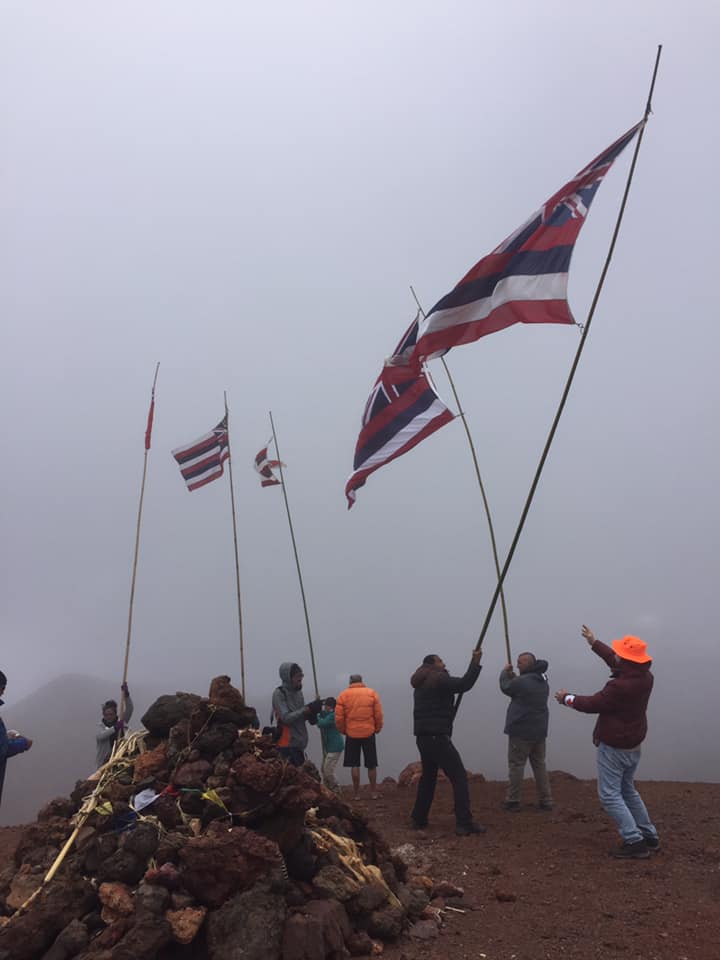
In a highly controversial move, the US military has shut off all visitation access to sacred sites within the Makua Valley on the Hawaiian island of O’ahu.

“Long-simmering differences between Native Hawaiians and the military over access to Makua Valley have flared anew, with the Army notifying two prominent groups that they will no longer be allowed access to four sacred sites they’ve visited in the past. Malama Makua and Hui Malama say the Army’s notice, contained in a June 12 letter, may violate a 2001 court order guaranteeing cultural access to many sites in the valley, including the four sites they can no longer enter.”

The military is alternately claiming safety issues (they use the valley for training purposes), objections by unnamed descendants, and (perhaps most ironically) the preservation of the sacred sites. This struggle over access between the military and the Native population is nothing new, in fact it has been going on since World War Two.

“The Makua Valley access debate dates to World War II “when the Army took over the valley in early 1943 and kicked out the residents,” Dodge said. “And there was an agreement that six months after the war was over, the valley would be returned in a condition satisfactory to the state. “And when that didn’t happen, the territory sued and it was in and out of the courts until statehood. It was a condition of statehood that the issue be resolved.” In 1964, for the sum of $1, America’s youngest state leased the lower third of Makua Valley to the Army for 65 years, Dodge said.”

Since these obstructionist tactics seem to violate a 2001 court decision granting Hawaiian Native groups visitation access to sacred sites, the matter will most likely end up in court again.

“Denying access to sacred sites denies Native Hawaiians the ability to honor their ancestral spirits within those locations, Aila said. He said the Native Hawaiian groups will continue to seek access to the restricted areas. If their requests continue to be denied, they’ll let a judge make the decision.”

This is just another example of the total disregard the military, the National Park Service, and other government agencies have for the remaining rights of Native peoples. The courts are often the only resort left to check the land-grabs done in the name of “progress” and “security”, and as seen here, even that isn’t always enough to guarantee justice.