Music, Folklore, and the Esoteric
It’s no secret that I’m a fan of music that explores otherworldly themes, but in recent years it seems like I’ve had more company. Yesterday, I was struck by the fact that there are three separate books coming out in the coming months that address the seemingly ever-vibrant confluence between music, folklore, the occult, and nature religion. The first, “Seasons They Change: The Story of Acid and Psychedelic Folk” by Jeanette Leech explores psychedelic and acid folk’s birth, and its rebirth 30 years later.
“For 30 years it languished in obscurity, apparently beyond the reaches of cultural reassessment, until, in the mid-2000s a new generation of artists collectively tagged ‘New Weird America’ and spearheaded by Devendra Banhart, Espers and Joanna Newsom rediscovered acid and psych folk, revered it and from it, created something new. Thanks partly to this new movement, many original acid and psych folk artists have re-emerged, and original copies of rare albums command high prices. Meanwhile, both Britain and America are home to intensely innovative artists continuing the tradition of delving simultaneously into contemporary and traditional styles to create something unique. “Seasons They Change” tells the story of the birth, death and resurrection of acid and psych folk. It explores the careers of the original wave of artists and their contemporary equivalents, finding connections between both periods, and uncovering a previously hidden narrative of musical adventure.”
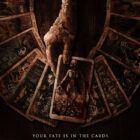
Many of these newer “freak folk” (sometimes called “wyrd folk”) artists explicitly explore the esoteric, like Fern Knight’s upcoming concept album centered on the Tarot, or events like Hip Death Goddess that mix Paganism, magic, and psychedelic folk into one package. Which brings us to the second book, Rob Young’s “Electric Eden: Unearthing Britain’s Visionary Music” that explores the “esoteric impulses” of Britain’s ever-renewing folk scene.
“While ostensibly purporting to be a history of that much derided (though currently fashionable) four-letter word, ‘folk’, “Electric Eden” will be a magnificent survey of the visionary, topographic and esoteric impulses that have driven the margins of British visionary folk music from Vaughan Williams and Holst to The Incredible String Band, Nick Drake, John Martyn and Aphex Twin. For the first time the full story of the extraordinary period of folk rock from the mid 1960s to the mid 1970s will be told in a book with the breadth of a social history touching on sonic worship, pagan architecture, land art, ley lines and ther outer fringes of the avant garde.”
In a recent editorial for the Guardian, Young talks about the “silver chains” that bind modern musical visionaries into a continuum with Cecil Sharp, the founding father of folklore revival, who believed that today’s musicians are “the last of a long line that stretches back into the mists of far-off days.” The same thinking that found pagan survivals in every dance, and allowed for the re-emergence of full-fledged Pagan religions into Britain’s (and eventually America’s) collective consciousness.
Finally, author Christopher Knowles proposes in “The Secret History of Rock ‘n’ Roll” that rock n’ roll concerts and dance clubs are our modern mystery religions, and the performers are fulfilling the ancient archetypal roles as gods and goddesses incarnate.
“Sex. Drugs. Loud music. Wild costumes. Pyrotechnics. These words all describe a rock concert or a hot dance club on a Saturday night, but they’re also equally appropriate descriptors for the ancient spiritual phenomenon known as the “mystery religions.” These ancient occult rites used many of the same trappings as rock ‘n’ roll — heavy drinks and drugs, loud, percussive music, outrageous ritual garb, and lots and lots of sex — to bring the initiate out of his or her mundane life and into the transcendent realm of the gods. In this book, author Christopher Knowles shows how, 2,000 years later, the mystery religions got a secular makeover when the new musical form called rock ‘n’ roll burst on the scene. The Secret History of Rock ‘n’ Roll traces the history of the mysteries — their rise, their fall, and their eventual metamorphosis into rock music and other myriad offshoots. In the process, he reveals how readers’ favorite rock bands fit into the same archetypal roles as the ancient gods.”
The work of Knowles, Young, or Leech wouldn’t surprise most folks operating within the modern Pagan communities, where we often discuss the pagan elements of folklore, weave the visionary into our music, or hold a “Morrison Ritual” at events. But what is exciting about these works is that it seems to hint that our subculture is quickly colliding with a much larger renewed creative impulse within a far broader creative underground. It could represent an new opening of our own creative efforts into new avenues of expression, new ways of operating, bringing renewal and new opportunities to both sides of the equation. When music turned visionary the first time around modern Pagan religions, and their creatives, were just finding their footing. Now, 30 years later, who knows what could happen when our paths cross again. I’m excited about the possibilities, and you can be sure that I’ll be covering these works as they are released.
No responses yet