
BRASÍLIA, Brazil — Brazil has taken a historic step in Indigenous education with the creation of the country’s first federal Indigenous university, an institution designed to place Indigenous knowledge, languages, and cultural traditions at the center of higher learning.
On May 28, President Luiz Inácio Lula da Silva signed into law the creation of the Universidade Federal Indígena (UNIND), fulfilling a longstanding demand of Indigenous movements and educational leaders. The new institution, linked to Brazil’s Ministry of Education, is intended to serve Indigenous communities across the country while promoting research, teaching, and public engagement grounded in Indigenous worldviews and priorities.
Brazilian officials described the university as a recognition of Indigenous peoples’ right to higher education built upon their own identities, knowledge systems, and visions for the future. According to the federal government, the university emerged from years of consultation involving Indigenous leaders, scholars, educators, government agencies, and higher education institutions.
UNIND will be headquartered in Brasília but will operate through a multicenter model, allowing campuses and educational programs to be established in different regions of the country. This structure is intended to reflect the geographic, cultural, and linguistic diversity of Brazil’s Indigenous peoples.
The institution is expected to begin operations in 2027. Government plans call for an initial enrollment capacity of approximately 2,800 students during its first four years and the launch of ten undergraduate programs. Areas of study are expected to include Indigenous and community health, teacher education, environmental and territorial management, agroecology, public policy, law, engineering, sustainability, and Indigenous languages.
The university’s creation represents more than an expansion of educational access. Its mission includes preserving and revitalizing Indigenous languages, strengthening cultural traditions, supporting Indigenous territorial stewardship, and fostering dialogue between traditional knowledge systems and academic research.
The legislation also reflects a broader shift in Brazilian policy toward Indigenous representation and self-determination. Since the establishment of Brazil’s Ministry of Indigenous Peoples in 2023, Indigenous leaders have pressed for greater participation in decisions affecting education, land rights, environmental protection, and cultural preservation. The university proposal emerged from those conversations and from decades of advocacy by Indigenous educators seeking an institution designed specifically around Indigenous priorities rather than adaptation to existing academic structures.
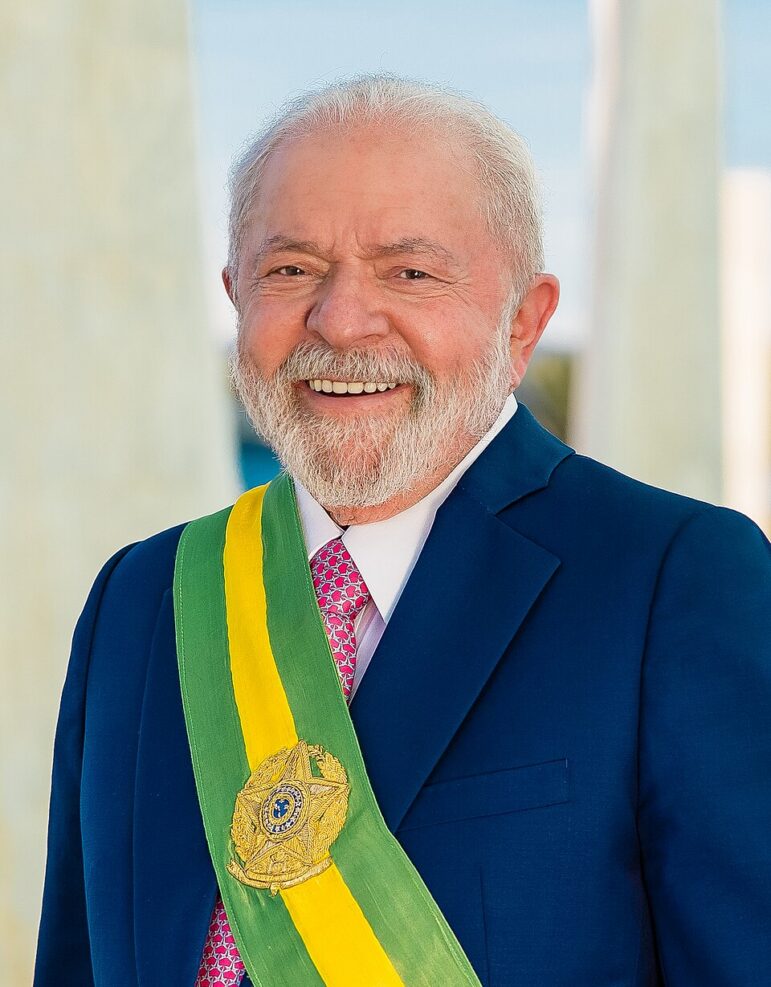
Official Portrait of President Lula. Image Credit: Ricardo Stuckert/PR [CC BY 2.0
While UNIND is the first federal Indigenous university in Brazil, it joins a growing network of Indigenous universities.
Among the best known is the First Nations University of Canada, founded to provide post-secondary education grounded in First Nations cultures, languages, and traditions. In New Zealand, institutions such as Te Wānanga o Aotearoa and other Māori-led tertiary organizations have developed educational models rooted in Indigenous values and language revitalization.
Latin America has also seen significant growth in intercultural and Indigenous universities. Mexico’s network of intercultural universities was established to serve Indigenous regions and support bilingual and culturally relevant education. Bolivia’s Indigenous universities, known collectively as the Universidades Indígenas Bolivianas Comunitarias Interculturales Productivas (UNIBOL), were created to integrate Indigenous knowledge systems with professional and technical training while supporting community development.
These institutions emerged from a common concern: that conventional universities often treat Indigenous knowledge as an object of study rather than a living intellectual tradition. Supporters argue that Indigenous universities help preserve culture, strengthen environmental stewardship, transmit traditional ecological knowledge, and create opportunities for Indigenous scholars and elders to shape academic priorities.
For many Indigenous communities, higher education has historically been associated with assimilation pressures, colonization, and the loss of cultural identity. Indigenous universities seek to reverse that dynamic by making culture, language, and community responsibility central components of academic life.
Brazil’s new university arrives at a moment when Indigenous peoples are increasingly recognized as essential partners in addressing issues ranging from biodiversity conservation to climate resilience. Many Indigenous territories contain some of the world’s most important ecosystems, and Indigenous knowledge systems are increasingly cited by researchers and policymakers as valuable sources of environmental understanding.
Indigenous universities represent more than alternative pathways to higher education. They create spaces where Indigenous languages, governance systems, ecological knowledge, and cultural traditions are treated not as relics of the past but as living bodies of knowledge. By creating UNIND, Brazil joins a growing international movement demonstrating that universities can be both academically rigorous and deeply rooted in Indigenous cultures and ways of knowing.
The Wild Hunt is not responsible for links to external content.
To join a conversation on this post:
Visit our The Wild Hunt subreddit! Point your favorite browser to https://www.reddit.com/r/The_Wild_Hunt_News/, then click “JOIN”. Make sure to click the bell, too, to be notified of new articles posted to our subreddit.