
Humans have been using it for roughly 8,000 years, and archaeologists often report oily residues on ancient pottery that have traditionally been interpreted as evidence of olive oil. That assumption is understandable given olive oil’s long-documented cultural and economic importance. Not only can olive oil transform bread and salad into an amazing meal, but in some traditions, it is also used in rituals intended to detect or cleanse the Evil Eye.
Long before it graced our kitchens and apothecary, the acquisition of olive oil shaped human history. Its endurance across time speaks to its unusual versatility: food, fuel, medicine, purification, blessing. Few substances have bridged the gap between the mundane and the divine as elegantly.
Indeed, the use of olive oil in ritual is one of the most enduring spiritual technologies in human history. Across the Mediterranean, it illuminated temples, anointed kings, consecrated sacred objects, identified curses as noted, and symbolized purity. Today, modern Pagans, from Hellenic reconstructionists to Wiccans to kitchen witches, continue to draw from this heritage, reinventing olive oil as a spiritual “battery,” a base for intention, and a household blessing.
Olive oil’s cultural presence can seem ubiquitous in Europe and western Asia. But new research is shaking up some of the long-held presumptions about olive oil use.
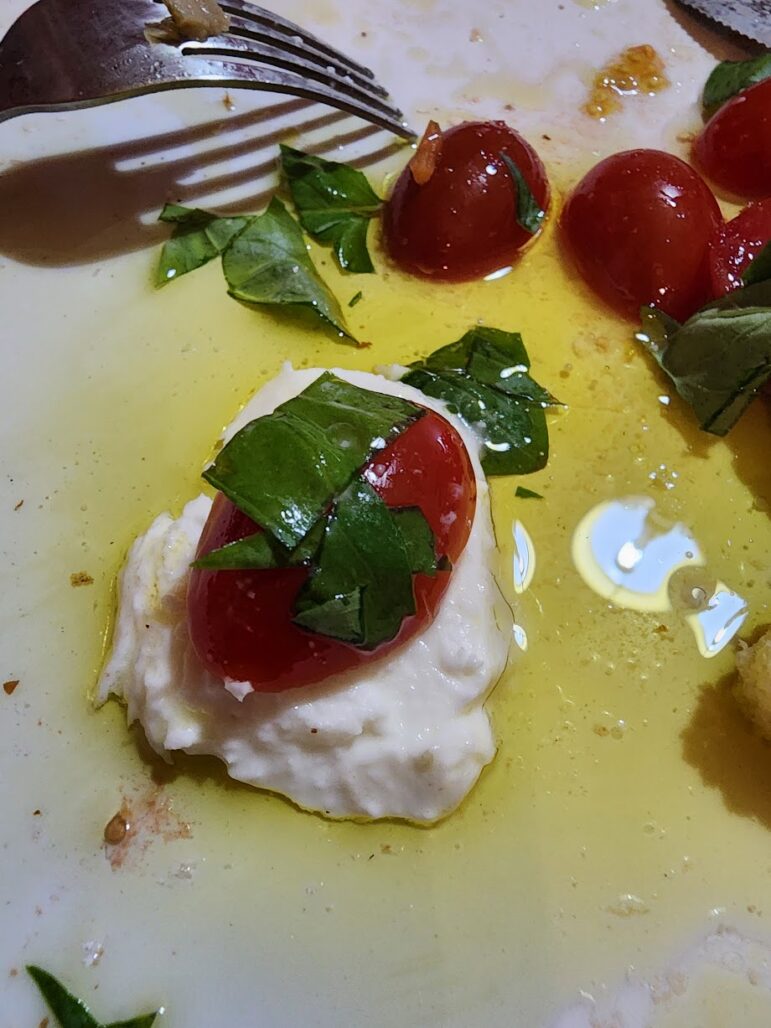
Burrata, tomatoes, basil and olive oil [Photo Credit: S. Ciotti
Ancient Mediterranean Rituals: Liquid Gold of the Gods
In the ancient world, olive oil was liquid gold. It fueled lamps, served as the region’s primary cooking fat, and functioned as a cleanser before the invention of soap. Because it sustained life and pushed back the darkness, ancient cultures naturally imbued it with sacred meaning.
In Ancient Greece, the olive tree was believed to be a divine gift from Athena, and damaging a sacred olive tree could carry severe penalties. Olive oil featured prominently in libations, funerary rites, and athletic rituals. Greek athletes coated themselves in oil before competing—a practice that honored gods like Heracles and Hermes while also protecting the skin. Victors in the Panathenaic Games were awarded amphorae filled with sacred olive oil, a prize representing both divine favor and immense wealth.
The Romans continued this tradition, using oil to cleanse their bodies with strigils and pouring it over sacrificial offerings. Oil lamps illuminated temples and homes, while the Vestal Virgins maintained Vesta’s sacred fire as an unbroken symbol of the life of the state.
In ancient Egypt, where olive cultivation was more limited, oils and unguents were still central to temple and funerary ritual. Textual and archaeological evidence describe the use of multiple consecrated oils, often referred to as the ‘Seven Sacred Oils,’ in rites involving divine statues and the dead.
Today, modern Pagans and Witches continue to use olive oil because of its accessibility, neutrality, and connection to ancient rites. Many practitioners consider it a “carrier oil,” a blank canvas that readily absorbs magical intention or herbal infusions. Others use it directly for burning in censers and as an offering.
Across these cultures, olive oil represented vitality, illumination, purity, and divine presence, an everyday substance elevated for spiritual use.
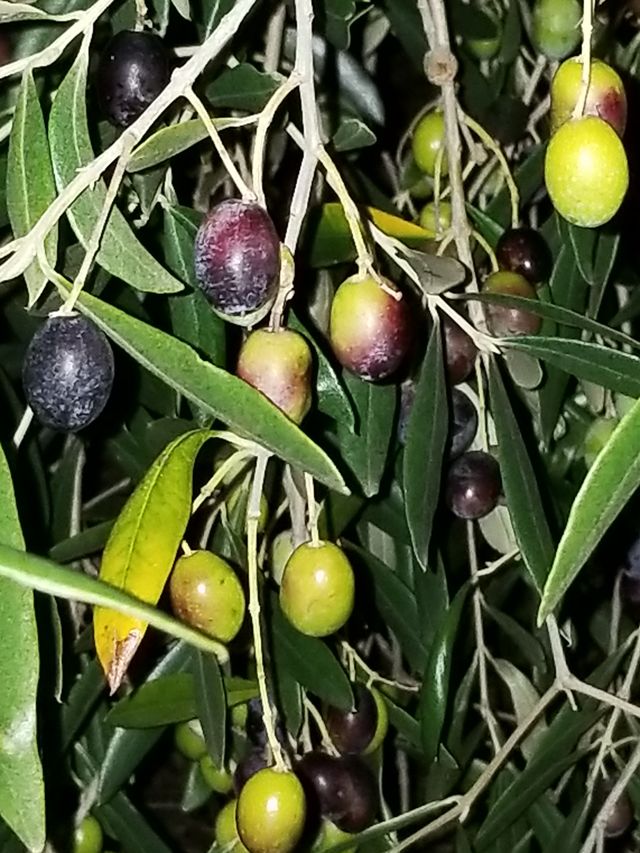
Olive on Trees [Photo Credit: S. Ciotti
A New Archaeological Twist: Are We Sure It Was Olive Oil?
For all its significance, a recent scientific study may upend long-held assumptions about the ancient world’s relationship with olive oil. A new article in the Journal of Archaeological Science challenges decades of archaeological claims that residues found on Mediterranean pottery are necessarily olive oil.
The problem is that olive oil comes from a plant, and plant oils don’t preserve well, especially in the calcium-rich soils commonly found around the Mediterranean basin. Over time, these soils break down the biomarkers that distinguish olive oil from other fats. As a result, what earlier archaeologists believed to be olive oil may instead have been another plant oil, or even degraded animal fat.
The project began in 2019 while Dr. Rebecca Gerdes was a doctoral student and now an archeologist with Cornell University. “I usually describe my work as: I wash ancient dirty dishes, I save the rinse liquid, and I use the molecules in it to figure out how people are using their pots,” said Gerdes, currently the Hirsch Postdoctoral Associate at the Cornell Institute of Archaeology and Material Studies in A&S.
“One of the things that I was realizing early in my Ph.D. was people were making all sorts of claims about what they had found in pots in the eastern Mediterranean, and there was a lot of room for backing those claims up with more solid experimentation,” she said. “I wanted to answer some interesting archaeological questions, but I realized I had to do some method development first.”
Gerdes and her team created clay pellets, soaked them in olive oil, and buried them for a year in two types of soil—one from Cyprus (alkaline and calcareous), and one from New York (mildly acidic). The results were striking. In the Cypriot soil, the olive oil degraded so severely that some of its identifying chemical markers disappeared entirely. In some cases, it began to resemble animal fat.
“What turns out to be critical is this soil is really common in the eastern Mediterranean, so it impacts a lot of major historical periods, especially where we’re looking at trade and connectivity in that region,” Gerdes said. “The Late Bronze Age [c. 1650-1100 BC] is one of those time periods.”
This means archaeologists may need to revisit old assumptions: in calcareous Mediterranean contexts, residues once identified as olive oil may be less definitive than previously believed—and could sometimes reflect other plant oils or degraded fats.
“There’s definitely a sense among archaeologists of wanting to believe that you found olive oil, because it makes a nice story,” Gerdes said. “And because it’s such an economically important Mediterranean product, there is a default assumption that if you found molecules that match olive oil, then you must have found olive oil. The problem is that olive oil overlaps in its composition with a bunch of other plant oils. And if you start to degrade it, then it gets even worse—it starts looking like an animal fat.”
The results call into question assumptions about the prevalence and use of olive oil in the archaeological record. If some reported cases of ancient olive oil residue are less certain than once believed, archaeologists now face the task of reexamining which artifacts truly bear traces of the oil. For Gerdes and her colleagues, that means the careful work of residue analysis is far from finished and involves more dishwashing.
Whether or not our ancestors used olive oil as extensively as once assumed, its symbolic and cultural importance remains unquestioned. From feeding temple lamps to blessing modern candles, olive oil continues to nourish both body and spirit, despite some possibly slippery assumptions.
The Wild Hunt is not responsible for links to external content.
To join a conversation on this post:
Visit our The Wild Hunt subreddit! Point your favorite browser to https://www.reddit.com/r/The_Wild_Hunt_News/, then click “JOIN”. Make sure to click the bell, too, to be notified of new articles posted to our subreddit.