
TWH – Pagans have long known what science is only beginning to prove: modern life causes a kind of stress that only time in nature can truly heal. As many readers know, I’m a swamp hiker. I spend hours wandering the marshes and wetlands of Florida, occasionally with curious and mildly apprehensive friends in tow. After they get past the initial (and rational) nerves about “what might be lurking in the swamp,” they usually say the same thing: the experience is, as one person put it, “emotionally clearing.”
It’s not a forest, but it’s close. A growing body of research now supports the physical, psychological, and emotional benefits of spending time in forests. The Japanese practice of Shinrin-yoku, or forest bathing, has gained traction worldwide as a powerful, evidence-based wellness practice. And two new studies, one released this month and another earlier this year, reinforce just how real these benefits are.
Forest bathing isn’t about exercise or hiking. It’s about slowing down, engaging your senses, and simply being in nature. The term was coined in 1982 by Japan’s Ministry of Agriculture, Forestry, and Fisheries as a response to rising rates of stress and illness linked to urban living. Rooted in the Shinto and Buddhist reverence for nature, forest bathing soon gained traction in both spiritual and scientific communities. By the 1990s, researchers in Japan began measuring its physiological effects, from lower cortisol (stress hormone) levels to improved immune function. Eventually, Japan developed official “therapy forests” and integrated the practice into public health policy.
Like Shinto and Buddhism, many Pagan traditions mirror this reverence for the natural world and have long embraced nature as healing.
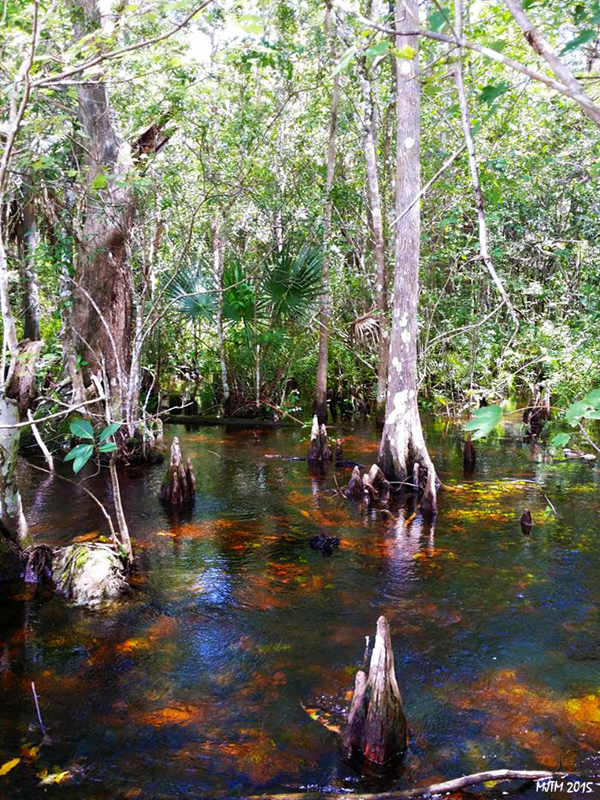
Photo by M. Tejeda-Moreno
New Study Shows Real Biological Benefits
A July 2025 study published in Frontiers in Forests and Global Change followed 36 healthy adults through a three-day forest bathing retreat in the low-latitude evergreen forests of Tianjing Mountain in southern China. Researchers tracked participants’ mood, sleep quality, and immune function, not just during the experience but over a full month afterward.
The results were striking. Participants reported better sleep, improved mood, and reduced stress. These changes were measured using validated tools. In addition, the researchers found that participants showed increases in important immune cells. T cells and B cells both of which regulate immune system strength and higher levels of protective salivary compounds like immunoglobulin A (IgA) and lysozyme (the enzyme that helps protect against infection by breaking down the cell walls of certain bacteria, effectively killing them).
It wasn’t just the immune benefit either. Markers of inflammation and stress in their blood dropped significantly during the forest immersion.
The study had its limitations, including its small size and narrow focus on healthy young adults, which may not reflect the experiences of the general population. It also took place in a specific type of forest, one which they say is rich in health-promoting volatile compounds, which might not translate exactly to other regions.
Still, the findings are strong and longitudinal. As researchers noted, “The physiological and immunological benefits observed in this study provide multifaceted evidence for the health-promoting effects of forest bathing.” They advocate for integrating forest access into urban planning and preventive healthcare, framing nature as a low-cost, high-impact wellness strategy.

(Interestingly) Virtual Forests: Helpful, but Not the Same
Another study, conducted by researchers at the University of Koblenz-Landau in Germany, explored whether immersive virtual nature could replicate the benefits of real forests. In 2022, they asked 50 participants to either walk through a real urban forest or explore a virtual version of the same forest using VR headsets. Both groups showed reduced stress, improved mood, and greater vitality. However, the real forest group saw slightly stronger effects.
The implication? While virtual nature has potential, especially for people who can’t easily access the outdoors. It still doesn’t match the full sensory and emotional richness of real trees, fresh air, and living ecosystems, but it might still provide benefits.
Those findings led researchers to more questions, and a March 2025 study published in Healthcare took this idea further. Conducted in South Korea, researchers worked with 53 young adults, many experiencing social anxiety. Participants were divided into two groups: one walked a forest trail in person, the other experienced the same trail through a VR headset. Both groups improved, but those in the real forest showed significantly greater reductions in stress and stronger engagement of the parasympathetic nervous system (which helps the body rest and recover). They also reported deeper emotional refreshment and a stronger sense of connection.
The VR experience helped, but it couldn’t fully replicate the forest’s touch, smell, or sense of immersion. As the researchers put it, “Virtual forest bathing is a promising environment for delivering therapeutic content,” but nothing apparently beats the real thing.
Spiritual traditions like Shinto, Buddhism, Wicca, Druidry, and many other Paganisms have long honored the Earth as sacred and sustaining. The research findings echo what spiritual wisdom across many practices teaches: nature can heal.
Real forests (albeit safe ones) do more than soothe the mind; they regulate stress hormones, strengthen immune defenses, and improve sleep. Nevertheless, virtual forests can offer support, especially when access is limited, even if their benefits are less than the layered experience in nature.
In a world increasingly dominated by screens, schedules, and concrete, nature isn’t a luxury; it’s a necessity. It may even be the Earth’s free public health infrastructure.
The Wild Hunt is not responsible for links to external content.
To join a conversation on this post:
Visit our The Wild Hunt subreddit! Point your favorite browser to https://www.reddit.com/r/The_Wild_Hunt_News/, then click “JOIN”. Make sure to click the bell, too, to be notified of new articles posted to our subreddit.